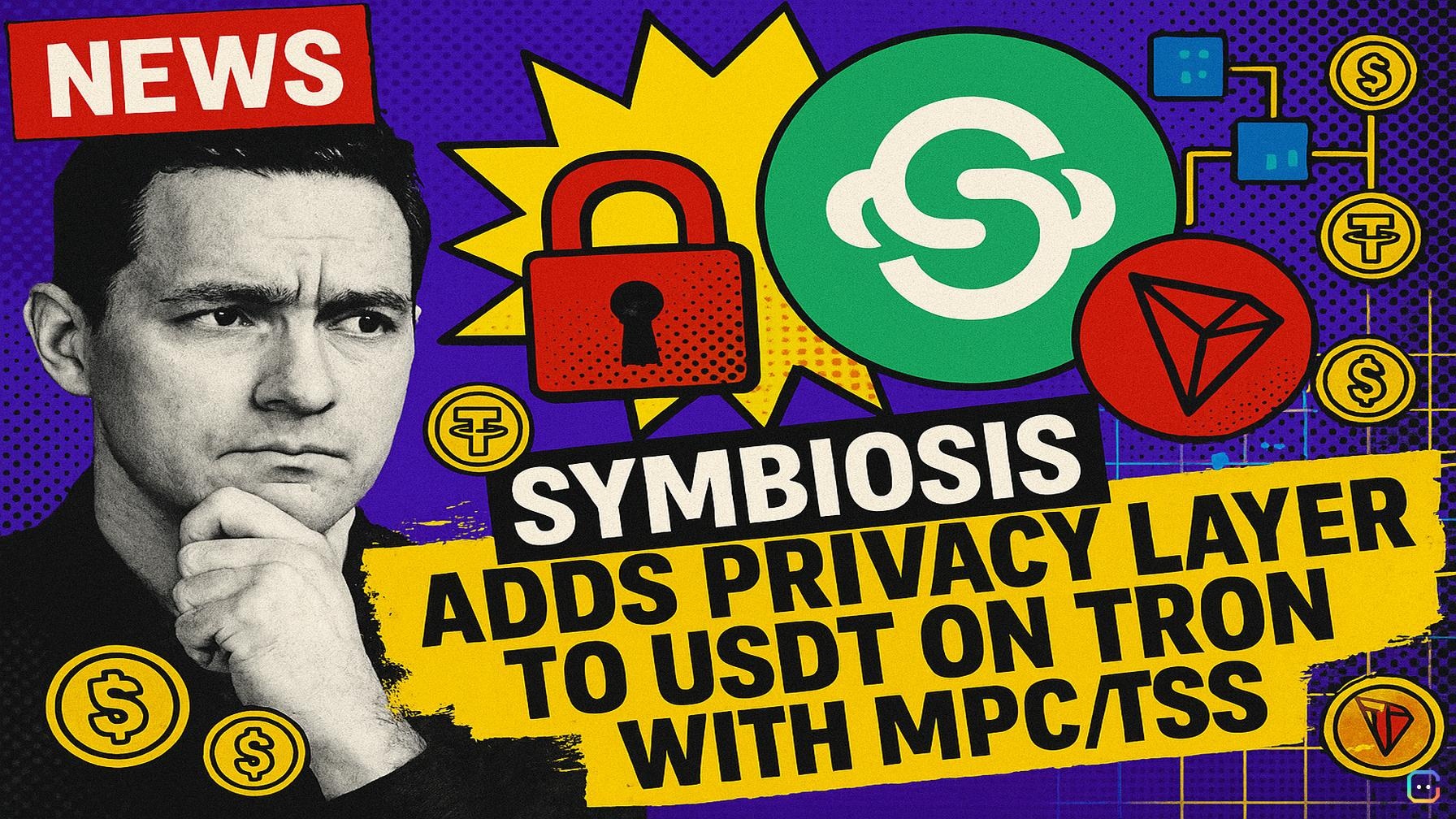
Symbiosis Finance has rolled out private USDT swaps and transfers that route through TRON, bringing a privacy layer to one of crypto’s busiest stablecoin rails. The move is notable — not because TRON changed, but because a dApp built on top of it is offering stealthier ways to move USDT.
How it works (high level)
- This is a dApp-level solution, not a native TRON protocol change. TRON remains the settlement network; Symbiosis provides the routing and privacy experience around USDT movement.
- Symbiosis’ documentation points to non-custodial MPC routing and Threshold Signature Schemes (TSS) as core components. In practice, the system is designed to reduce the obvious on-chain link between sender and recipient wallets when users swap or transfer USDT across chains.
Why that distinction matters
- A protocol-level privacy upgrade from TRON would be a big, systemic shift. A dApp solution is more modular and quicker to deploy, but it also means users must evaluate what they’re trusting: the contracts, routing nodes, failure modes, and the exact privacy guarantees.
- MPC and TSS can reduce custody risks and obscure direct address links, but they don’t automatically eliminate all metadata or make the system impervious to analysis.
Who might use it — and why
- Everyday users who want to avoid broadcasting every payment to a permanent public ledger.
- Businesses that prefer discretion around treasury movements so suppliers, competitors, or customers can’t surveil their cash flows.
- Traders or liquidity providers who don’t want counterparties tracking on-chain flows between wallets and exchanges.
Why regulators will pay attention
- Stablecoins are increasingly functioning like financial infrastructure. Adding privacy to widely used dollar tokens raises familiar tensions: legitimate privacy needs versus risks of sanctions evasion, money laundering, and other illicit finance.
- TRON matters in this debate because USDT on TRON is widely used thanks to low fees and fast transactions. Privacy tooling layered on top of TRON-based USDT could have outsized impact — and could attract closer regulatory scrutiny as a result.
Caveats on “privacy”
- Privacy claims in crypto are nuanced. Tools can hide links from casual observers but still leave traces elsewhere: metadata, timing, routing patterns, liquidity footprints, or partial trail information.
- Users should treat privacy as a trade-off, not magic. Understand how funds flow through the system, which contracts are involved, what happens if routing fails, and what parts of the path are actually obfuscated.
The bigger picture
- Centralized issuers and exchanges can freeze assets and comply with subpoenas; public blockchains make transactions auditable; privacy tools try to restore some discretion. Stablecoins now sit between cash-like privacy and bank-like compliance, and different participants want different balances.
- Symbiosis’ TRON-linked USDT feature highlights where stablecoin infrastructure is heading: faster, more cross-chain, and more user-focused — but increasingly caught between user privacy demand and regulatory expectations.
Bottom line
This is a meaningful product launch: it leverages TRON’s role as a major USDT rail while showing how third-party dApps can add privacy without changing base-layer protocols. Adoption and regulatory reaction will be the key signals to watch — both for users seeking discretion and for authorities focused on financial crime controls.
Source: Symbiosis Finance documentation and TRON network materials. Written by the News Desk; edited by Samuel Rae.
Read more AI-generated news on: undefined/news