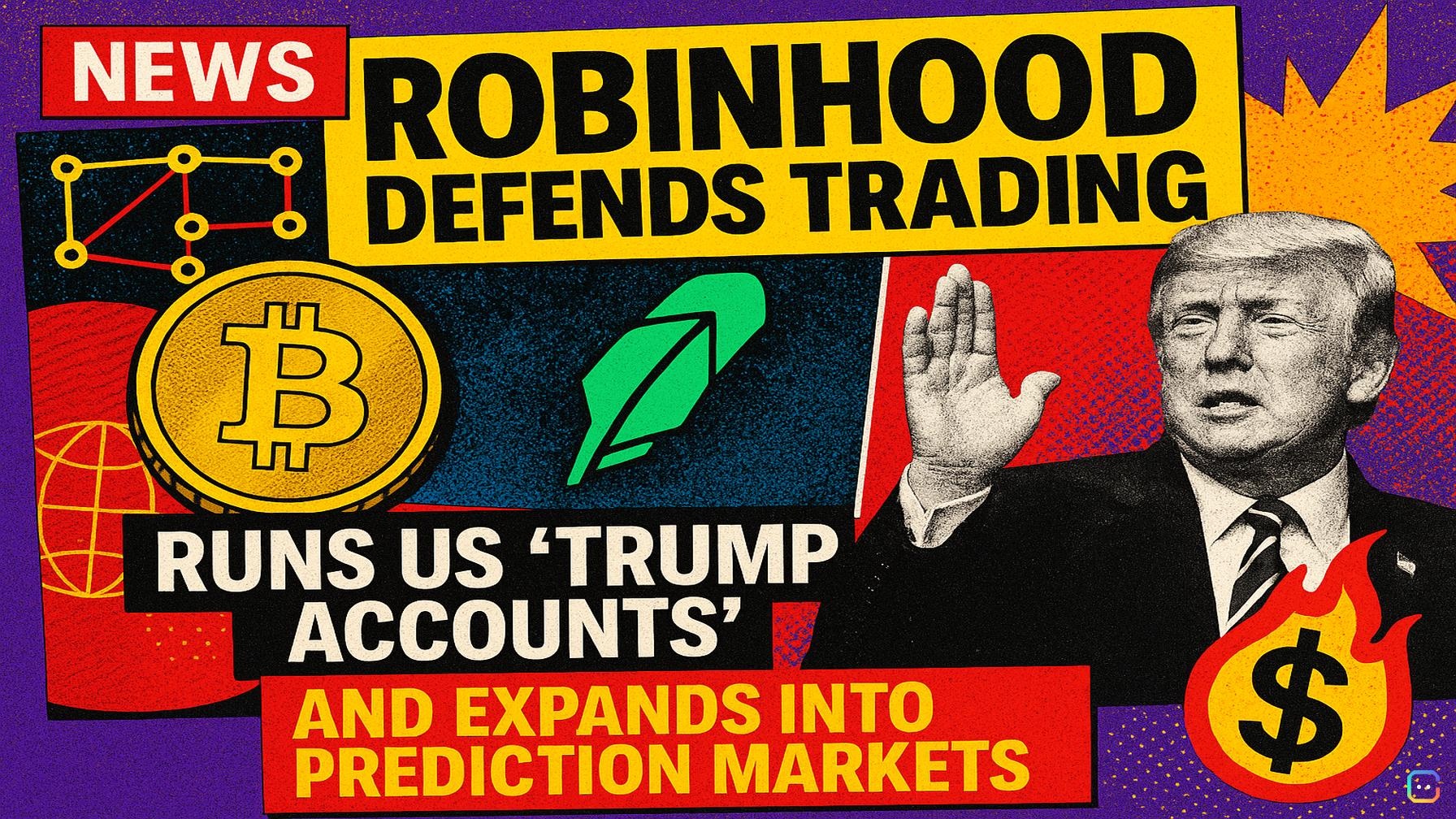
Headline: Robinhood doubles down on investing—not “gambling”—as it helps run U.S. “Trump Accounts” and pushes into prediction markets and tokenization
Robinhood CEO Vlad Tenev is defending trading as a form of market participation—not mere gambling—while steering the firm into new territory with a U.S. government partnership and an expanding product slate that reaches into crypto and tokenized assets.
What’s new: government-backed kids’ accounts
- Robinhood is working with the U.S. government to operate the newly announced “Trump Accounts,” tax-deferred investment accounts for children born between 2025 and 2028. Each eligible child can receive a $1,000 government contribution, and families can make additional deposits once accounts are activated. The company helped build the app that will manage the program, pitching it as a way to introduce younger people to long-term investing (NYT).
Tenev on trading vs. gambling
- In an interview with The New York Times, Tenev pushed back on critics who label Robinhood’s products as encouraging gambling among younger investors. He argued that speculation is inherent to markets—buyers and sellers are making predictions about future prices when allocating capital—and that trading should not be conflated automatically with betting.
Why it matters for crypto and prediction markets
- The debate has intensified as Robinhood expands into prediction markets and tokenized assets. Research cited by crypto.news (Bernstein) forecasts prediction-market revenue jumping to about $586 million in 2026 from roughly $150 million in 2025, highlighting how quickly that business could scale—and why regulators and observers are scrutinizing the line between regulated trading, event contracts, and betting.
A broader strategy: beyond commission-free trading
- Robinhood is clearly aiming to move past its meme-stock reputation from the 2021 GameStop era and build a broader financial platform. Recent moves include:
- Launching Robinhood Chain on July 1, an Ethereum layer-2 focused on tokenized real-world assets.
- Gaining approval for Robinhood Securities to act as an IPO underwriter.
These steps give the firm roles in trading, blockchain infrastructure and capital markets as it pursues a wider product ecosystem.
Tenev’s stake and insider sales
- Tenev told NYT that more than 90% of his personal net worth remains invested in Robinhood shares, underscoring his long-term commitment. Public filings show he sold 375,000 shares on July 6 under a Rule 10b5-1 plan adopted in September 2025, and still holds more than 48.2 million Class B shares.
Bottom line
- Robinhood is pivoting from a pandemic-era retail-trading darling into a diversified financial platform that mixes retail brokerage, prediction markets, tokenization and even government-backed savings accounts. That growth path promises new revenue streams but also raises fresh regulatory and reputational questions—especially as the company courts younger investors and expands into areas where the line between trading and betting can blur.
Read more AI-generated news on: undefined/news