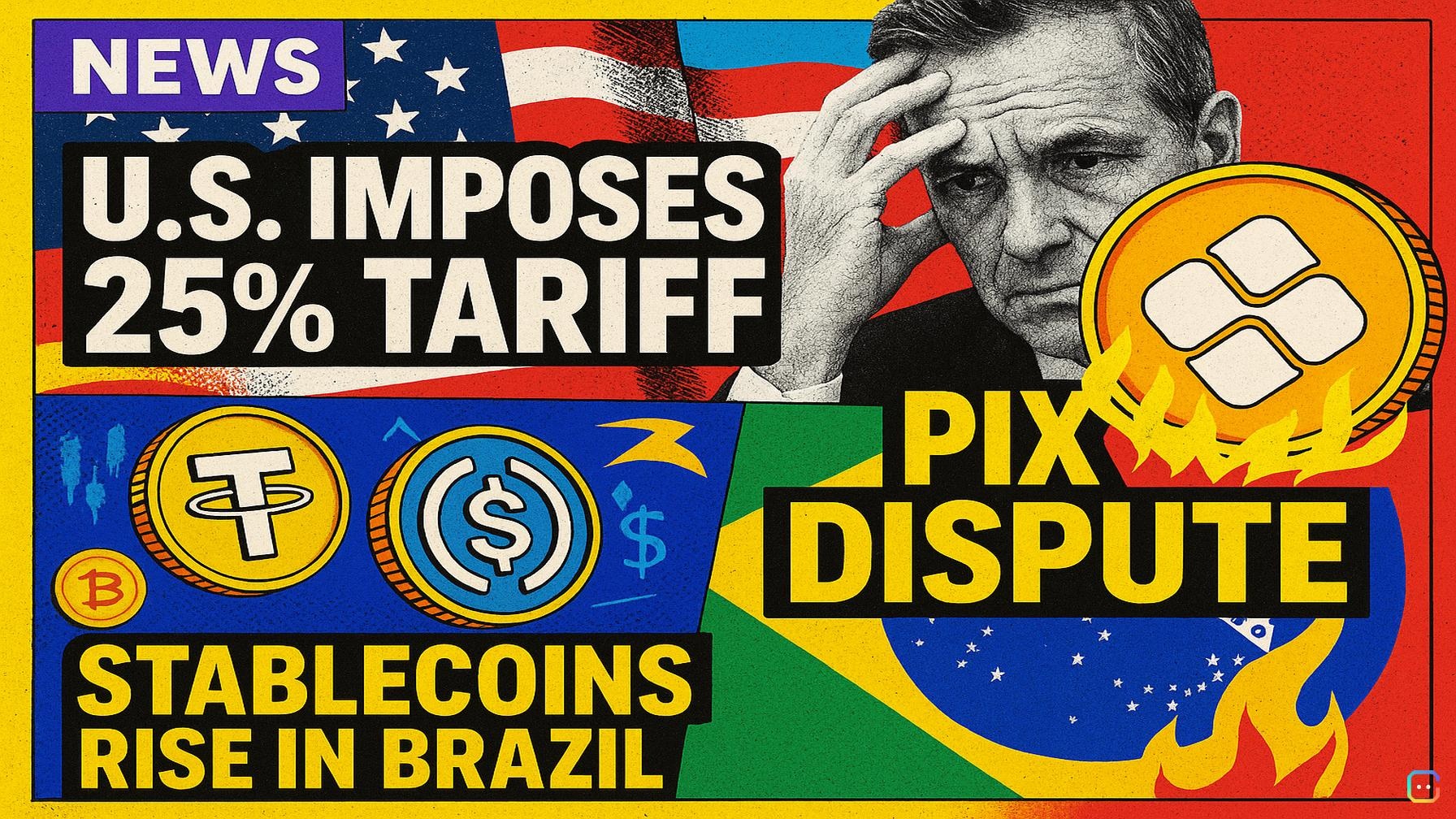
The United States has escalated a trade dispute with Brazil by naming the country’s Pix instant-payment system among practices it calls unfair — and as part of that move, the U.S. Trade Representative (USTR) announced a 25% tariff on most Brazilian imports. The tariff, following a year-long Section 301 probe that examined digital trade, electronic payments and related issues, was announced on July 15 and is scheduled to take effect on July 22, with some product exemptions. While the USTR did not slap a tariff directly on Pix, it singled out electronic-payment policies that it says “unfairly disadvantaged” U.S. payment firms and used those practices to justify duties on Brazilian goods.
Why Pix matters
Launched by Brazil’s central bank in 2020, Pix quickly became the backbone of everyday payments. In 2024 the system processed 63 billion transactions totaling BRL 26.4 trillion, sharply increasing competition with card networks and other payment services. That ubiquity is central to Washington’s complaint: USTR argues Brazil’s policy environment has favored Pix in ways that hurt U.S. electronic-payment providers.
Stablecoins and dollar demand
At the same time, dollar-backed stablecoins are taking up a large share of Brazil’s crypto activity — creating a real-world split between domestic payment policy and consumer demand for digital dollars. Brazil’s central bank has said stablecoins account for roughly 90% of reported crypto flows, with users frequently turning to dollar-linked tokens for payments and value transfer.
The two worlds are already connecting. In June, Tether-backed Oobit added Pix support, enabling users to deposit reais, hold USDT and pay via Pix keys or QR codes — effectively wrapping dollar-pegged stablecoins in a familiar payments interface. Across the region, demand for digital dollars is visible on exchanges too: data reported by crypto.news shows dollar-pegged tokens made up 40% of crypto purchases on Bitso in 2025, outpacing Bitcoin.
Regulatory separation: private crypto vs official settlement
Brazilian regulators are moving to draw clearer lines between private crypto use and regulated financial plumbing. Resolution BCB No. 561 bars virtual assets from settling payments inside regulated electronic foreign-exchange (eFX) channels. The rule does not ban stablecoins or crypto transfers outright; rather, it prevents supervised eFX providers from using digital assets to settle covered cross-border payments, keeping those flows within approved FX channels. In practice, that separates stablecoin activity — which can still flow through exchanges, wallets and other services — from official foreign-exchange settlement.
Geopolitics and payments
The U.S. action comes after Brazil promoted alternative settlement ideas during its 2025 BRICS presidency, where officials discussed blockchain payments while denying any plan to create a BRICS common currency to replace the dollar. Washington’s tariff strategy frames Pix within a broader trade case rather than as a narrow crypto issue, but the simultaneous growth of dollar-backed stablecoins shows continued market demand for digital dollars on blockchain rails.
What this means
- For consumers and fintechs: Pix remains dominant for domestic instant payments, but stablecoins are increasingly used for dollar-denominated transfers and payments, often via interfaces that bridge the two systems.
- For regulated providers: Brazil’s rules restrict use of crypto in supervised cross-border FX settlement, pushing official flows back into conventional FX channels.
- For trade and geopolitics: The 25% tariff ramps up pressure on Brazil and signals U.S. willingness to treat certain domestic payment policies as trade barriers — potentially complicating fintech partnerships and cross-border payment innovation.
The payment landscape in Brazil is therefore moving in multiple directions simultaneously: a powerful domestic instant-pay network, tighter controls on where crypto can touch official FX rails, and growing grassroots demand for dollar-linked stablecoins that keep finding ways to plug into daily payments. The new tariff adds another layer of pressure on this evolving ecosystem.
Read more AI-generated news on: undefined/news