New client “DOG Mode” opens a fresh front in Bitcoin’s governance battle over block space
A new open-source Bitcoin client called DOG Mode, introduced by Bitcoin Ordinals advocate Leonidas, is pushing the debate over Ordinals, Runes and how Bitcoin block space should be used into a new phase. Rather than changing consensus rules, DOG Mode alters node relay policy — allowing nodes to propagate certain valid transactions that current default clients treat as “non-standard.”
What DOG Mode does
- Raises the default relay limit for a single transaction to 3.9 million weight units (vs. Bitcoin Core’s default 400,000 weight units).
- Lowers the dust threshold so very small outputs can be relayed down to 1 satoshi.
- Remains fully compatible with Bitcoin consensus rules, so no chain split or fork is required; miners still decide which transactions to include in blocks.
Why this matters
The project targets a long-standing tension in Bitcoin governance: should every fee-paying, consensus-valid transaction be treated equally, or should node software impose additional policy limits to protect the network? Leonidas argues that Bitcoin Core and Bitcoin Knots enforce relay policy restrictions that consensus does not mandate. DOG Mode embodies a market-oriented approach where users compete for space via fees rather than developers pre-selecting which transaction types get default relay support.
Practical effects and trade-offs
If adopted, DOG Mode would make it easier to propagate large Ordinal inscriptions and tiny outputs used by some Bitcoin-native token schemes, potentially improving interoperability for these protocols. But there’s a trade-off: different relay policies mean nodes could see different mempools — different sets of unconfirmed transactions — before miners include them in blocks. Consensus rules remain unchanged, so a divergent mempool is a policy-level divergence, not a protocol split.
How it compares to BIP 110
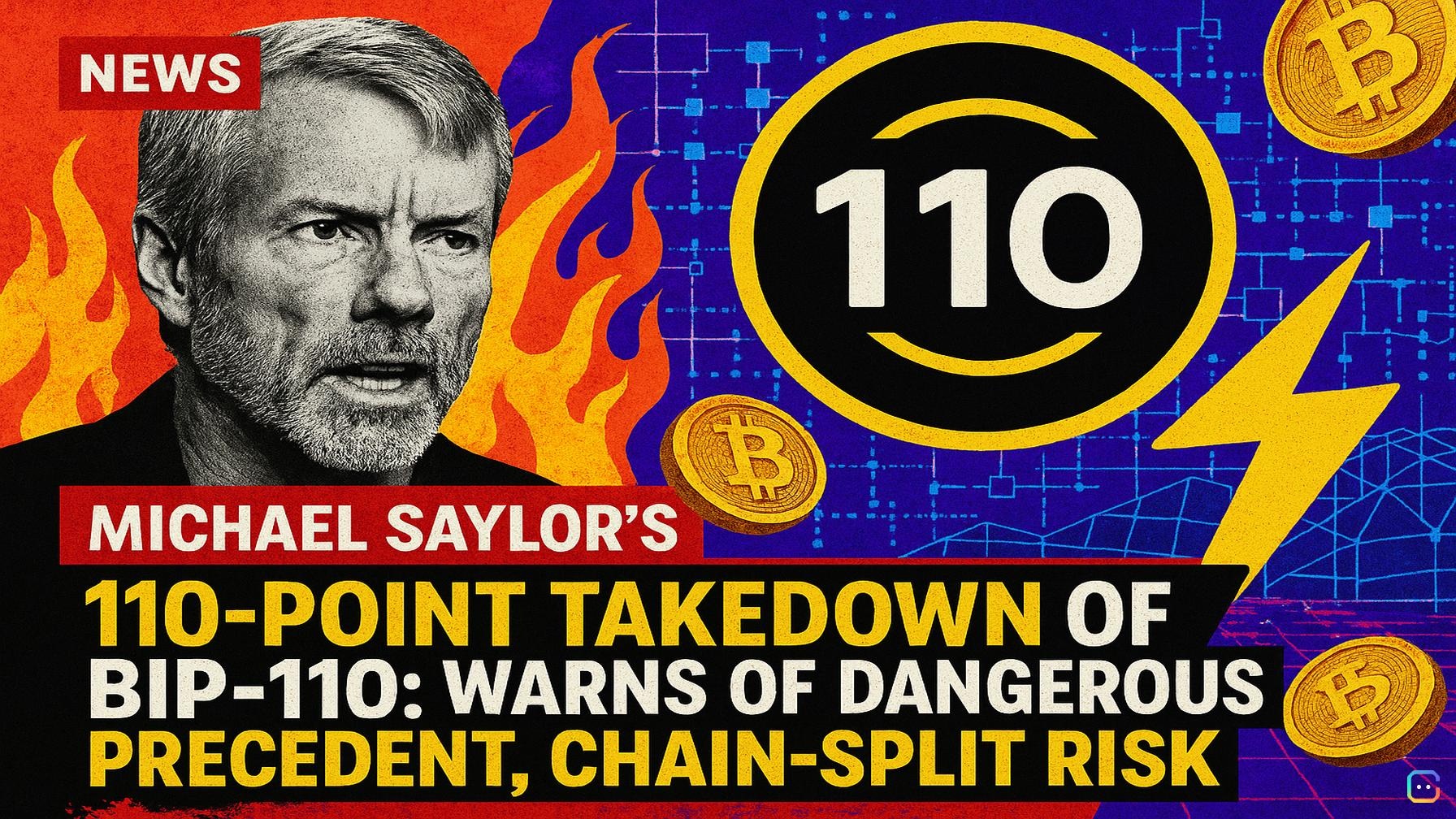
DOG Mode’s relay-policy approach contrasts with BIP 110, which proposes temporarily tightening consensus rules to restrict some forms of data-heavy transactions. Proponents of BIP 110 argue such transactions increase storage costs and consume finite block space; critics warn that changing consensus to ban currently valid transactions sets a risky precedent. High-profile figures including Michael Saylor and Adam Back have opposed BIP 110, while Bitcoin developer Luke Dashjr has continued to back it; miner signaling for BIP 110 remained well below the 55% activation threshold as of mid-July.
Governance implications
DOG Mode highlights how Bitcoin governance can operate outside formal consensus changes. Core developers can set default relay policies, but node operators are free to run alternative software. Miners also have options to receive transactions directly rather than relying on the public relay network. That means DOG Mode can begin running without broad community approval; its impact will depend on whether node operators, miners and users choose to adopt its policies. Leonidas says broader usage could pressure existing clients to reconsider what he views as unnecessary restrictions.
Bottom line
The debate has crystallized into two opposing strategies: change consensus to restrict data-heavy transactions (BIP 110) or loosen default relay policy limits while leaving consensus intact (DOG Mode). Which approach wins out will come down to software adoption and miner behavior — and it could reshape how Bitcoin handles new, data-intensive uses of block space.
Read more AI-generated news on: undefined/news