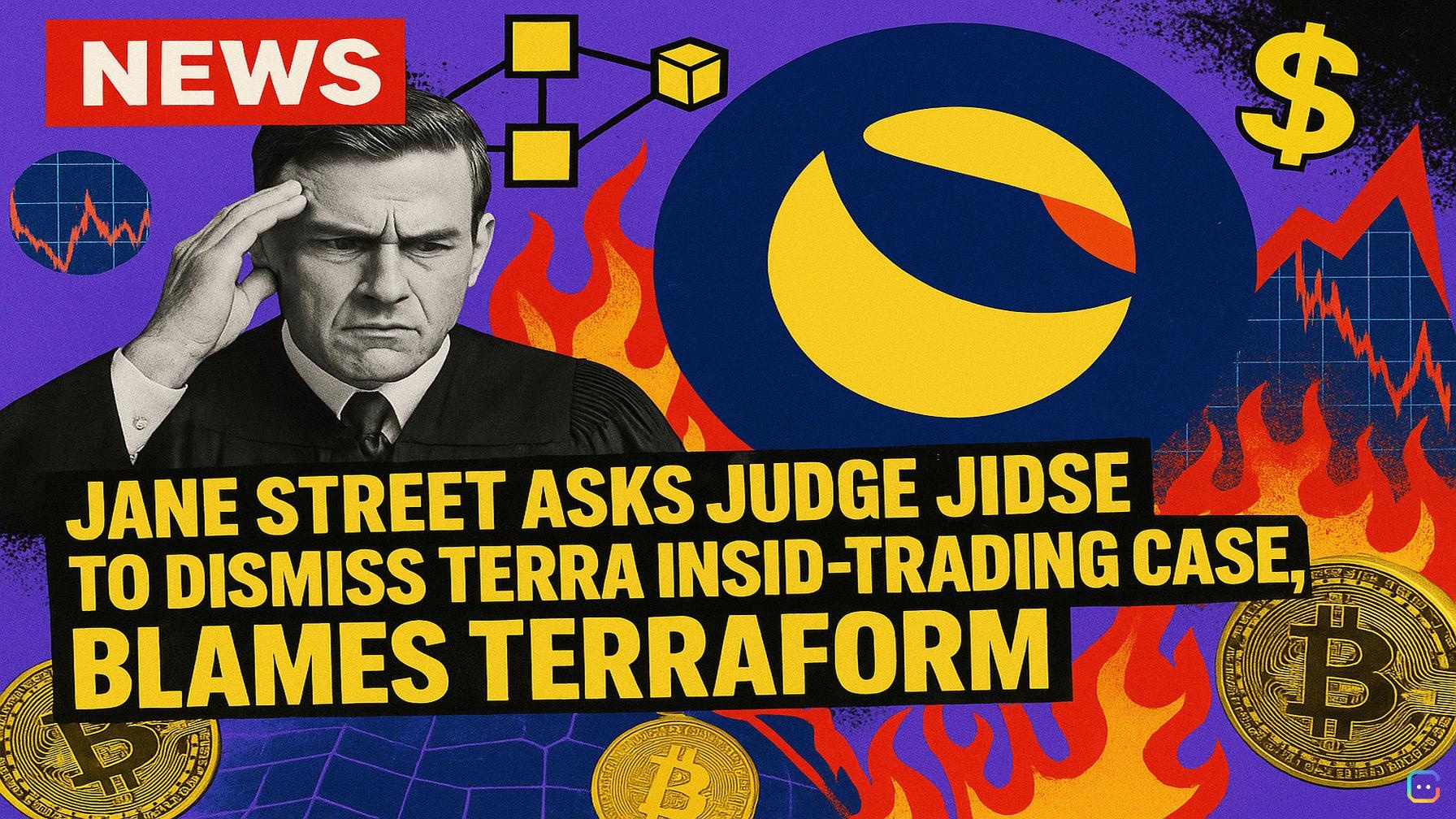
Jane Street asks judge to toss Terra insider-trading suit, argues case should be closed for good
Jane Street has asked a federal judge in Manhattan to throw out a lawsuit accusing the trading firm and several employees of insider trading tied to the 2022 collapse of TerraUSD (UST), filing a motion to dismiss “with prejudice” in the Southern District of New York. If granted, the dismissal would bar Terraform Labs’ bankruptcy estate from re-filing the claim.
In court papers shared with crypto.news, Jane Street and the named employees say the allegations brought by court-appointed bankruptcy administrator Todd Snyder fail to meet legal standards and amount to an attempt to shift blame — and liability — for a collapse that the defendants say was caused by Terraform itself. “This case is an attempt by the estate of Terraform Labs to extract cash from Jane Street to foot the bill for a fraud that Terraform itself perpetrated on the market,” the filing states.
Background and the core allegation
The suit, filed in February by Snyder, alleges Jane Street traded on confidential information in the run-up to UST’s meltdown in May 2022 — an event that wiped roughly $40 billion from crypto market value and sparked broad contagion across the industry. The complaint points to alleged information flows between Terraform insiders and Jane Street traders, including a former Terraform intern, Bryce Pratt, who later joined Jane Street and purportedly maintained communication channels with former colleagues. Group chats involving Terraform co-founder Do Kwon are also cited as possible conduits for non-public information.
A focal moment in the complaint is May 7, 2022: Terraform withdrew 150 million UST from a key Curve liquidity pool, and minutes later a wallet linked to Jane Street withdrew 85 million UST from the same pool. Plaintiff Snyder says that sequence accelerated selling pressure, helped break UST’s dollar peg, and allowed Jane Street to unwind large UST positions and build trades that profited from the ensuing collapse. “Jane Street abused market relationships to rig the market in its favor during one of the most consequential events in crypto history,” Snyder said when the suit was filed.
Jane Street’s rebuttal
Jane Street’s motion argues the timeline and trading activity cited by the estate don’t prove access to material non-public information. The firm notes that Terraform’s move to a new liquidity pool had been publicly announced weeks earlier, that there was no market reaction to that announcement at the time, and that the complaint offers “no plausible explanation” for why the transition would affect UST’s value.
The defendants point to trading records showing large positions were built only after wider market concerns about UST had already surfaced, saying activity on May 7–8 — including asset sales and short positions — does not, by itself, demonstrate use of confidential information. The firm has previously called the lawsuit a “desperate” effort to extract money and described the claims as “baseless, opportunistic.”
Legal defenses and jurisdictional challenges
Jane Street also leans on broader legal defenses. The filing notes Terraform’s own fraud has been prosecuted and punished: Do Kwon pleaded guilty to conspiracy and wire fraud and is serving a 15-year sentence, and a jury previously found Kwon and Terraform liable for securities fraud. The filing quotes Kwon as admitting he was “alone responsible for everyone’s pain.”
The motion invokes the Wagoner rule — a legal doctrine that can bar a bankruptcy estate from suing third parties for losses resulting from its own misconduct — arguing the estate cannot shift responsibility for Terraform’s fraud onto other market participants. The defendants further raise questions about whether the disputed trades occurred in the United States, challenging the court’s jurisdiction over the claims.
What’s next
Jane Street is asking the court for a full dismissal with prejudice. If the judge grants the motion, the estate would be prevented from relitigating the matter in that forum; if denied, the case would proceed to discovery and further litigation. The filing marks the latest chapter in an ongoing legal fight over one of crypto’s most consequential crashes.
Read more AI-generated news on: undefined/news