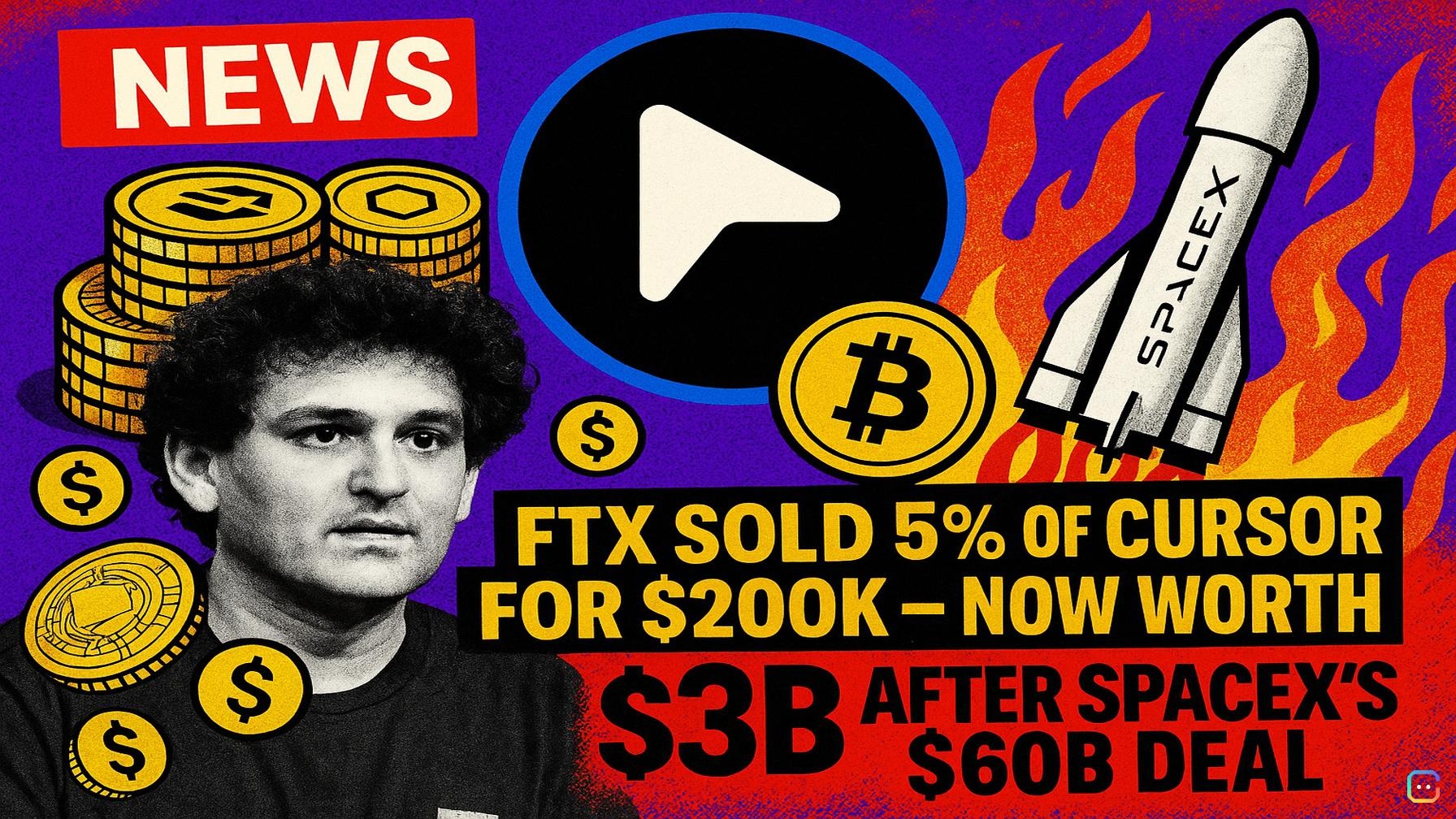
FTX’s bankruptcy estate appears to have traded a potential multibillion-dollar windfall for a $200,000 liquidation sale.
What happened
- In April 2023 the FTX bankruptcy estate sold a 5% stake in Cursor — the product of Anysphere, which Alameda Research had originally invested in the year before — for $200,000. That sale mirrored Alameda’s initial April 2022 outlay.
- The sale has returned to the spotlight after reports that SpaceX secured rights to acquire Cursor at a $60 billion valuation. At that price, a 5% stake would be worth roughly $3 billion — a gulf of nearly four orders of magnitude compared with the $200,000 the estate recorded during asset liquidation.
- SpaceX’s deal reportedly includes a potential $10 billion breakup fee if the acquisition does not proceed, underscoring how steep Cursor’s valuation jump has been.
Why it matters
- The Cursor sale is now cited as an example of how early post-collapse asset sales by the FTX estate may have foregone enormous upside. After FTX and Alameda collapsed, the estate moved quickly to liquidate many holdings to repay creditors — a process that critics say prioritized speed and certainty over capturing future gains.
- Financial research platform Bull Theory estimated that assets sold early by the estate could, if held through recent market cycles, be worth about $114 billion today. Its list of “missed” winners includes Anthropic, SpaceX, Solana, Robinhood, Genesis Digital, and Cursor. Bull Theory summed up the paradox: “SBF was a genius at picking generational winners and a criminal at managing their money.” The platform also noted the estate ultimately recovered roughly $18 billion for users.
Reactions and context
- Sam Bankman-Fried, now serving a 25-year federal sentence after convictions for fraud and conspiracy, has publicly criticized the bankruptcy proceedings from prison. He has claimed the bankruptcy was mishandled, writing earlier this year that “FTX was never bankrupt. I never filed for it,” and alleging lawyers “filed a bogus bankruptcy so they could pilfer it for money.”
- Under the estate’s restructuring plan, creditors have received repayments in dollar terms — including claim values plus interest — but some former users and observers argue those payments excluded the upside that retained venture and crypto holdings might have generated.
Bottom line
The Cursor episode crystallizes a larger tension in the FTX fallout: the trade-off between quickly converting assets to satisfy creditors and the potential cost of selling early into a market that later revalues those assets dramatically. Whether the estate’s approach can be defended on legal or fiduciary grounds will continue to be a focal point for creditors, analysts, and critics as more valuations and deal terms come into public view.
Read more AI-generated news on: undefined/news