Aave leads industry rescue as $292M KelpDAO exploit rattles DeFi
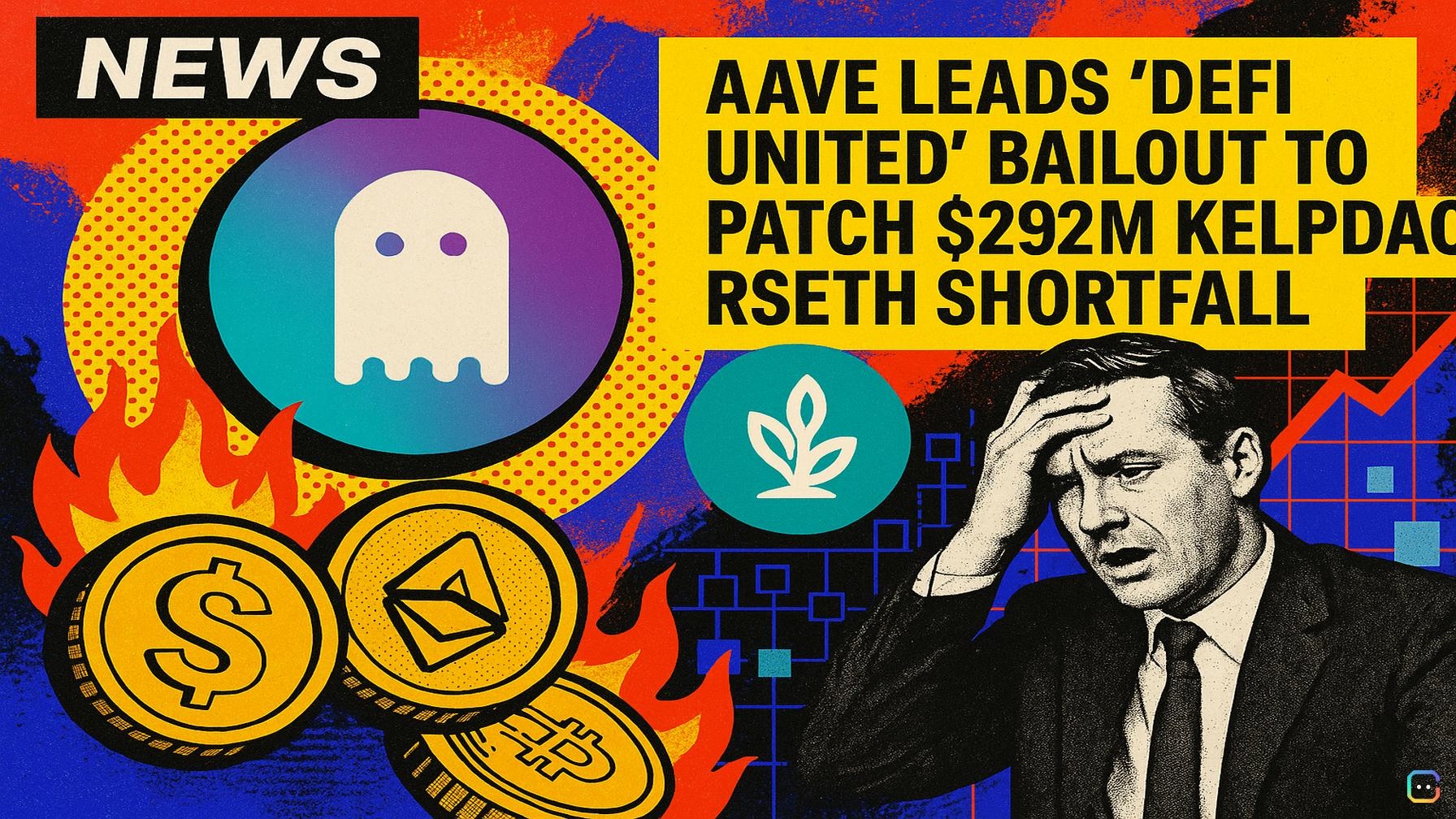
Aave and a coalition of major crypto firms have launched a coordinated recovery effort to shore up DeFi markets after a $292 million exploit exposed a shortfall in collateral backing. The initiative, dubbed “DeFi United” and spearheaded by Aave service providers, is focused on recapitalizing rsETH — a yield-bearing ether derivative at the center of the attack — to prevent forced liquidations and broader contagion across lending markets.
Who’s stepping up
Aave said on X that several participants have already signaled support. Early commitments include:
- Lido Labs Foundation: a proposal to allocate up to 2,500 stETH (about $5.7 million) into a dedicated relief vehicle to reduce the rsETH shortfall.
- EtherFi: proposed contributing 5,000 ETH to “protect users and prevent bad debt” across DeFi.
- Stani Kulechov (Aave founder): committed 5,000 ETH and emphasized Aave’s priority to resolve the situation quickly and normalize market conditions.
Aave said more commitments will be announced as they are formalized.
What happened
The exploit originated in KelpDAO’s integration with LayerZero. An attacker exploited the bridge’s messaging system to mint roughly 116,500 unbacked rsETH. Rather than dump the tokens, the attacker deposited nearly 90,000 rsETH into Aave as collateral and borrowed about $190 million in ETH and other assets across Ethereum and Arbitrum.
The result: impaired collateral on Aave triggered a run on deposits, with Aave’s total value locked plunging by about $10 billion. Aave’s incident report estimates the shortfall at more than 112,000 rsETH.
Containment and recovery challenges
Some early containment steps have been taken. Arbitrum’s security council froze 30,766 ETH tied to the exploit (roughly $71 million at the time). But much of the stolen proceeds were bridged and converted into bitcoin via Thorchain, complicating recovery efforts.
Rather than attempting a full clawback, the current DeFi United strategy emphasizes system stabilization: recapitalize rsETH backing, reduce the risk of cascading liquidations and limit bad debt across lending protocols.
Why it matters
The coordinated bailout-style approach signals growing willingness among major DeFi actors to pool resources to protect users and market integrity when smart-contract failures or bridge exploits threaten the ecosystem. For Aave — one of DeFi’s largest lenders — restoring confidence in collateral quality is critical to preventing further liquidity drain and restoring normal market functioning.
Aave and its partners will continue to disclose formalized commitments as DeFi United rolls out.
Read more AI-generated news on: undefined/news