Ethereum is gearing up for a big year in 2026, building on two major 2025 upgrades that already boosted performance for layer‑2s. Here’s a clearer look at what’s coming, why it matters, and how the market is reacting.
What’s already done
- 2025 saw two protocol upgrades: Pectra (May) and Fusaka (December). These changes increased data availability and lowered node costs, improving throughput and scalability—particularly for layer‑2 solutions.
What’s coming in 2026
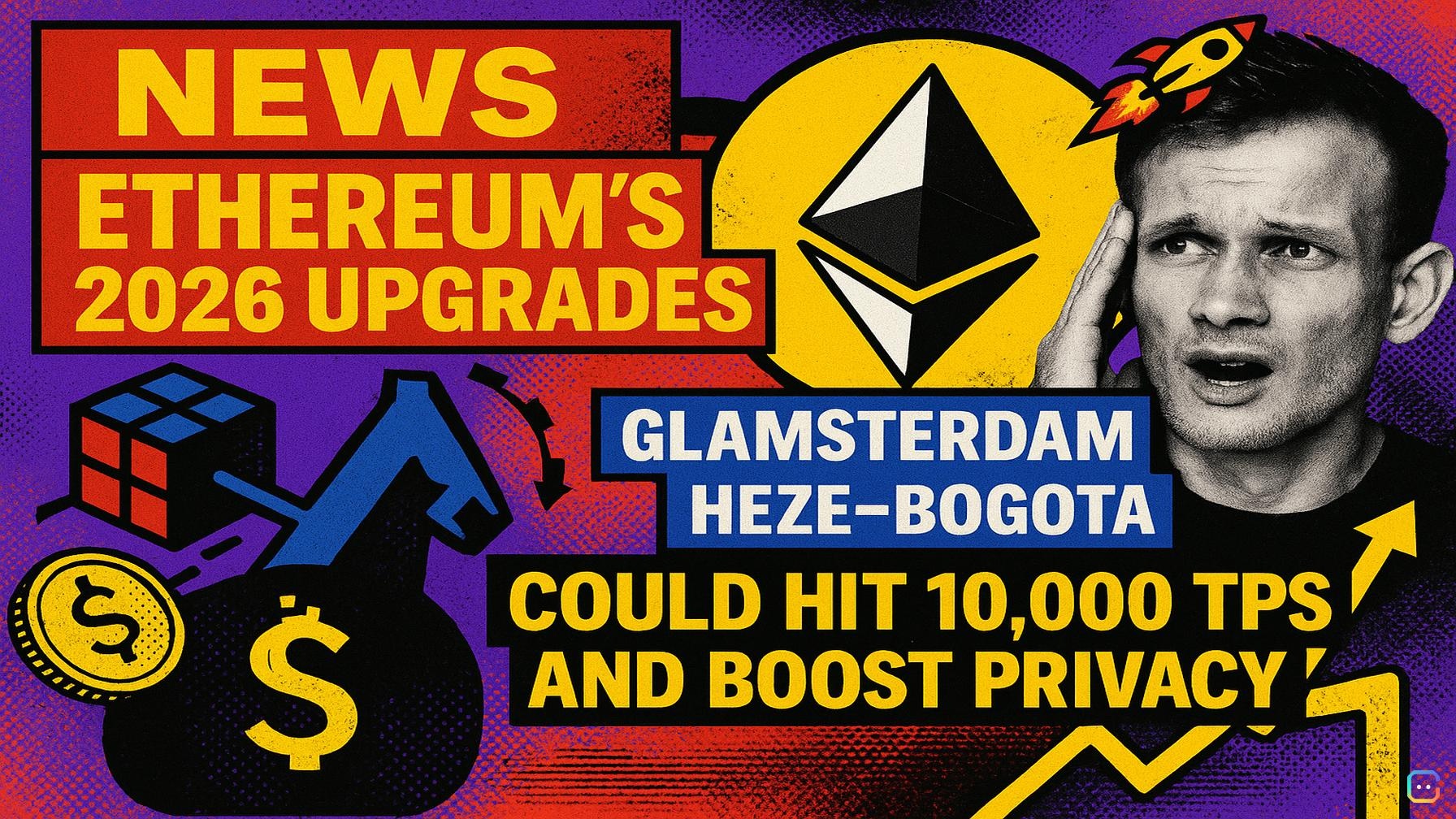
- Glamsterdam fork (target: mid‑2026): This is the headline scaling upgrade. Key features reported:
- Parallel transaction processing: Ethereum will be able to process multiple transaction streams simultaneously rather than sequentially, reducing bottlenecks.
- Big gas‑limit increase: Estimates indicate the per‑block gas limit could jump from ~60 million to 200 million (with potential further rises later in the year), which would allow many more transactions per block (source: YCharts).
- Shift toward zero‑knowledge (ZK) validation for validators: Validators are expected to rely more on ZK proofs instead of reprocessing full transaction data, trimming validator workload and lowering validation costs (source: Token Terminal).
- Performance projection: With these changes, network throughput could rise from roughly 21 transactions per second today to a projected ~10,000 TPS.
- Heze‑Bogota fork (target: late‑2026): This upgrade focuses on privacy, censorship resistance and decentralization.
- Objectives include reducing dependence on centralized infrastructure so no single party can easily block transactions, improving privacy features, and making Ethereum more permissionless—important in an environment of growing regulatory scrutiny.
Why it matters
- Combined, the two 2026 upgrades target both scalability (speed, throughput, lower costs) and fundamental network resilience (privacy and censorship resistance). If realized as planned, they would strengthen Ethereum’s competitiveness as demand for on‑chain activity grows.
Market context and price action
- ETH has been trading below $3,000, generally around $2,800–$2,900, with $3,000 as near‑term resistance (source: TradingView).
- The “Future Grand Trend” indicator referenced by analysts suggests a bullish finish to 2025 and a strong start to 2026—potentially closing the year above $3,000, trading in the $3,200–$3,400 range, before a likely retracement in mid‑January.
- Caveat: persistent bearish pressure across crypto could cap gains; a broader market recovery may be required for the most optimistic scenarios to play out.
Bottom line
Ethereum’s roadmap for 2026 emphasizes both scaling and privacy. Glamsterdam aims to dramatically boost capacity and reduce validator costs through parallel processing and ZK validation, while Heze‑Bogota seeks to harden privacy and censorship resistance. Together, these upgrades could materially change Ethereum’s performance and decentralization profile—though timelines, implementations and broader market conditions will ultimately determine outcomes.
Disclaimer: This summary is informational and not investment advice. Trading cryptocurrencies is high risk—do your own research before making decisions. © 2025 AMBCrypto.
Read more AI-generated news on: undefined/news