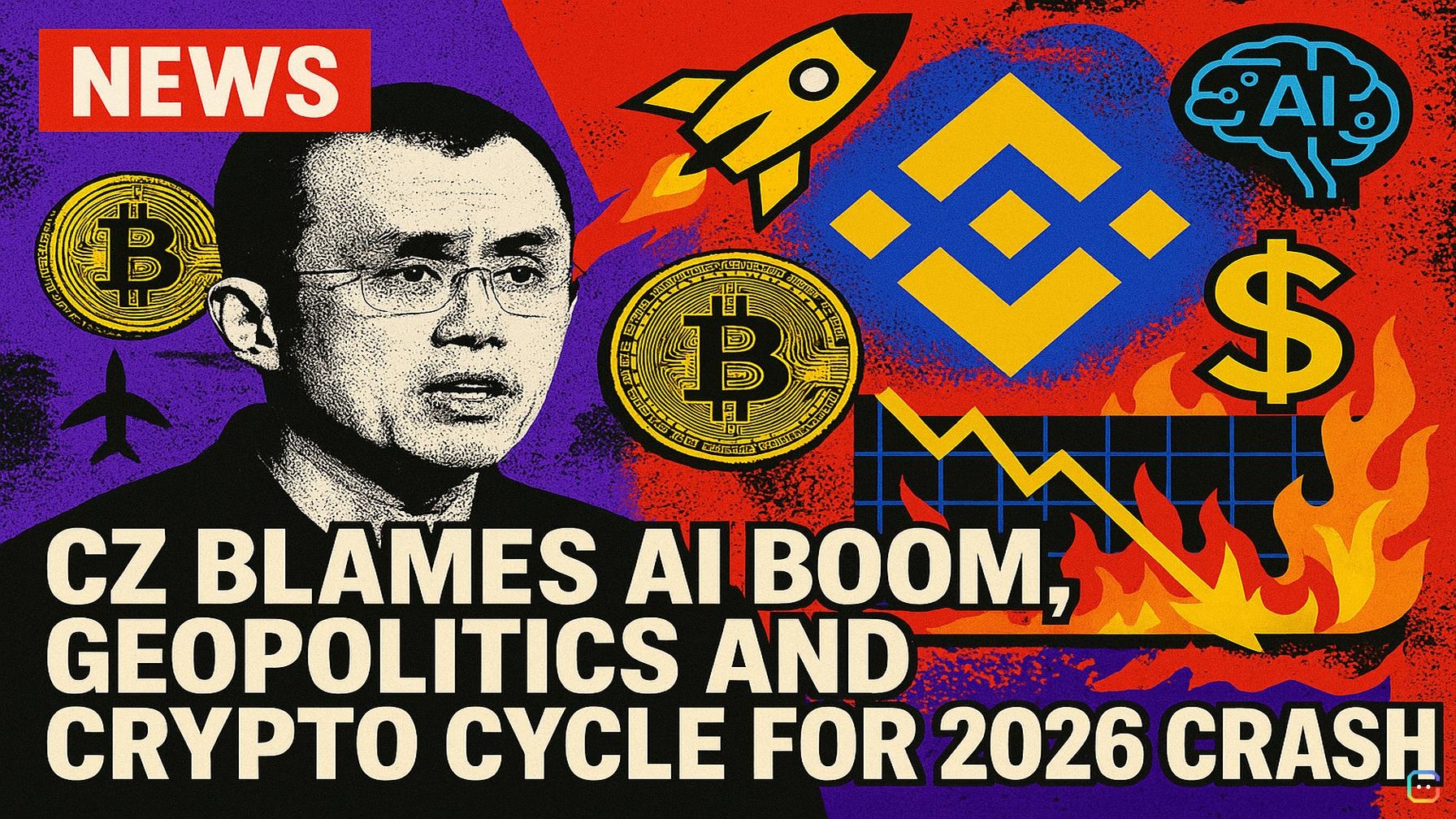
Headline: CZ: AI boom, geopolitical tension and the classic crypto cycle all helped crush the 2026 market
Binance founder Changpeng “CZ” Zhao says there’s no single smoking gun behind crypto’s rough start to 2026. In a CoinDesk interview, CZ pointed to a mix of forces — a wave of capital chasing artificial intelligence, heightened global tensions, and the industry’s own four‑year boom‑and‑bust rhythm — as drivers of the slump.
What happened to prices
- Bitcoin plunged from an October 2025 peak above $126,000 to trade near $60,000 in mid‑2026.
- It began 2026 around $89,000, briefly topped $96,000, then slid toward the current level. That drop — more than a 50% retreat from the 2025 high — has reignited debate over whether markets are simply following an established cycle or entering a new regime.
Why CZ thinks the pullback occurred
- Capital rotation into AI: Investors have poured money into AI infrastructure, chips, cloud computing and robotics, siphoning some “hot money” from crypto. CZ described that flow as a temporary rotation rather than a permanent rejection of digital assets.
- Geopolitical tension: Rising global friction has pushed some investors to reduce risk, weighing on crypto demand.
- The four‑year crypto cycle: Bitcoin’s history of halving‑linked booms and busts, liquidity swings and behavioral patterns may be at work again — though analysts remain split on whether the old cycle still fully applies given market evolution.
Attention and retail demand
Market attention matters for crypto rallies, and search interest in the space slipped to a one‑year low even as Bitcoin remained well above the 2022 bottom. With AI stocks dominating headlines and investor focus, retail inflows that often fuel crypto upswings have been harder to come by.
A changed market structure
CZ and others note that institutional flows have altered Bitcoin’s dynamics: spot ETFs, corporate treasuries and derivatives now play a larger role than in previous cycles. That makes interpreting current drawdowns — and predicting recoveries — more complex.
Policy, prediction markets and longer‑term view
CZ called U.S. policy important but described bills like the CLARITY Act as tactical steps that could help bring activity back to the U.S. by clarifying rules. He also promoted prediction markets for their price‑discovery and liquidity benefits, and praised activity in the BNB Chain’s prediction‑market sector — citing Predict.fun’s acquisition of Probable as a move to combine liquidity and talent.
Still, CZ remains broadly optimistic: “Over the long run, the industry will develop,” he said, noting growing demand for financial technology and digital transactions. He’s previously argued that countries slow to adopt blockchain and AI risk falling behind economically. In his view, the 2026 slump reflects several pressures converging at once — a painful reset, but not a verdict on crypto’s long‑term potential.
Read more AI-generated news on: undefined/news