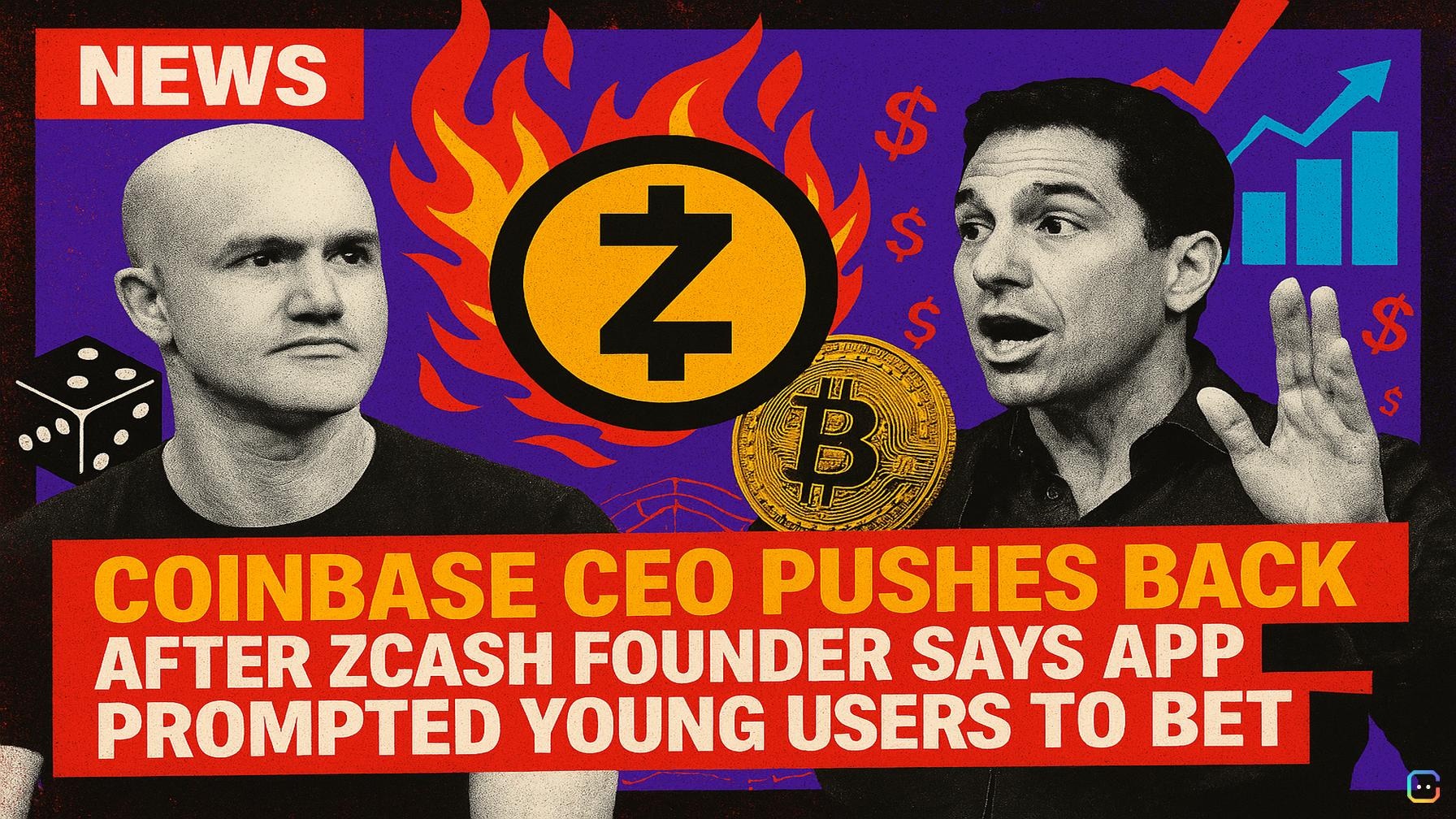
Coinbase CEO Brian Armstrong pushed back this week after Zcash founder Zooko Wilcox publicly criticized the exchange for allegedly prompting a young, vulnerable user to place bets inside the Coinbase app.
The spark: Zooko’s post on X
- Zooko said he had spoken with a young, financially vulnerable Coinbase user who reported in-app prompts encouraging bets on sports and Bitcoin’s price. He called the situation “shameful” and used the example to question how big crypto apps promote prediction markets and other betting-style products to inexperienced users.
Armstrong’s response: choice, but with caveats
- Armstrong defended users’ freedom to use their money as they wish — “I’m pro-freedom. Consenting adults should be able to do what they want with their own money” — and argued there isn’t a perfect line between investing and gambling.
- At the same time, he accepted part of Zooko’s concern: “It does not feel right to aggressively promote high‑risk products to unsophisticated users.” He emphasized the difference between making a product available and making it the primary focus of an app.
Why this matters: Coinbase’s changing product mix
- Coinbase has been expanding well beyond spot crypto trading, moving into areas such as prediction markets and pre‑IPO perpetual futures that blend crypto, stocks and derivatives within one account. That strategy gives users more trading options but raises questions about how risk is presented inside a simple mobile interface.
- Coinbase’s sports prediction markets are offered through Coinbase Financial Markets, a registered futures commission merchant. The product page warns that prediction contracts are high risk and can result in the loss of the full investment.
Regulatory backdrop: betting vs. derivatives
- Sports event contracts are a hot legal issue in the U.S. Kentucky sued exchanges including Kalshi and Polymarket, and alleged partners tied to Coinbase, Robinhood and Webull, arguing those products amounted to sports wagering under state law.
- The Commodity Futures Trading Commission has taken the opposite view, saying Kalshi and Polymarket fall under federal oversight as designated contract markets. Former CFTC Chair Gary Gensler filed that sports prediction contracts do not qualify as swaps under U.S. derivatives law, adding complexity to the legal debate.
What Coinbase might do next
- Armstrong suggested practical fixes: clearer disclosures, AI-driven financial literacy tools, and more granular onboarding settings so users can enable or disable product categories. That approach aims to preserve access while reducing the risk that young or inexperienced users are exposed to gambling-style prompts.
Bottom line
- The exchange’s product diversification — from coins to derivatives and event contracts — is forcing a conversation about where to draw the line between user choice and platform responsibility. For Coinbase, the central question is not only whether users can access these markets, but how prominently they’re presented and what safeguards should be in place before trades are executed.
Read more AI-generated news on: undefined/news