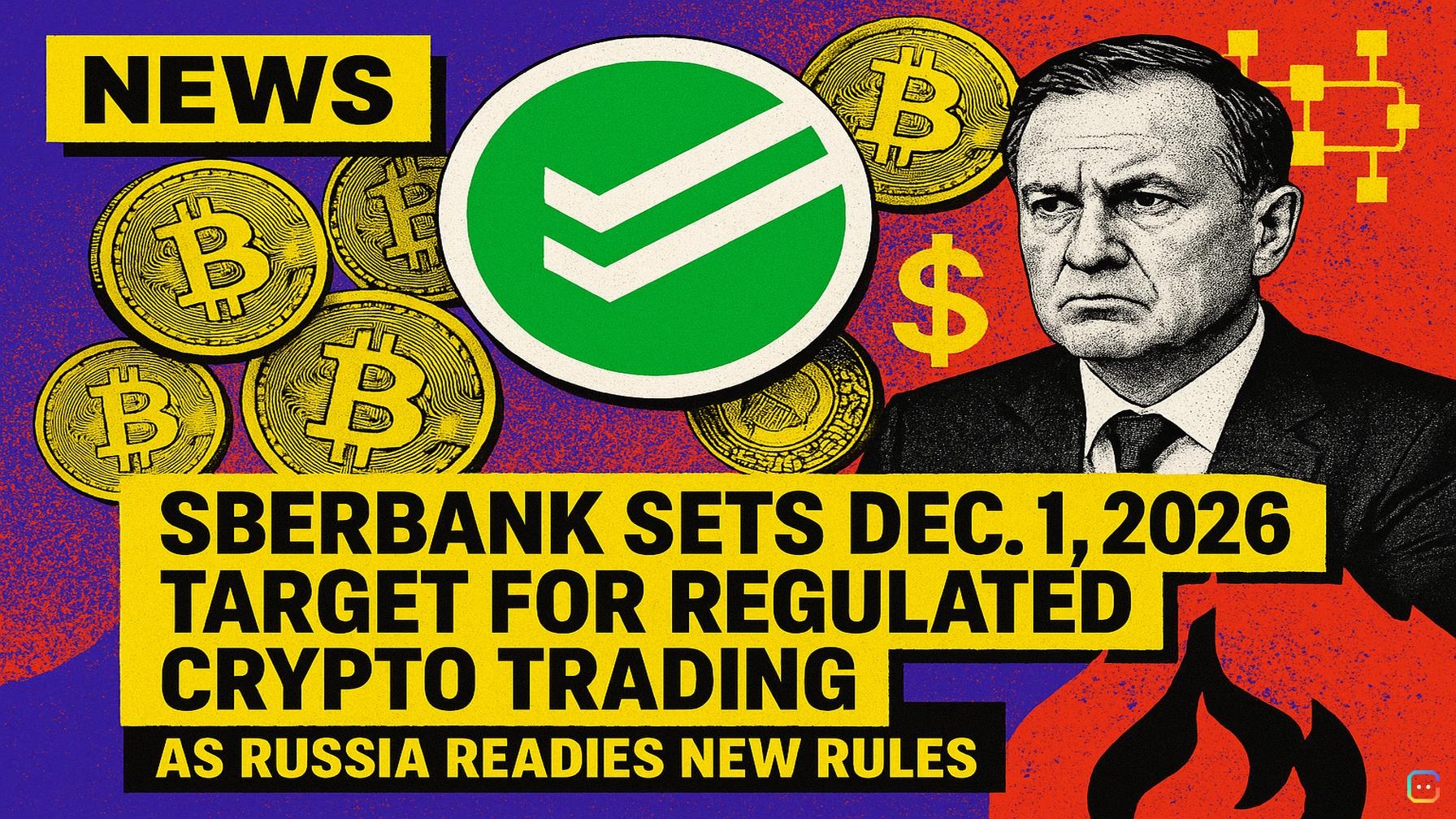
Headline: Sberbank targets Dec. 1, 2026 launch for regulated crypto trading and digital depository as Russia’s new rules loom
Sberbank, Russia’s largest lender, has set a firm deadline — Dec. 1, 2026 — to roll out a cryptocurrency trading infrastructure and a digital depository designed to support regulated trading, custody and settlement for eligible clients. The move comes as Russia finalizes a broad regulatory framework for digital assets that takes effect Sept. 1, 2026 and gives market players until July 1, 2027 to secure licences and comply.
What Sberbank is building
- The bank’s planned digital depository will record customers’ crypto ownership and handle many transactions off public blockchains, while Sberbank-operated wallets will manage deposits, withdrawals and transfers, Interfax reports.
- Alexander Vedyakhin, Sberbank’s first deputy chairman, said the bank “plans to implement the necessary infrastructure and launch the digital depository by Dec. 1, 2026.”
- Sber has not yet published which cryptocurrencies it will list, nor disclosed fees, customer eligibility rules or withdrawal limits — items likely to depend on final regulatory guidance.
Regulatory backdrop and investor rules
- Russia’s new framework becomes effective Sept. 1, 2026. The Bank of Russia will supervise the market, set custody and accounting standards, and require separate approvals for new crypto exchanges and digital repositories.
- Under the draft rules, investors will be split into qualified and non‑qualified categories:
- Non‑qualified investors must pass a knowledge test and will be capped at buying 300,000 rubles of crypto per year through a single intermediary. Publicly available assets will be limited to those meeting liquidity and market-size thresholds.
- Qualified investors also face testing but can access a wider range of assets without the same annual limit.
- Banks, brokers and asset managers may provide crypto services under existing licences with added crypto requirements. Russia will continue to ban crypto payments for domestic goods and services, though approved cross‑border settlements in crypto will be permitted. Residents may also be required to report certain foreign crypto holdings and transactions for tax purposes.
Sberbank’s track record and pilots
- Sber has been active in the regulated digital-asset space since joining the register of information system operators in 2022. It has issued digital financial assets and structured products tied to Bitcoin, Ethereum and crypto baskets.
- The bank has been preparing a crypto wallet and depository and has tested crypto-backed lending: in December 2025 it completed a pilot loan to Bitcoin miner Intelion Data, secured with mined crypto as collateral. Reuters later said Sberbank was exploring similar loans for corporate clients.
- In mid-2025 Sber reportedly proposed models to the central bank for custody of Russian customers’ crypto through regulated banking infrastructure.
Industry race ahead of licensing deadline
Other major Russian financial groups are lining up projects ahead of the July 2027 licensing cut-off. VTB and T-Bank have been reported developing digital depositories; Moscow Exchange is weighing regulated crypto operations; Alfa‑Bank has trialled limited crypto services and custody tools. The regulated market is expected to split duties among brokers (order processing), exchanges (trading venues) and digital repositories (recording customer rights and custody).
What’s next — and what to watch
- Sberbank must finish wallet, trading, accounting and custody systems and publish which assets it will support, fee schedules and customer access rules before opening the service.
- Final regulatory texts and guidance from the Bank of Russia will determine many practical details, including which assets qualify for public access and the exact licensing requirements for exchanges and repositories.
- Market observers will be watching whether Sber and other incumbents seek links to foreign exchanges, how custody standards are enforced, and whether crypto-backed corporate lending scales beyond pilot projects.
Bottom line: Sberbank’s Dec. 1 timeline places it squarely in the regulatory transition window. If it meets that target, the bank will be among the first major Russian financial institutions to offer a full suite of regulated crypto services under the new domestic regime.
Read more AI-generated news on: undefined/news