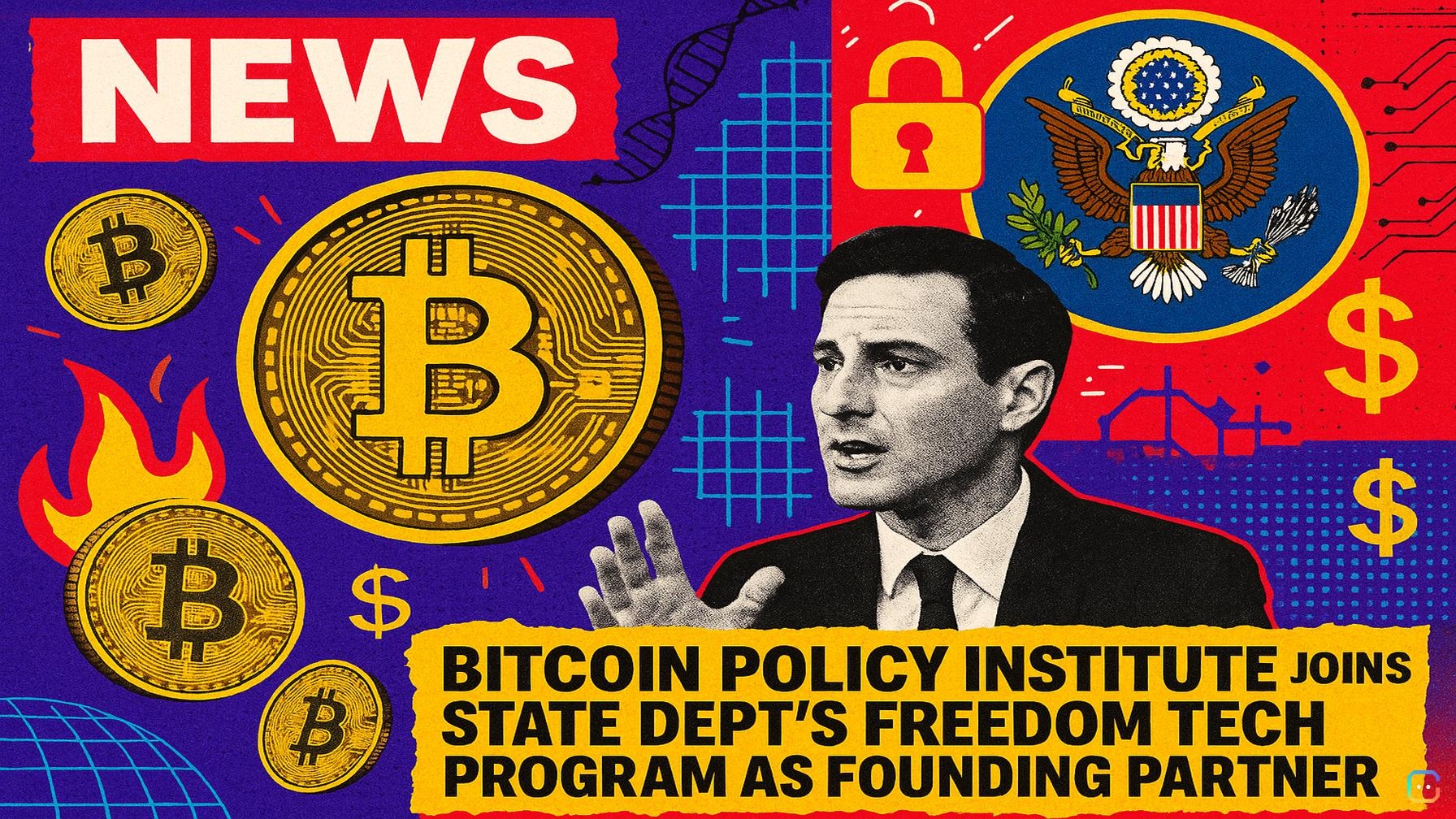
The Bitcoin Policy Institute (BPI) has signed on as a founding partner of the U.S. State Department’s new Freedom Tech Excellence Program (FTEP), joining Palantir Technologies, Anduril Industries and the Victims of Communism Memorial Foundation in a pilot designed to inject private-sector technical expertise into diplomatic work on digital freedom.
BPI announced the move in a July 24 post on X, saying its staff will be detailed to State Department projects that touch on online speech, privacy tools, surveillance defenses and responsible AI governance. The FTEP model places specialists into government for fixed, limited assignments while they remain formally attached to their home organizations — a way to boost technical capacity inside diplomatic teams without creating permanent hires.
What FTEP will actually cover — and where — remains broad by design. The State Department lists likely workstreams such as protecting online freedom of expression, countering unlawful surveillance and scams, expanding access to encryption and VPNs, promoting responsible AI governance, and improving child safety online. The announcement made clear FTEP is about digital-policy and technical help; it is not a Bitcoin reserve, payment system or crypto licensing project.
BPI framed the partnership as a chance to “work alongside State Department experts and defend digital freedoms around the world.” Details the parties have not released include how many BPI employees will participate, when placements start, which State Department offices or embassies will host them, and how projects will be allocated among the four founding partners. Those operational choices will determine whether deployments focus on policy research, tool development, training, or overseas programming.
Founded in 2021, the non-partisan, non-profit Bitcoin Policy Institute focuses on Bitcoin policy and related issues including national security, financial inclusion, energy and human rights. BPI has argued that strong encryption and open monetary rails can help journalists, dissidents and everyday users in countries with speech and financial restrictions. That expertise likely explains the group’s inclusion, but the partnership does not amount to State Department endorsement of Bitcoin in every FTEP project. BPI staff may advise on censorship-resistant systems, privacy tech or financial access — not run government crypto policy.
Context matters: BPI has been active in Washington advocacy around federal Bitcoin initiatives. It supported efforts to convert President Donald Trump’s March 6, 2025 executive order establishing a Strategic Bitcoin Reserve into statutory law. That order created a reserve built from Bitcoin forfeited through criminal or civil proceedings and directed studies on budget-neutral ways the U.S. might acquire additional BTC. At a BPI-organized event in March 2025, Senator Cynthia Lummis reintroduced the Bitcoin Act, which proposed the U.S. acquire one million BTC; that bill had not passed when FTEP was announced. Separately, federal agencies are still debating which department should legally control and custody any reserve — Treasury was named in the White House order, but Commerce and Justice have also been part of later discussions, according to reporting in July 2026.
Put plainly: FTEP gives BPI a seat at the table on foreign-policy talent exchanges tied to digital freedom — not authority over U.S. crypto policy or control of a federal Bitcoin reserve. The programme is structured around short-term, skills-based assignments intended to boost diplomatic capacity; partner employees typically return to their organizations with direct experience of government needs.
What to watch next: the State Department’s rollout should clarify how many experts each partner will supply, the embassies and bureaus involved, and which specific technologies and projects FTEP will field. Separately, BPI will continue its independent activities — its Freedom Tech DC summit is scheduled for September 22–23 in Washington, bringing together policymakers, investors, researchers and builders to discuss the intersections of money, speech and computing systems.
Read more AI-generated news on: undefined/news