Bitcoin mining’s power appetite surged again — and the energy mix is shifting with it.
Key findings (Cambridge preliminary data)
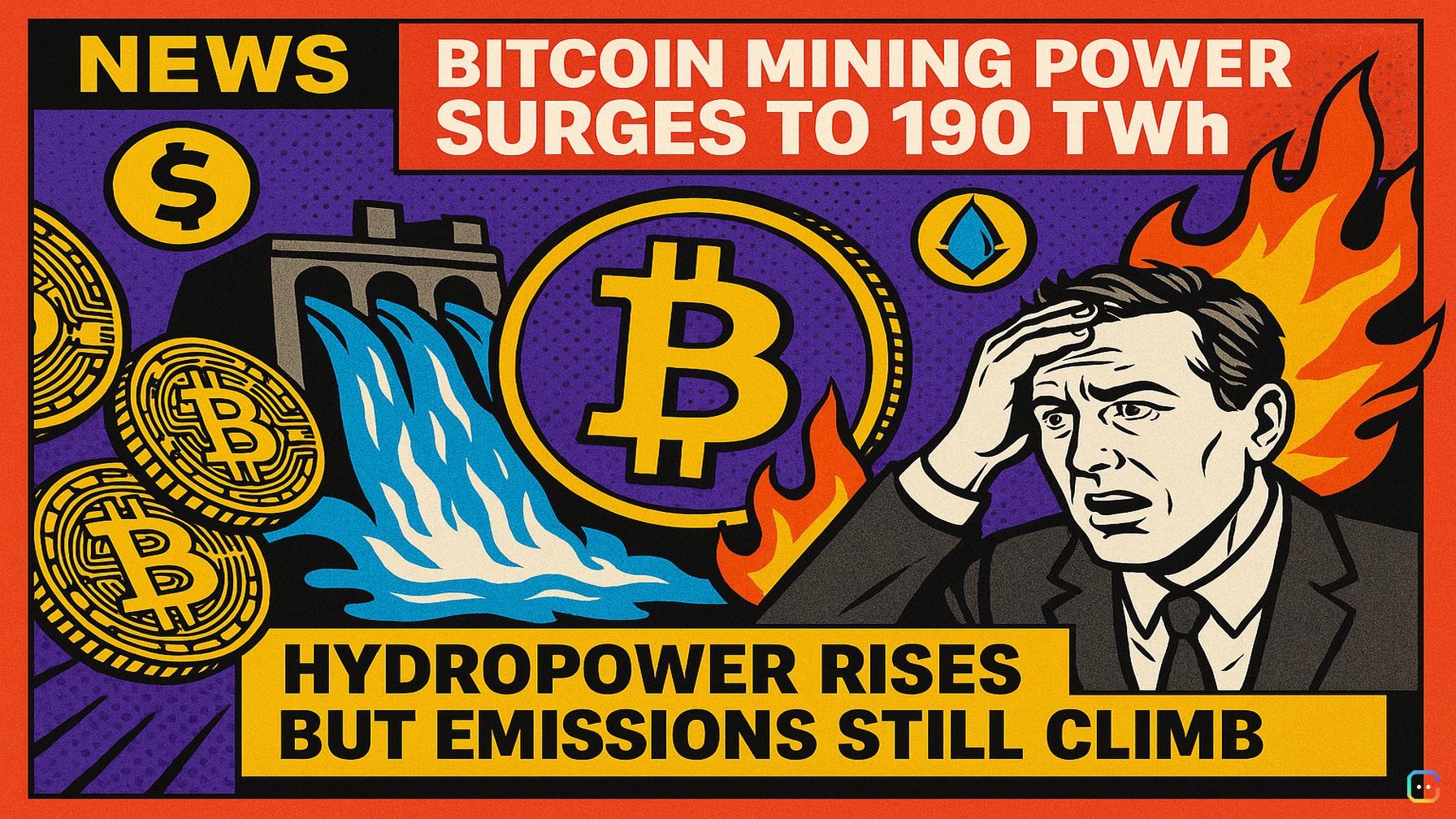
- Annualized electricity demand rose to about 190 TWh in December 2025, a 38% jump from ~138 TWh in June 2024. (Presented by Alexander Neumueller of the Cambridge Centre for Alternative Finance at the Energy Investors Forum in Dallas; reported by TheEnergyMag.)
- Low-carbon sources now make up 59.4% of the reported mining mix, up from 52.4% previously. Hydropower has overtaken natural gas as the largest single source of electricity for Bitcoin miners.
- Despite a cleaner mix, estimated greenhouse-gas emissions increased by roughly 20% — from ~40 million to ~48 million tonnes CO2-equivalent — because overall electricity consumption rose.
What changed and why it matters
- The network’s annualized power use climbed by about 52 TWh between the two measurement points. “Annualized” here means the electricity use that would occur over a year if the December 2025 rate persisted — it’s not a statement that miners consumed exactly 190 TWh in calendar 2025.
- Hydropower’s new top spot appears linked to better survey coverage in hydro-rich markets such as Ethiopia, where mining expanded around low-cost power from the Grand Ethiopian Renaissance Dam. Cambridge hasn’t published the full breakdown by source in the preliminary update.
- The 2025 Cambridge Digital Mining Industry Report (first edition) had found natural gas supplying 38.2% of surveyed miners’ electricity, renewables at 42.6% and nuclear at 9.8%, while coal fell to 8.9% (from 36.6% in 2022). The updated sample — covering slightly more than half of global Bitcoin hashrate — gives a larger window into the industry but could be revised after further checks.
Emissions and methodology caveats
- Emissions didn’t rise as fast as electricity use because miners reported a lower-carbon power mix, yet higher consumption still drove CO2e up to ~48 million tonnes.
- Results depend heavily on method and assumptions. Cambridge’s earlier survey-based estimate was ~39.8 million tonnes, while a location-based model produced ~69.6 million tonnes — a reminder that estimates vary with assumptions about sites, contracts, grid mixes and use of stranded or flared energy.
- Cambridge warns survey participation can skew geographic estimates: heavy U.S. response may have overstated the U.S. share, and improved coverage in hydro markets likely boosted hydropower’s reported share.
Miners diversify into AI and HPC
- The survey also probed whether mining operators are shifting power capacity into artificial intelligence and high-performance computing (HPC). About 10% of respondents have already allocated some capacity to AI/HPC; more than 40% of the rest are actively exploring it.
- Neumueller cautioned that exploration ≠ deployment: AI centers need costly networking, cooling and uptime guarantees that typical Bitcoin sites may lack. Miners can rapidly curtail BTC loads when prices spike; AI customers usually demand steady, reliable power.
- Still, nearly nine in ten respondents expect AI/HPC diversification to expand over the coming years. Publicly listed miners have already disclosed more than $70 billion in AI and HPC contracts. Example: TeraWulf reported $21 million in HPC hosting revenue in Q1 2026 versus under $13 million from mining.
Bottom line
Cambridge’s preliminary findings point to two simultaneous trends: Bitcoin mining is consuming more electricity overall, while a growing share of that power is reported as coming from hydropower and other low-carbon sources. Miners are also actively exploring (and in some cases already deploying) non-mining workloads like AI/HPC to stabilize revenues. Cambridge plans to publish the full second edition of its Digital Mining Industry Report with detailed breakdowns and methodology later in 2026.
Read more AI-generated news on: undefined/news