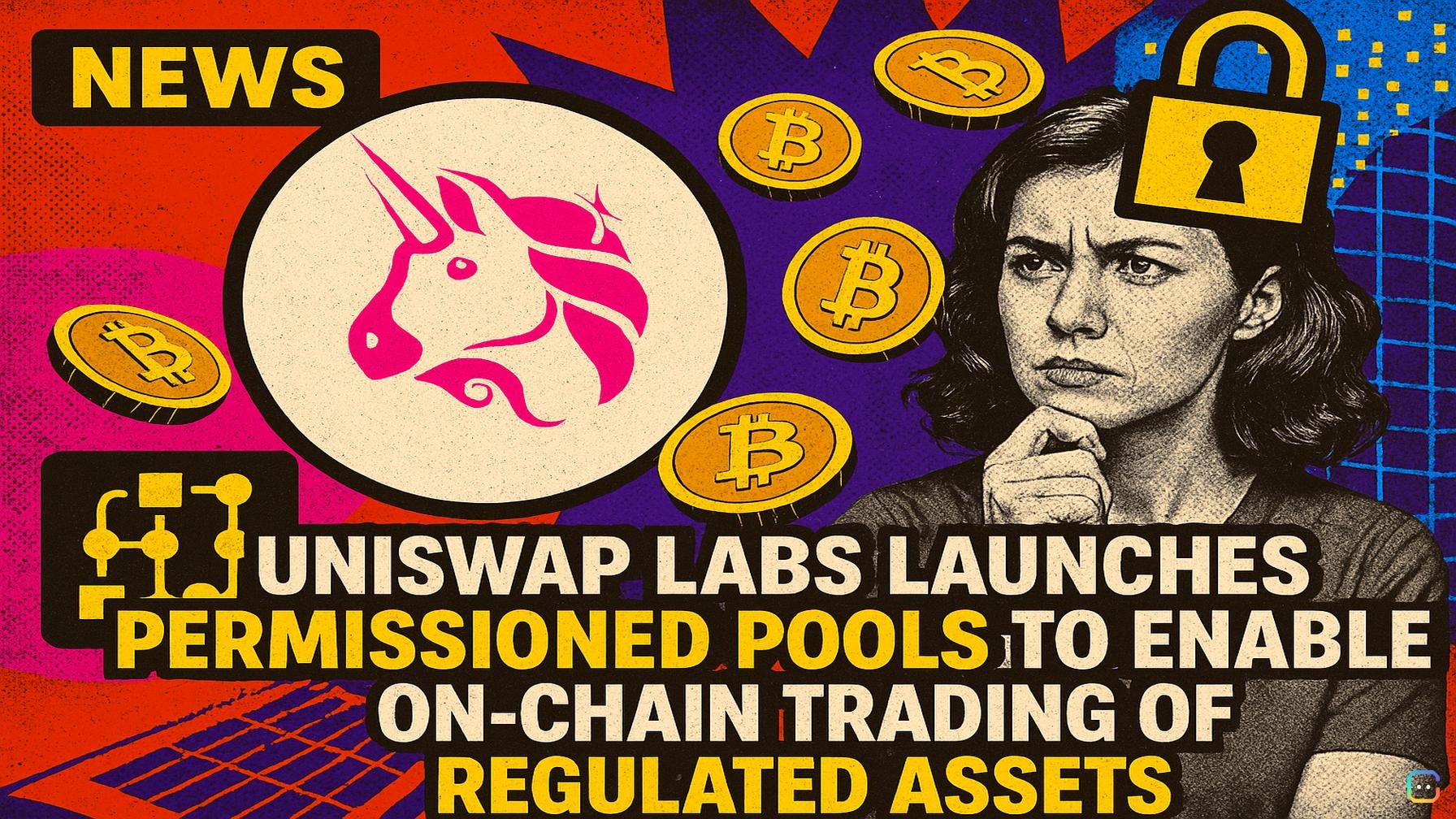
Uniswap Labs has rolled out Permissioned Pools on Uniswap v4, a new open-source standard that lets regulated, issuer-controlled assets trade onchain while enforcing compliance checks at the protocol level. Announced July 23, 2026, the feature introduces onchain access controls so tokenized funds, securities, equities and other restricted instruments can use automated market maker (AMM) liquidity without letting every wallet trade freely.
How it works
- Permissioned Pools use Uniswap v4 hooks to insert issuer-defined checks into pool smart contracts. Before any swap or before a wallet creates a liquidity-provider position, the pool consults an issuer-managed allowlist. If the wallet isn’t approved, the transaction is blocked.
- Uniswap says these checks run “at the protocol level, not on the frontend,” meaning the restriction is enforced inside the pool’s smart-contract logic rather than through user interfaces.
- The design also leverages v4 virtual accounting so exchanges and settlement happen while regulated assets remain inside a permissioned contract. Approved participants still interact with an AMM — liquidity providers supply capital and the pool’s code handles pricing under the issuer’s access rules.
Partners and standards
Uniswap worked with several industry players to develop the standard. Launch partners include:
- Superstate — an early design partner that helped shape support for tokenized equities and funds.
- Securitize — collaborated on compatibility for assets issued via Securitize’s DS Protocol.
- Dowgo — contributed an ERC-3643 integration (a token standard supporting identity and transfer controls) and plans to use Permissioned Pools once it receives DLT TSS authorization under the EU’s DLT Pilot Regime; Dowgo’s application is under review by France’s ACPR.
Permissioned Pools are opt-in
This rollout does not change Uniswap v4’s permissionless nature. Standard v4 pools remain open — developers can keep building and deploying without approval from Uniswap Labs. Permissioned Pools only apply when an issuer or developer explicitly deploys a restricted pool for a specific asset. That split lets regulated issuers access AMM liquidity without turning the broader protocol into a closed trading venue.
Context and market outlook
The launch follows Uniswap’s June update that added tokenized securities to its web app, wallet and API, enabling eligible users to access blockchain-linked products tied to companies such as Apple, Nvidia and Tesla. Uniswap warned those products may not represent direct ownership and could be subject to KYC, transfer and geographic limits; Permissioned Pools provide a way for issuers to encode such restrictions directly into trading infrastructure.
Uniswap cited industry estimates that tokenized assets could reach $11 trillion by 2030, though current figures are far smaller: about $34 billion in tokenized real-world assets as of May 2026, including roughly $1.55 billion in tokenized equities. Market participants and regulators remain focused on how tokenized securities preserve ownership records and shareholder rights — transfer agents and other intermediaries often control wallet allowlists and official ownership registries.
Regulatory backdrop
Regulators continue scrutinizing tokenized securities. The U.S. Securities and Exchange Commission delayed a proposed tokenized-stock exemption amid questions about investor protections and recordkeeping. Securitize CEO Carlos Domingo has emphasized that any framework should target “the right instruments.” Permissioned Pools address access and transfer controls at the smart-contract level, but issuers remain responsible for complying with securities laws and licensing requirements in their jurisdictions.
Why it matters
Permissioned Pools give regulated issuers a practical onchain route to AMM liquidity while preserving Uniswap’s permissionless core. By embedding issuer-controlled allowlists and compliance rules into pool contracts, Uniswap is carving out a model where real-world regulatory requirements can coexist with decentralized trading infrastructure — provided issuers and intermediaries meet their legal and recordkeeping obligations.
Read more AI-generated news on: undefined/news