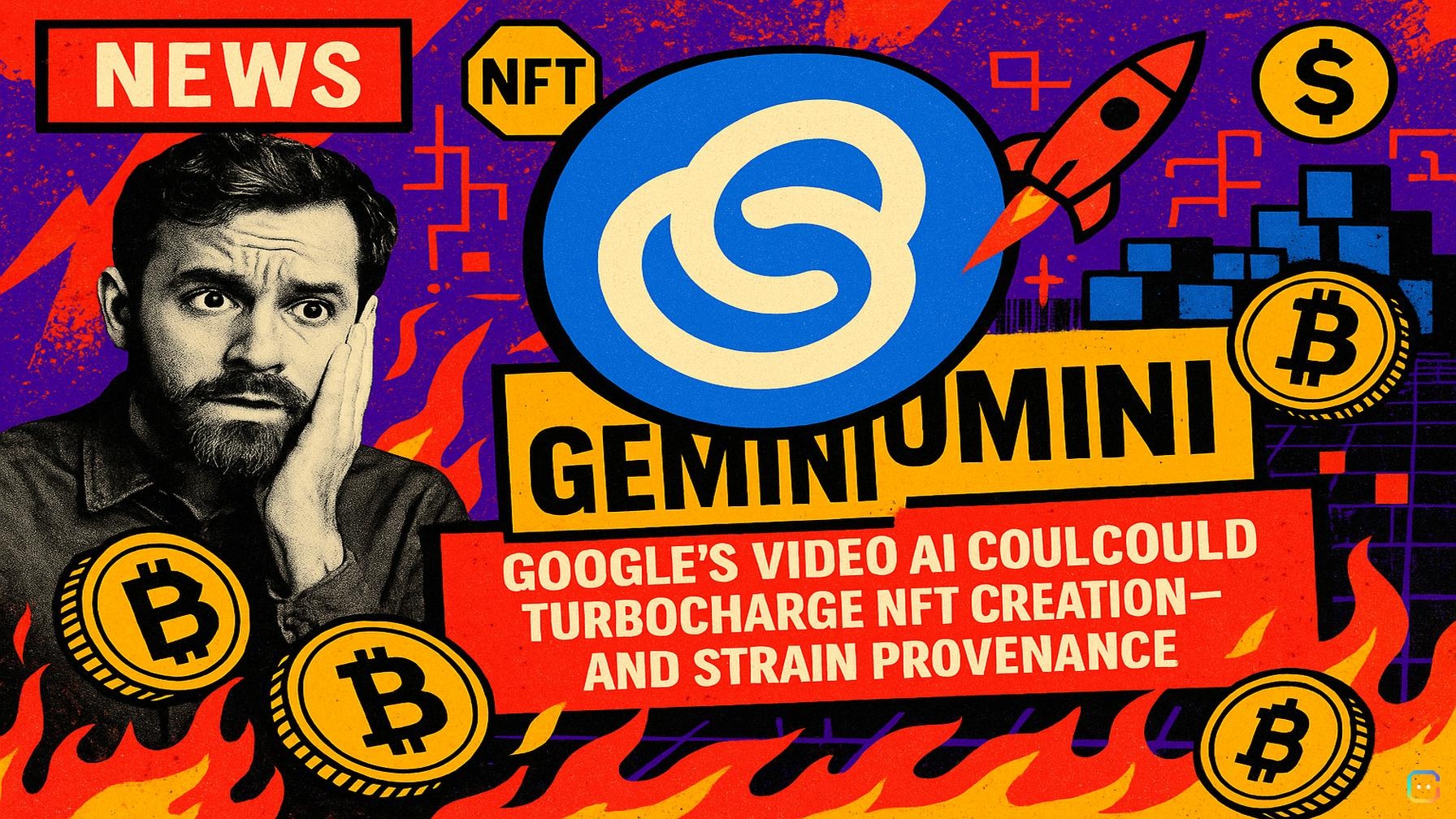
Google just pushed a major lever in the AI-media race. At Google I/O 2026 the company unveiled Gemini Omni — a multimodal generative model that stitches together its Gemini reasoning backbone with Google’s media engines (Veo, Nano Banana and Genie) to build and edit video from simple inputs.
Demis Hassabis, DeepMind’s CEO, introduced Omni as “our new model that can create anything from any input,” calling it “a step towards artificial general intelligence.” Google says the first public incarnation, Gemini Omni Flash, will be available through Flow — Google’s AI filmmaking platform — and Flow Music for AI-assisted music projects.
What Omni does
- Combines Gemini’s reasoning and world-model capabilities with Google’s generative media suite to create and edit videos with consistent characters, backgrounds and motion — a common weakness of many video AI tools.
- Supports conversational editing: users can direct broad, natural-language changes (e.g., “make this scene feel like a rainy street at dusk”) rather than specifying every technical detail.
- Demonstrations included a claymation-style explainer about protein folding and a selfie video that was edited conversationally to add new visual elements and alter the environment.
New Flow features
- Gemini Omni Flash will be integrated into Flow and Flow Music.
- Flow Agent: an AI assistant to brainstorm scenes, organize assets, recommend plot edits and batch-edit projects.
- Flow Tools: lets creators build custom editing workflows using natural-language prompts — no coding required.
Roots in Nano Banana and recent performance tests
Gemini Omni builds on Nano Banana, Google’s earlier image-editing model that helped drive Gemini’s app-store surge last September. Nano Banana gained traction for meme creation and conversational image edits and briefly helped Gemini overtake ChatGPT in downloads and search interest. In a recent Decrypt comparison, Nano Banana 2 outperformed OpenAI’s GPT Image 2 on anime-style illustration and spatial composition tests, while OpenAI’s model scored higher on photorealism and text rendering. Google appears to be extending many of Nano Banana’s editing strengths into video with Omni.
Why this matters for crypto and Web3
For crypto-native creators and marketplaces, Gemini Omni could be transformative:
- Creator tooling: fast, high-quality video generation and batch-editing could accelerate production of NFT drops, on-chain storytelling and in-game cinematics for metaverse projects.
- Tokenized provenance: as AI-native media proliferates, blockchain-based provenance and verification tools could become more important to certify origin, authorship and rights.
- Market disruption: lower friction for media production may flood marketplaces with AI-generated content, stressing curation, valuation and copyright systems.
- Risk vectors: more convincing deepfakes and manipulated video will raise moderation and regulatory questions, and increase demand for tamper-evident timestamping and on-chain attestations.
Google frames Omni as the long-term realization of Gemini’s multimodal ambitions. Hassabis said the team has been expanding Gemini into “a world model AI that can understand and simulate the world,” and that video is just the first frontier. Google did not immediately respond to Decrypt’s request for comment.
Bottom line: Gemini Omni promises a leap in AI-driven video creation and editing. For the crypto ecosystem, that’s both an opportunity — faster, cheaper content and new kinds of digital goods — and a challenge: provenance, moderation and monetization frameworks will need to keep pace.
Read more AI-generated news on: undefined/news