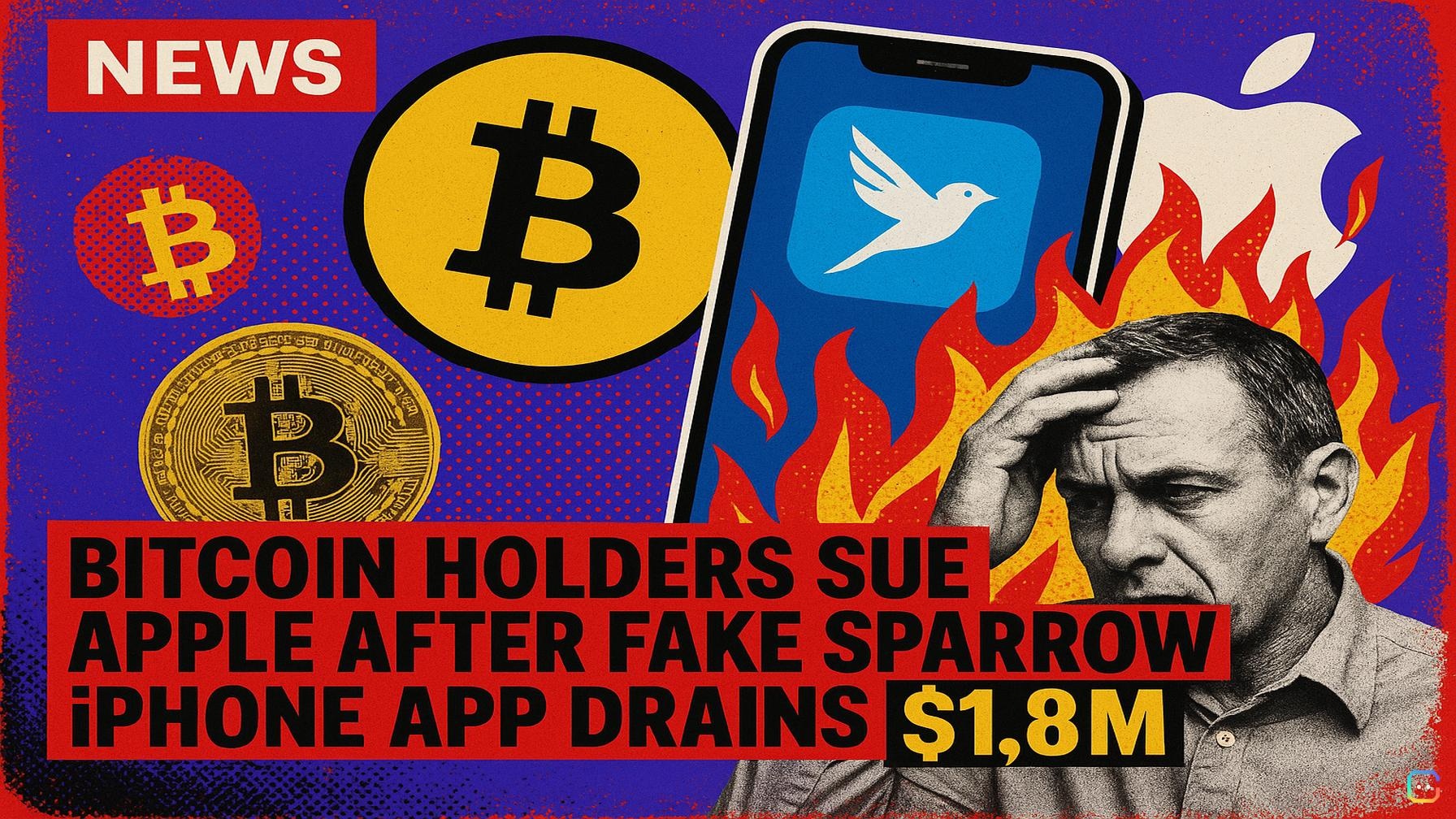
Three Bitcoin holders have sued Apple after a fake iPhone app posing as the popular Sparrow Wallet allegedly drained a combined $1.8 million in bitcoin.
The complaint, filed July 24 in the U.S. District Court for the Northern District of California, brings eight counts including fraud, negligent misrepresentation and strict products liability. According to the suit, each plaintiff entered their seed phrase into the counterfeit app — effectively surrendering control of their funds. The named losses: James Ramirez says he lost 7.4 BTC (about $875,000), Christopher Ellis alleges $840,000 in losses, and Jalen Delgado reports 1.05 BTC (roughly $120,000) stolen.
Sparrow Wallet is desktop-only (Windows, macOS and Linux) and has never shipped an iOS version, the filing notes, so any App Store listing under that name is an impersonation. Ramirez says he reported the fraudulent app to Apple on July 25, 2025 — the day his funds were taken — but the complaint alleges Apple did not contact him and that fake Sparrow listings were still live when the suit was filed. Ellis reportedly downloaded a Sparrow app from the App Store nine days after Ramirez’s loss.
The plaintiffs also accuse Apple of more than negligence: the filing alleges, on information and belief, that Apple ranked the fake app and placed it in curated cryptocurrency collections, “effectively recommending a fraudulent application to consumers alongside legitimate ones.”
Sparrow’s creator, Craig Raw — who holds the U.S. trademarks for the name — has been flagging copycat apps on Apple’s store since at least January 2024. He publicly warned that a scam version remained live weeks after being reported, and later told Apple he submitted an App Store listing whose sole purpose was to inform iOS users that Sparrow is desktop-only. Apple rejected that submission as “placeholder content” and temporarily flagged Raw’s developer account for “dishonest activity,” a decision he says was later overturned on appeal.
Apple declined to comment to TechCrunch about the lawsuit, instead pointing to its own ecosystem analysis that it says shows it rejected more than 371,000 malicious App Store submissions. The company also told TechCrunch that, at the time of its statement, there were no Sparrow Wallet copycats on the App Store.
One notable legal claim in the suit — count seven — asks the court to treat the App Store itself as a product placed into the stream of commerce, which would expose Apple to strict liability for failing to warn consumers. The complaint argues Apple’s opposite-position disclaimers are buried “deep within” lengthy click-through terms and therefore insufficient.
The case raises fresh questions about platform responsibility and curation: if an app store ranks or promotes software that turns out to be fraudulent, can the platform be held liable for the resulting losses? The court’s handling of this suit could set important precedents for app marketplaces and crypto security.
Read more AI-generated news on: undefined/news