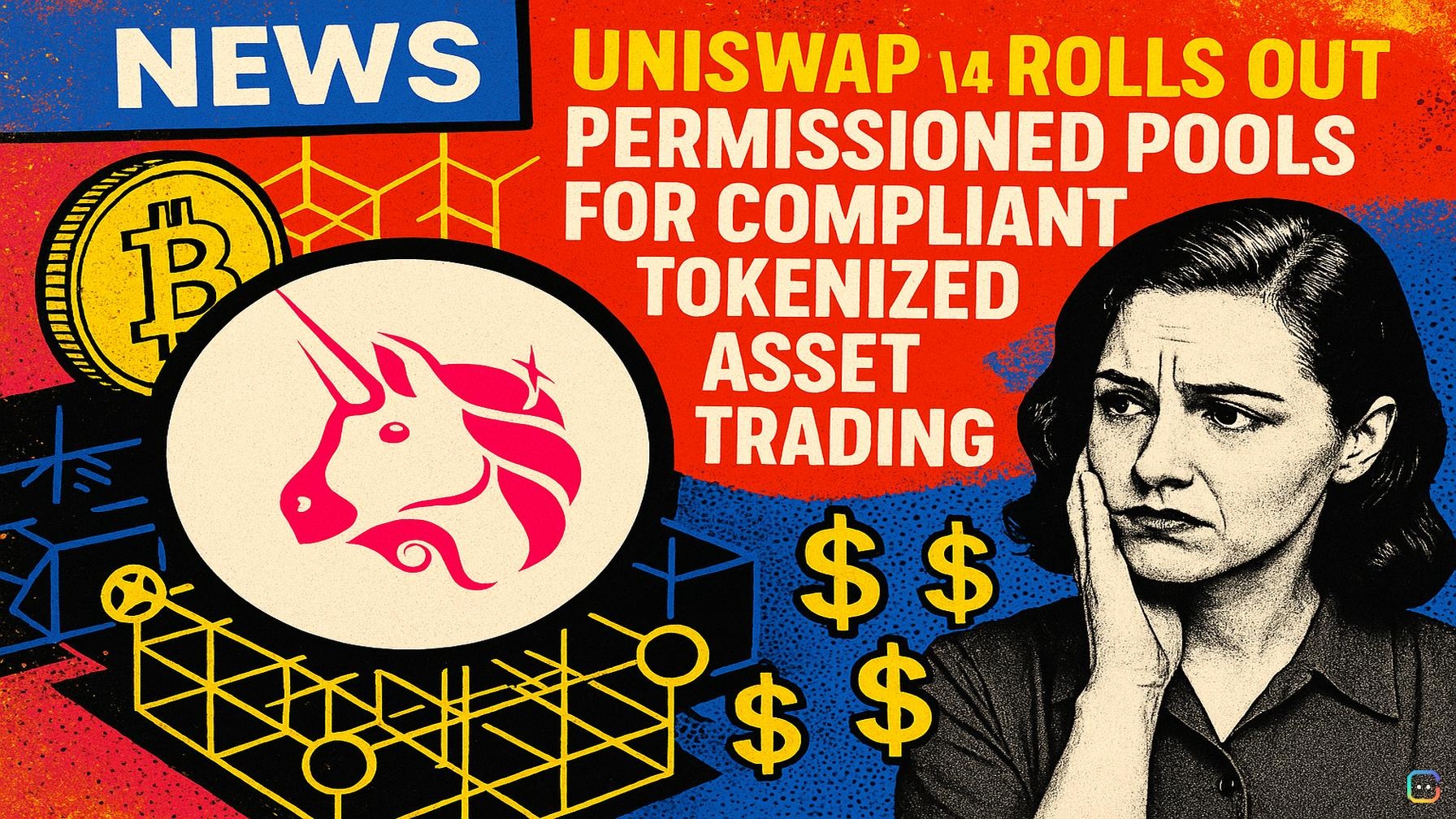
Uniswap Labs has unveiled Permissioned Pools on Uniswap v4, a new open‑source standard that lets issuers restrict on‑chain trading of regulated tokens while keeping swaps inside automated market maker (AMM) pools. Announced July 23, 2026, the feature is designed for tokenized funds, securities, equities and other assets that legally can’t trade freely between every wallet.
How it works
Permissioned Pools use the Uniswap v4 hook system to enforce issuer-controlled allowlists at the protocol level. Before any swap—or before a user can create a liquidity-provider position—the pool’s hook checks an issuer-managed allowlist. If a wallet isn’t approved, the transaction is halted; Uniswap emphasizes the checks run “at the protocol level, not on the frontend,” meaning access controls are embedded in the pool’s smart-contract flow rather than applied by a UI. The design also leverages v4’s virtual accounting so regulated assets stay inside a permissioned contract while pricing and settlement are handled by the AMM code rather than a traditional order book.
Partners and standards
Uniswap developed the standard with input from firms that issue and manage regulated on‑chain assets. Launch partners include Superstate, Securitize and Dowgo—each helped shape parts of the standard or its compliance integrations. Superstate, an issuer of on‑chain financial products, helped tailor the format for tokenized equities and funds. Securitize worked to make assets issued via its DS Protocol compatible with compliant AMM trading. Dowgo contributed an ERC‑3643 integration (a token standard that supports identity checks and transfer controls) and plans to use Permissioned Pools once it receives DLT TSS authorization under the EU’s DLT Pilot Regime; Dowgo’s application is currently under review by France’s ACPR.
Permissioned but optional
Importantly, Permissioned Pools are opt‑in. Regular Uniswap v4 pools remain permissionless and unchanged—developers can still deploy standard pools without approval from Uniswap Labs. Issuers who need identity checks, transfer rules or investor-eligibility controls can instead deploy a restricted pool version; the issuer, not Uniswap, controls the allowlist and the access rules that the hook enforces. This split gives regulated issuers a route to AMM liquidity while keeping the broader protocol open.
Context and implications
The launch follows Uniswap’s June rollout that added tokenized securities across its web app, wallet and API, which allowed eligible users to access blockchain-based products tied to companies such as Apple, Nvidia and Tesla. Uniswap cautioned then that some products may not represent direct ownership and could be subject to KYC, transfer or geographic restrictions. Permissioned Pools provide another way for issuers to bake those restrictions directly into trading infrastructure.
Market and regulatory backdrop
Uniswap cited an industry estimate that tokenized assets could reach $11 trillion by 2030, though current tokenized real‑world assets were reported at roughly $34 billion in May 2026, including about $1.55 billion in tokenized equities (crypto.news). The industry still relies heavily on transfer agents and other intermediaries to control wallet allowlists and official ownership records for tokenized securities. Regulators are scrutinizing how tokenized products protect ownership and shareholder rights: the U.S. SEC delayed a proposed tokenized‑stock exemption after exchanges raised questions about safeguards and recordkeeping. As Securitize CEO Carlos Domingo put it, any framework “should apply to the right instruments.”
Bottom line
Permissioned Pools add a composable, on‑chain way for issuers to enforce access rules on regulated tokens while preserving AMM liquidity. They don’t remove issuer responsibility for complying with securities laws and licensing—rather, they make compliance checks an enforceable part of smart‑contract trading when issuers choose that model.
Read more AI-generated news on: undefined/news