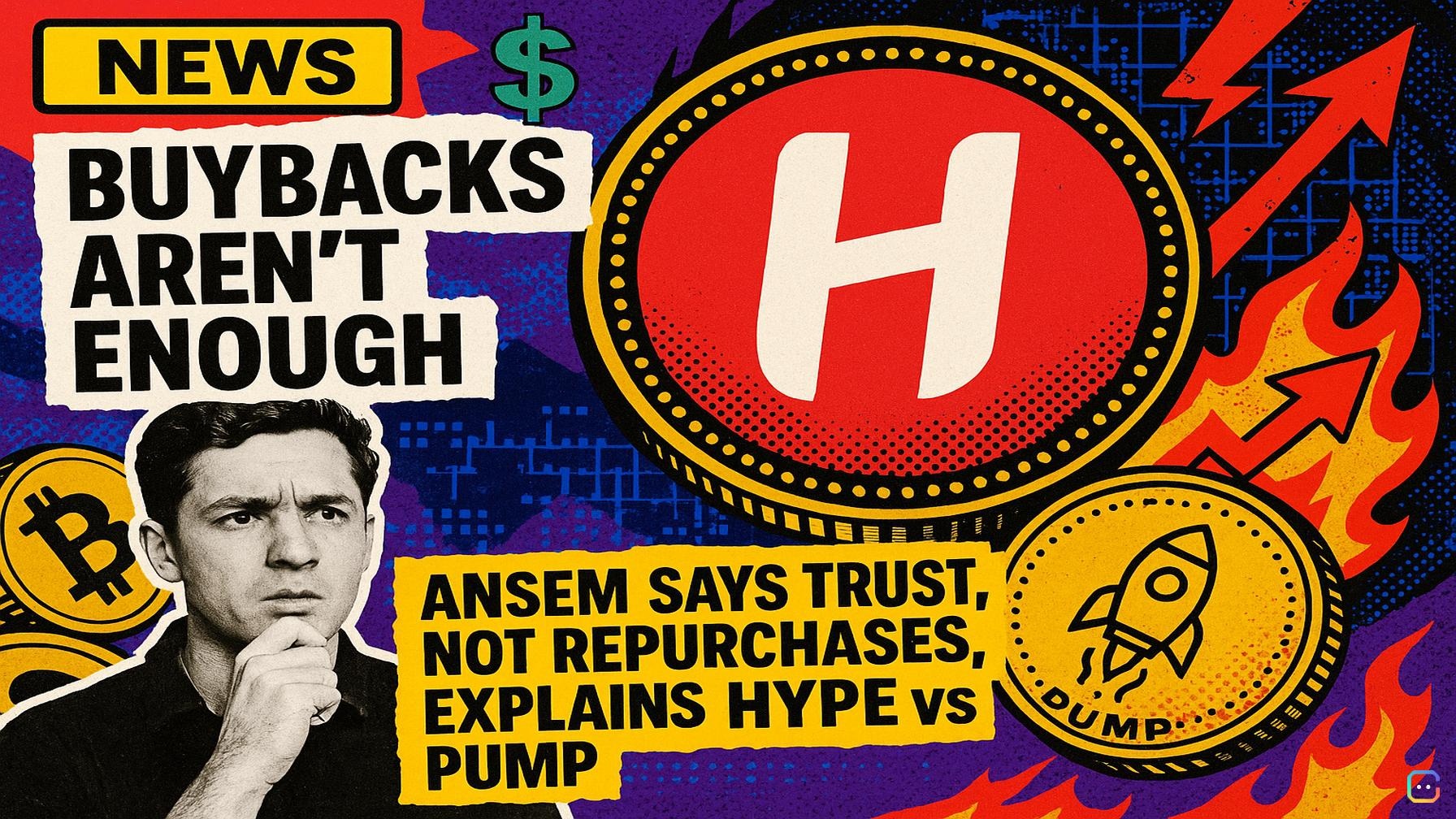
Crypto trader Ansem argues that buybacks alone can’t explain starkly different token valuations — and he points to Hyperliquid’s HYPE and Pump.fun’s PUMP as a case study.
In a July 17 post on X, Ansem highlighted that both platforms generate substantial revenues and run regular token repurchase programs, yet the market values them very differently. His numbers:
- Hyperliquid: roughly $800 million in annualized revenue; HYPE trades near a $65 billion fully diluted valuation (FDV).
- Pump.fun: about $440 million in annualized revenue; PUMP’s FDV sits around $1.4 billion.
“If both teams do recurring buybacks with portions of their profits, why the massive valuation gap?” Ansem asked. His answer: buybacks aren’t the whole story.
Trust, community alignment and a project’s track record matter
Ansem’s thesis is that recurring buybacks can’t create a lasting “trust premium” by themselves. He argues that market confidence — built through clear communication, consistent delivery and incentives that align with real user activity — can materially boost valuation beyond what financial metrics show.
He pointed to Hyperliquid as an example of a platform that has earned strong confidence from core users by shipping products without overpromising and rewarding measurable engagement. Hyperliquid also runs one of crypto’s largest buyback programs: its Assistance Fund funnels most protocol fees into continuous open-market HYPE purchases and had spent more than $1.3 billion on buybacks by May 2026.
Pump.fun’s buybacks and vesting events haven’t produced the same market response. The platform had spent about $233 million buying back 62.2 billion PUMP by early January and later executed a major token burn. On July 15, Pump.fun distributed 57.279 billion PUMP (roughly $86.49 million) to 121 team and investor wallets, starting a three‑year vesting schedule after a one‑year lockup — transfers that made tokens movable but did not confirm any sales.
Ansem suggests a key reason for weaker PUMP performance is weaker community alignment. Pump.fun promised a user airdrop that has not been delivered; co-founder Alon Cohen said in July 2025 that an airdrop remained planned but wouldn’t arrive immediately. Ansem’s view is that delivering on such promises and improving communication could help close some of PUMP’s valuation gap — though he stressed this is a market thesis, not a guarantee.
He also pointed to Bitcoin as an extreme example of a “trust premium”: despite producing no business revenue, its fixed 21 million supply and established rules support a vastly larger valuation.
Bottom line from Ansem: buybacks can be a powerful financial lever, but without trust, clear alignment with users and a track record of delivery, they may not be enough to lift valuations on their own.
Read more AI-generated news on: undefined/news