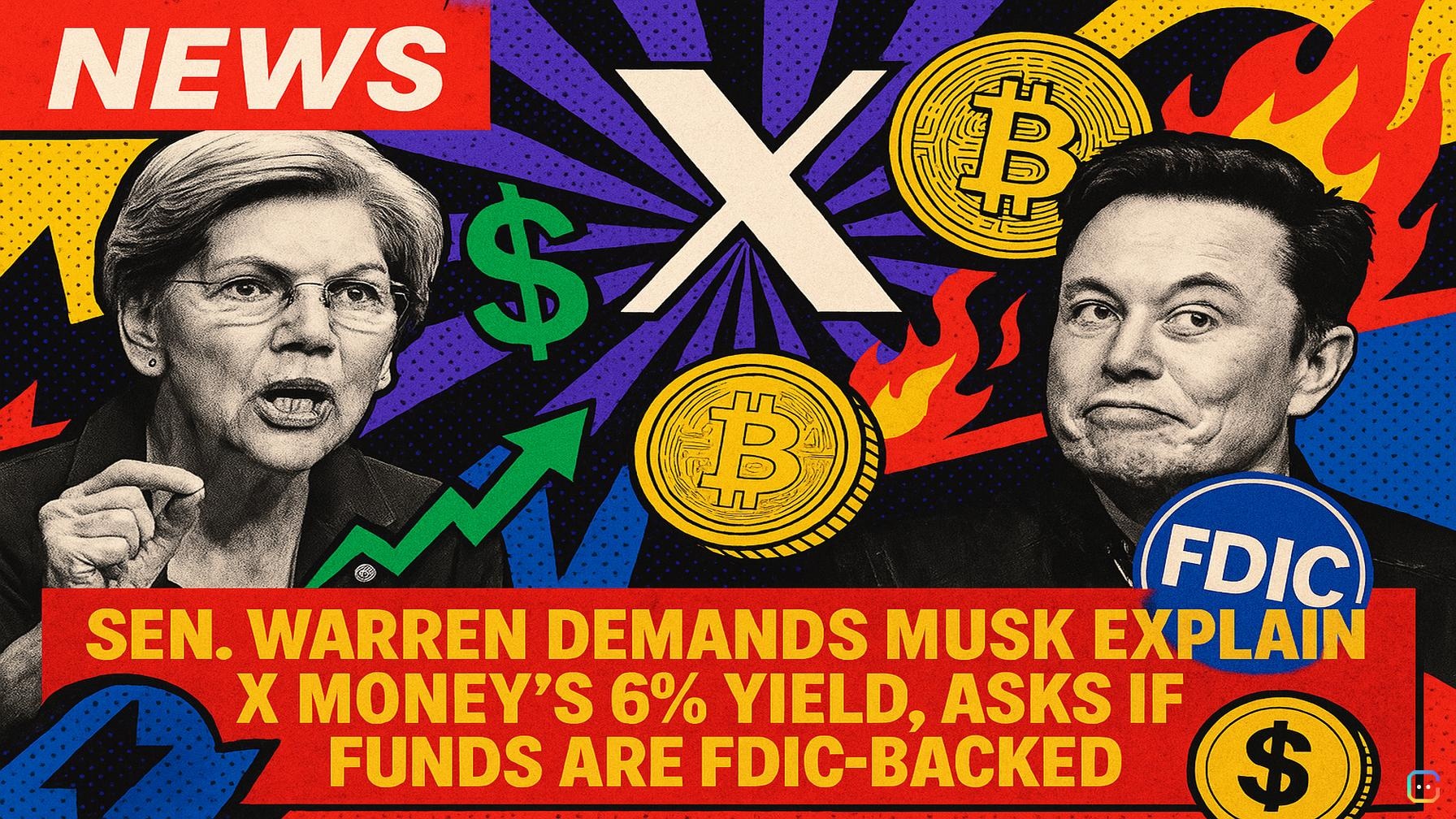
Sen. Elizabeth Warren has formally probed Elon Musk over X’s new payments product, X Money, after the platform advertised a surprisingly high 6% yield on deposits — a rate that, she says, “doesn’t add up” given the federal funds rate of 3.5%–3.75%.
In a Tuesday letter to Musk, Warren demanded details about how X Money would deliver that 6% return and what hidden risks customers might be taking on. A limited beta of the feature has already been rolled out, giving regulators and lawmakers a look at the offering and its advertised economics.
Key points from Warren’s letter
- How is X Money producing a 6% yield when benchmark interest rates are materially lower?
- Is the return being generated through risky investments, lending, or other practices that consumers aren’t being told about?
- Could aggressive data collection or undisclosed monetization be part of the funding model?
- Will X clearly disclose whether customer deposits are covered by federal insurer protections?
Warren singled out Cross River Bank, X Money’s listed banking partner, noting the bank has faced prior enforcement action from the FDIC. She also warned that X’s planned move into stablecoins and broader crypto products could pose risks to the financial system and national security.
Legislative backdrop: the GENIUS Act
Warren’s questions also tie into the Guiding and Establishing National Innovation for US Stablecoins Act (the GENIUS Act), which would let non-bank companies issue dollar-backed tokens. The law has drawn pushback from some Democrats who say it too readily opens the door for big tech to provide bank-like services. Warren asked whether X intends to use that legislative pathway to launch a stablecoin and how that would be communicated to users.
FDIC stance and consumer protections
In March, FDIC Chair Travis Hill said that stablecoin deposits held through products like X Money would not automatically be covered by FDIC insurance under the GENIUS Act. He added the law doesn’t explicitly bar “pass-through” insurance — which would extend FDIC coverage to individuals up to $250,000 — but said allowing that could undermine the framework’s intent. Warren pressed Musk to confirm whether X Money customers would be unambiguously informed that their funds may lack a federal backstop.
Context and next steps
Warren is a noted critic of both large tech’s financial ambitions and the crypto industry, and her letter reflects those longstanding concerns. The announcement of X Money has already generated excitement across crypto communities and social media, even as it draws sharper regulatory scrutiny. Elon Musk has not publicly responded to Warren’s letter.
For users and investors: regulators are asking for transparency about how attractive yields are produced and what protections — if any — back customer funds. Expect further questioning from lawmakers and potentially more detailed disclosures from X as the product moves out of beta.
Read more AI-generated news on: undefined/news