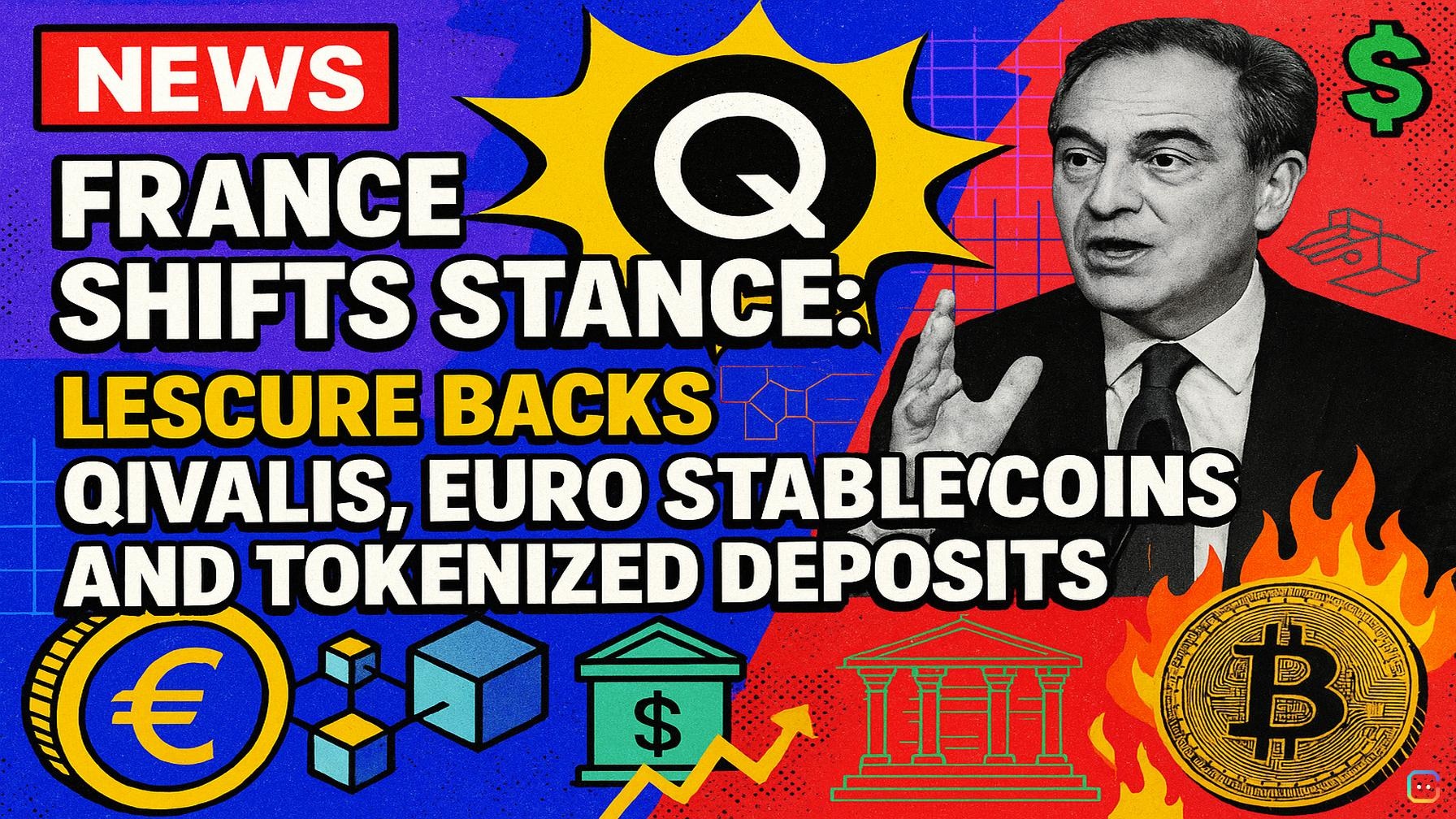
France’s finance minister has publicly called for a surge in euro-denominated stablecoins and for EU banks to test tokenized deposits — comments that signal a possible softening of France’s previously cautious stance on private digital money.
Speaking to reporters Friday (via Reuters), Finance Minister Roland Lescure voiced support for Qivalis, a consortium of 12 European banks — including BBVA, ING, UniCredit and BNP Paribas — that plans to roll out a euro-pegged stablecoin in the second half of 2026. Lescure framed the project as a strategic counterweight to U.S. dominance in digital payments: “That is what we need and that is what we want,” he said, and he urged banks to “further explore the launch of tokenised deposits.”
Lescure also flagged a worry about market dynamics: the current supply of euro-pegged stablecoins remains small compared with dollar-pegged alternatives, which he described as “not satisfactory.” His remarks indicate a government interest in growing euro-based digital infrastructure and preserving the euro’s relevance in emerging payments rails.
The tone contrasts with past positions in Paris. Former Finance Minister Bruno Le Maire took a hard line against privately issued fiat-pegged crypto, famously declaring such instruments “had no place on European soil” and warning they threatened “the sovereignty of nations.” In 2023 Le Maire was tied to an EU document outlining plans to limit stablecoins’ ability to displace fiat money.
Central bank officials have voiced similar concerns. In a widely covered on-stage dispute with Coinbase CEO Brian Armstrong, Bank of France Governor François Villeroy de Galhau warned that stablecoins and tokenized private money could accelerate “the privatization of money” and a resulting loss of monetary sovereignty — framing the technology as a political as well as technical challenge.
Lescure’s endorsement of Qivalis and his encouragement of tokenized deposits suggest Paris may be recalibrating: rather than block private stablecoins outright, policymakers could be moving toward encouraging European solutions that keep issuance and infrastructure under regional control. The coming years — and projects like Qivalis’ planned 2026 launch — will be watched closely as Europe weighs innovation, competition with dollar-based systems, and the sovereignty risks policymakers fear.
Read more AI-generated news on: undefined/news