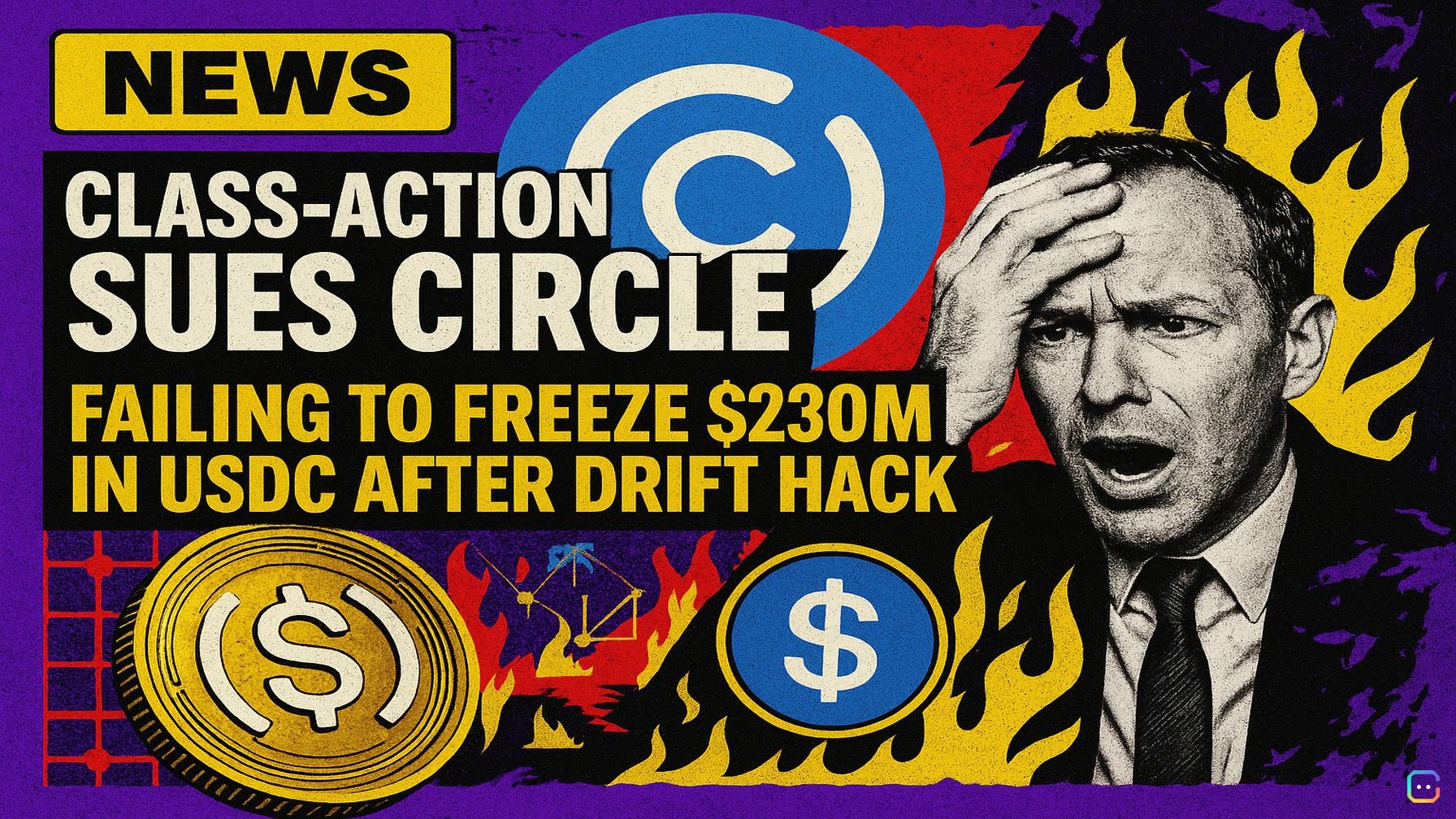
Circle Internet Group, the issuer of the USDC stablecoin, has been hit with a class-action lawsuit after failing to stop the onward movement of funds stolen in the April 2026 Drift Protocol exploit. The suit, filed in U.S. District Court in Massachusetts by Drift investor Joshua McCollum on behalf of more than 100 affected users, alleges Circle could — and should — have intervened as attackers converted and moved stolen assets into USDC and across chains.
The background: in April 2026 attackers exploited Drift, a Solana-based decentralized exchange, draining roughly $285 million. About $230 million of that haul was reportedly converted into USDC and then bridged off Solana—mainly to Ethereum—using cross-chain infrastructure. Those transfers were not instantaneous: they unfolded over several hours and were sliced into more than 100 transactions, a key point in the complaint.
Plaintiffs say that timeline provided a clear window for Circle to act. The filing contends the company had the technical ability to freeze wallets or block the transfers as they occurred, citing prior instances in which Circle froze wallets linked to illicit activity. By allegedly failing to do so, the lawsuit charges Circle with negligence and with indirectly facilitating the loss.
At the heart of the litigation is a thorny legal and policy question: when a centralized service like a stablecoin issuer operates inside a predominantly decentralized ecosystem, what are its duties and limits? The lawsuit tests whether an intermediary with control over on-chain assets can be held liable for not intervening during a multi-hour, multi-transaction exploit.
Drift’s recovery plan and the shortfall
Drift has proposed a structured recovery plan to address user losses and rebuild the platform. The protocol aims to mobilize up to $147.5 million in support, with significant backing from Tether and other ecosystem partners. Crucially, much of that total is a revenue-linked credit facility—roughly $100 million—which would be drawn down and repaid over time from future trading fees and platform revenue, not an immediate cash payout.
To allocate recoveries, Drift plans to issue a new recovery token to impacted users. Details on the token’s name and final structure are pending, but the token is expected to be transferable, letting victims hold for future repayments or sell on secondary markets for immediate liquidity (likely at a discount). The recovery pool will also be replenished over time via protocol revenue, partner contributions, and any funds recovered from the attackers.
Even with these measures there’s a notable funding gap: with around $285 million stolen and recovery efforts targeting up to $150 million, a substantial portion of user losses is not covered up front. That shortfall suggests users are unlikely to be fully reimbursed in the near term; successful recovery depends on Drift restoring liquidity, regaining user trust, and generating steady revenue.
Other operational changes
As part of the recovery and restructuring, Drift is shifting away from USDC as its primary settlement asset in favor of USDT — a move the protocol says is driven by the role USDC played in the exploit (with roughly $230 million routed into USDC during the attack). The relaunch plan also includes incentives and financial support to market makers to rebuild order books and improve trading conditions, recognizing that adequate liquidity will be essential to revive on-chain activity.
Why this matters
The case brings renewed scrutiny to the responsibilities of centralized actors in crypto—stablecoin issuers, custodians and cross-chain bridges—particularly when they can technically reverse or freeze on-chain movements. A ruling against Circle could set a precedent for how much legal obligation centralized service providers have to police and intervene in decentralized systems. Conversely, a decision favoring Circle could reaffirm operational limits for such intermediaries.
What to watch next
- How Circle responds in court and whether it can show it lacked legal duty or practical ability to stop transfers in time.
- Any early rulings on standing or class certification that shape the case’s scope.
- Progress and details from Drift’s recovery token rollout and the timelines for drawing down the revenue-linked credit facility.
The lawsuit and Drift’s recovery plan together underscore the ongoing tensions between decentralization, cross-chain complexity, and the centralized points of control that many users still depend on for liquidity and settlement.
Read more AI-generated news on: undefined/news