Google warns quantum danger to Bitcoin — and sooner than many expect
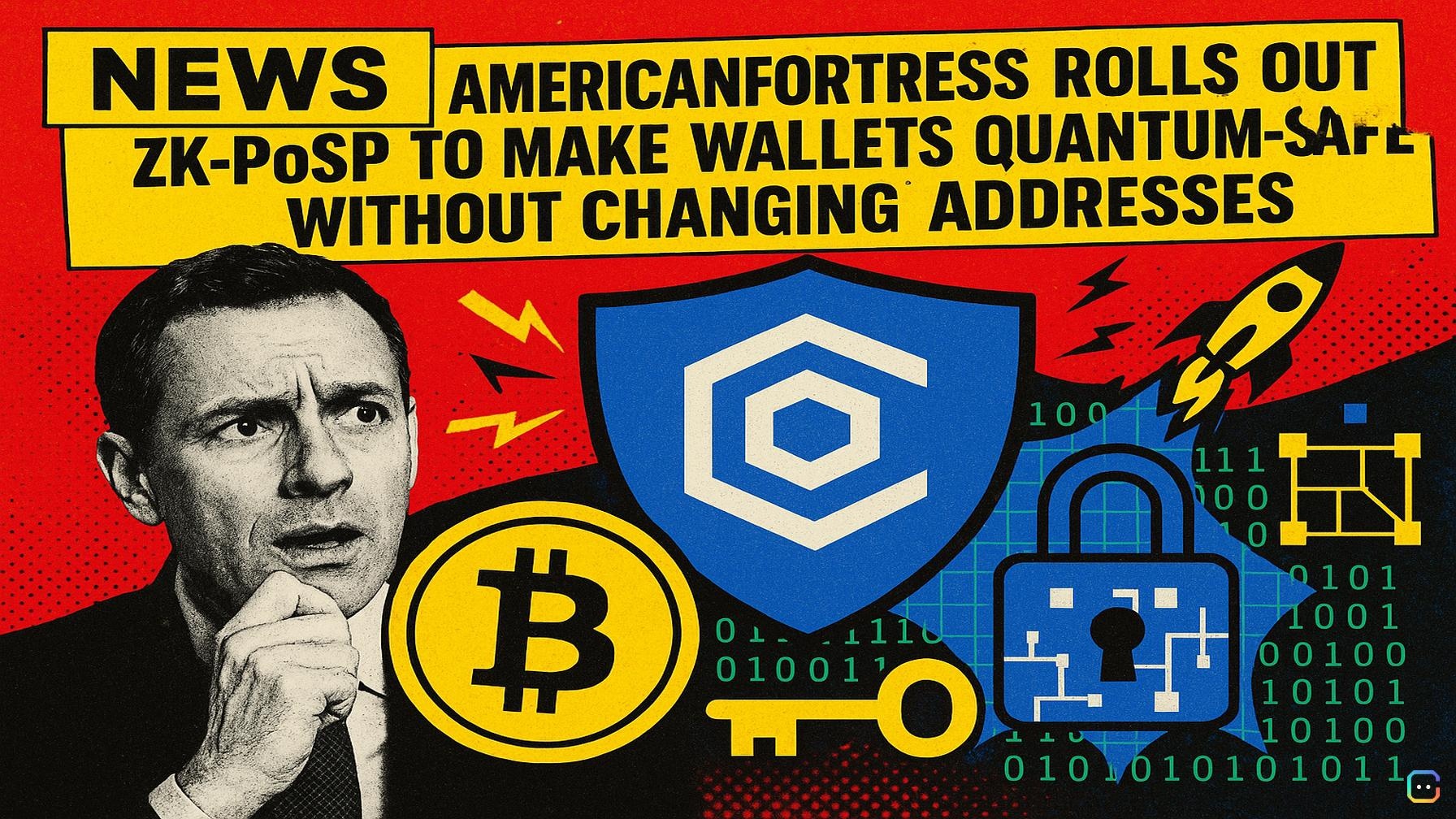
Google’s Quantum AI team has sharpened the timeline for a quantum threat to major blockchains, arguing in a blog post and new whitepaper that cracking Bitcoin and Ethereum may be easier than the industry has assumed.
Key findings
- The team says the physical quantum-computing resources needed to break current crypto protections could be well below prior “millions of qubits” estimates — potentially under 500,000 physical qubits.
- At the logical/high-quality qubit level, Google describes two practical attack designs that would each need roughly 1,200–1,450 high-quality qubits. The difference reflects the large overhead required for error correction: many physical qubits are needed to realize a single reliable (“logical”) qubit.
- Rather than trying to recover old private keys, an attacker could target live transactions. When you broadcast a transaction, a public key can be exposed briefly; a fast enough quantum device could derive the corresponding private key and divert funds in real time.
- Google points to Taproot — the upgrade that made many Bitcoin spends more efficient and private — as a factor that can increase the surface area for such attacks in some spending scenarios.
Why this matters
Google has previously suggested 2029 as a milestone for “useful” quantum systems and urged migration to post-quantum cryptography before then. These new lower-cost attack estimates shrink the perceived gap between today’s hardware and a viable blockchain attack, raising urgency for crypto projects, custodians, and wallet providers to accelerate post-quantum planning and key-management best practices.
OpenAI raises a record $122 billion at massive valuation
In another market-moving development, OpenAI closed a gargantuan funding round with $122 billion in committed capital at an $852 billion post-money valuation — making it by far the most valuable private startup on record.
- The raise was anchored by Amazon, Nvidia, and SoftBank, with continued participation from Microsoft. Co-leads and major participants include a16z, D.E. Shaw Ventures, TPG, BlackRock, Fidelity, Sequoia, Temasek, and others.
- For the first time, OpenAI opened access to individual investors via bank channels, raising over $3 billion from that tranche.
- OpenAI reports roughly $2 billion in monthly revenue (up from $1 billion per quarter at the end of 2024), about 900 million weekly active ChatGPT users, 50+ million subscribers, and traffic and engagement metrics far ahead of competing AI apps.
How major blockchains are preparing for “Q‑Day”
As quantum computing approaches practical capability, blockchain communities are starting to plan — but responses vary.
- Bitcoin, Ethereum, and Solana are taking different paths on upgrades, social coordination, and developer work. Discussions split between conservative, consensus-driven approaches and calls for rapid technical migration.
- The quantum threat comes from qubits’ ability to leverage superposition and entanglement to solve certain problems (like the math behind public-key cryptography) exponentially faster than classical computers. IBM and other researchers highlight orders-of-magnitude differences in time-to-solve for these tasks versus the fastest classical systems.
- Practical defensive steps include migrating to post-quantum signature schemes, avoiding reuse or on-chain disclosure of public keys where possible, and planning social-consensus mechanisms to roll out urgent upgrades if required.
Base (Coinbase) publishes 2026 roadmap: markets, payments, developers
Layer‑2 network Base, developed by Coinbase, laid out a 2026 strategy focused on three pillars: expanding on‑chain markets, scaling stablecoin payments, and growing its developer ecosystem.
- Base launched publicly in August 2023 on the OP Stack but has signaled a move toward more in‑house infrastructure as it scales.
- Layer‑2s like Base aim to reduce fees and increase throughput while using Ethereum for security. However, shifts in Ethereum scaling priorities at the base layer (noted by some core developers) leave open questions about layer‑2 roles going forward.
- Base’s push aligns with rising institutional interest in on‑chain trading venues and stablecoin payment rails.
What to watch next
- For investors and builders: accelerate inventories of at-risk keys and custody practices; follow post-quantum signature standards and wallet upgrades.
- For the industry: expect more urgent coordination conversations around migration paths and emergency upgrade governance.
- For researchers and the public: monitor quantum hardware progress (quality and scale), and watch major custodians and exchanges for concrete post-quantum migration timelines.
Sources: Google Quantum AI blog and whitepaper; reporting on OpenAI’s financing and usage stats; statements and roadmaps from Base/Coinbase.
Read more AI-generated news on: undefined/news