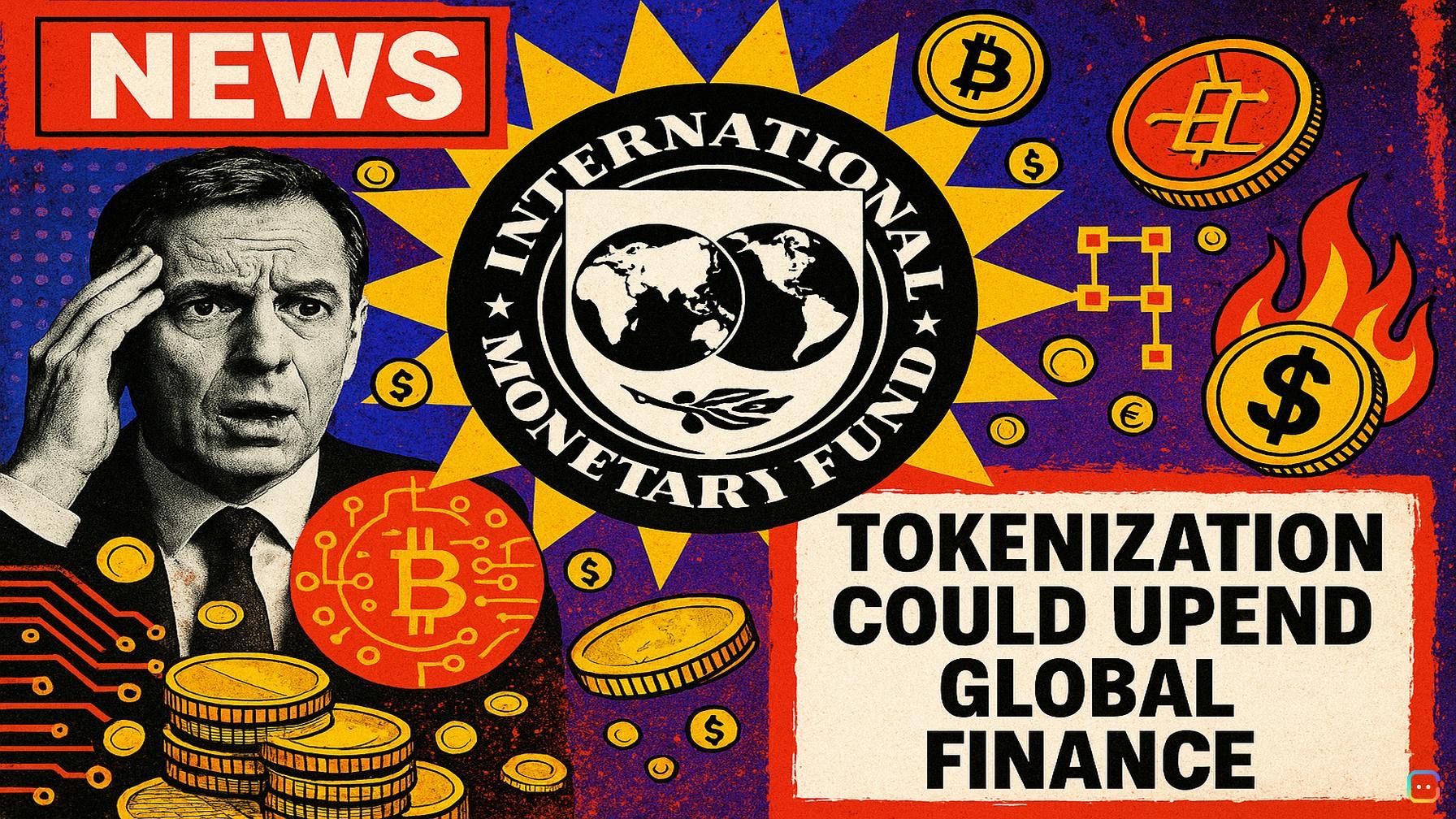
The IMF has issued a wide‑ranging assessment of tokenization, warning that the rapid rise of on‑chain representations of money, securities and derivatives could reshape the global financial system—and introduce new systemic risks.
In a note published Wednesday, the Fund frames tokenization as more than a tech upgrade: it’s an institutional shift. By turning claims into programmable digital tokens recorded on shared ledgers, tokenization changes how financial claims are issued, transferred and settled. That promises efficiency gains, but also risks disrupting long‑standing regulatory, legal and crisis‑management arrangements.
A central IMF concern is geography: current resolution tools and oversight frameworks are built around jurisdictional control of institutions, infrastructure and assets. Tokenized systems, by contrast, can execute transactions across borders at “machine speed.” Control in these systems may rest not with nationally domiciled entities but with governance keys, consensus mechanisms or the logic embedded in smart contracts—leaving authorities with fewer conventional levers to contain stress when things go wrong.
To address these challenges, the IMF sets out a “coherent policy roadmap” built on five pillars designed to align trust and risk in tokenized infrastructures:
- Anchor settlement in safe forms of money: Systemically important tokenized transactions should ultimately settle in assets that minimize credit and liquidity risk.
- Global standards and consistent regulation: Adopt international rules for crypto markets guided by the principle “same activity, same risk, same regulatory outcome,” echoing earlier IMF and Financial Stability Board guidance.
- Legal clarity: Legislatures and courts should clarify ownership records, the legal status of tokenized assets, and when settlement is legally final so law keeps pace with technology.
- Common standards for finality and cooperative oversight: Harmonized expectations on settlement finality and cross‑border supervisory cooperation to avoid fragmentation and better manage transnational risks.
- Adapted liquidity and crisis‑management frameworks: Update tools for a continuous, 24/7 automated environment—potentially requiring central banks and authorities to develop new instruments or operate directly within tokenized infrastructures to preserve policy effectiveness.
Together, the IMF says, these measures would provide the backbone for a stable, efficient tokenized financial system. But implementation will demand sustained cross‑jurisdictional cooperation between public authorities and private‑sector participants.
Featured image: OpenArt. Chart: TradingView.com.
Read more AI-generated news on: undefined/news