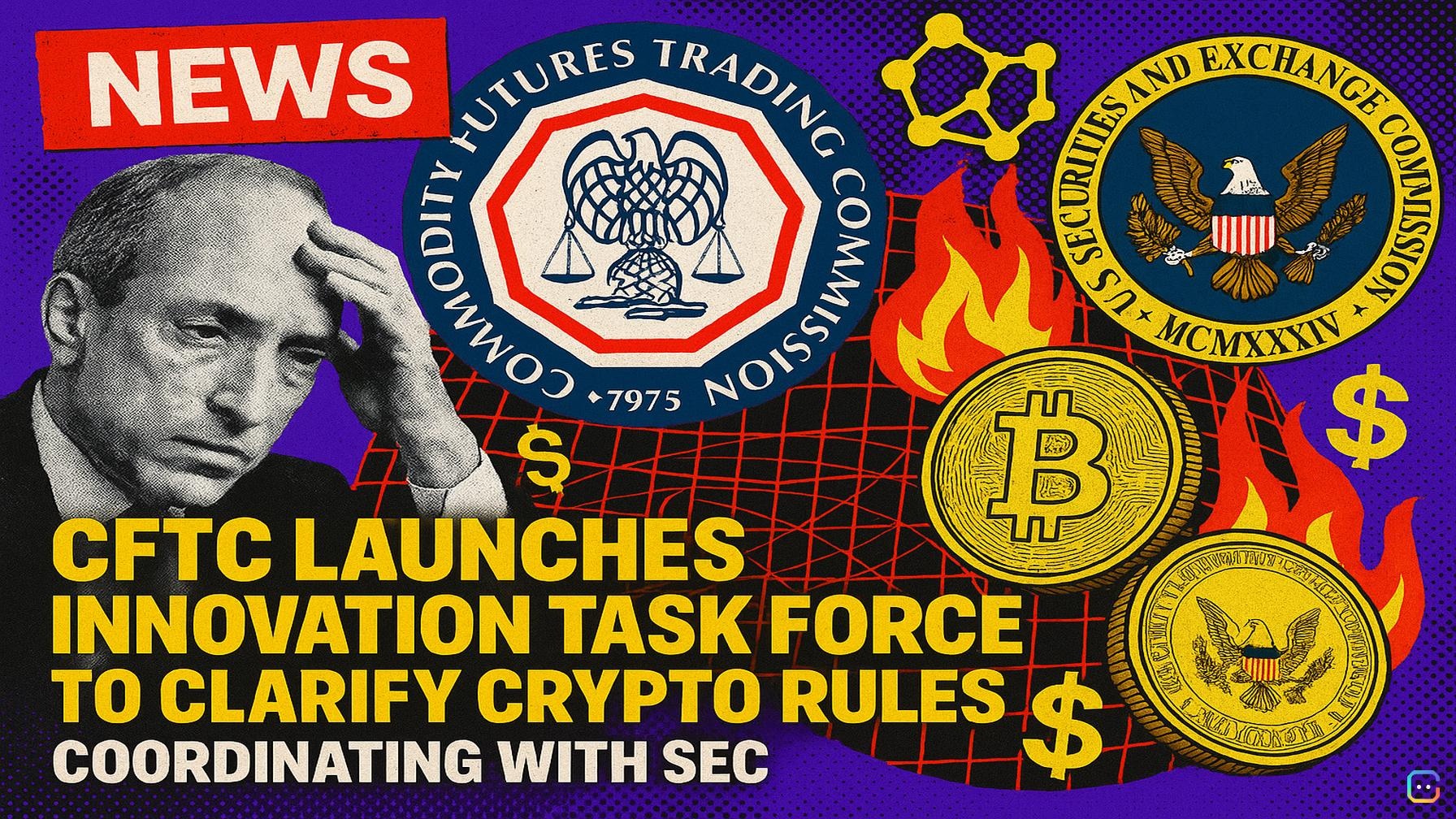
The Commodity Futures Trading Commission is moving to give crypto innovators clearer rules of the road. CFTC Chairman Michael Selig announced on Tuesday the creation of an Innovation Task Force aimed at delivering more explicit regulatory guidance for firms building crypto, blockchain and AI products that touch U.S. derivatives markets.
What the task force will do
- Work alongside the CFTC’s Innovation Advisory Committee and coordinate closely with other federal regulators — notably the SEC and its Crypto Task Force — to develop practical, enforceable standards for emerging technologies.
- Focus on three core areas: crypto assets and blockchain technologies; artificial intelligence and autonomous systems; and prediction markets and event contracts.
Selig framed the initiative as part of a broader “innovation agenda” designed to balance market growth with appropriate oversight. “By establishing a clear regulatory framework for innovators building on the new frontier of finance, we can foster responsible innovation at home and ensure American market participants are not left on the sidelines,” he said. Selig had stressed the urgency in a social post the day before, arguing that years of regulatory uncertainty drove many crypto firms offshore and left the industry “in limbo.”
Regulatory context: a joint SEC–CFTC push for clarity
The task force announcement follows recent joint guidance from the SEC and CFTC intended to untangle how federal securities laws apply to different digital assets — guidance that arrived as the CLARITY Act stalled on Capitol Hill. At the heart of that guidance is a structured taxonomy that separates digital commodities, digital collectibles, digital tools, stablecoins, and digital securities. Regulators also warned that a token’s status can change over time: a crypto asset not initially treated as a security could later fall under securities laws depending on how it is used or how its economics evolve, and vice versa.
Both agencies say this approach departs from prior enforcement-focused strategies and offers market participants clearer criteria for assessing compliance risk. SEC Chair Gary Gensler’s successor, SEC Chair [Atkins — as quoted in the release], commented: “After more than a decade of uncertainty, this interpretation will provide market participants with a clear understanding of how the Commission treats crypto assets under federal securities laws.”
Market snapshot
As of this writing, the total crypto market capitalization stood at $2.35 trillion, with prices slipping on Tuesday: Ethereum down about 1.5%, XRP roughly 3%, and Bitcoin around 2%.
Why it matters
If the CFTC task force and interagency coordination produce usable, predictable rules, U.S.-based firms could gain more confidence to innovate onshore rather than relocating abroad. For traders and developers, clearer definitions and compliance pathways can reduce legal risk and help integrate new products into regulated derivatives markets — but much will depend on how quickly the agencies convert guidance into enforceable rules and how markets react.
(Featured image: OpenArt; chart: TradingView.com)
Read more AI-generated news on: undefined/news