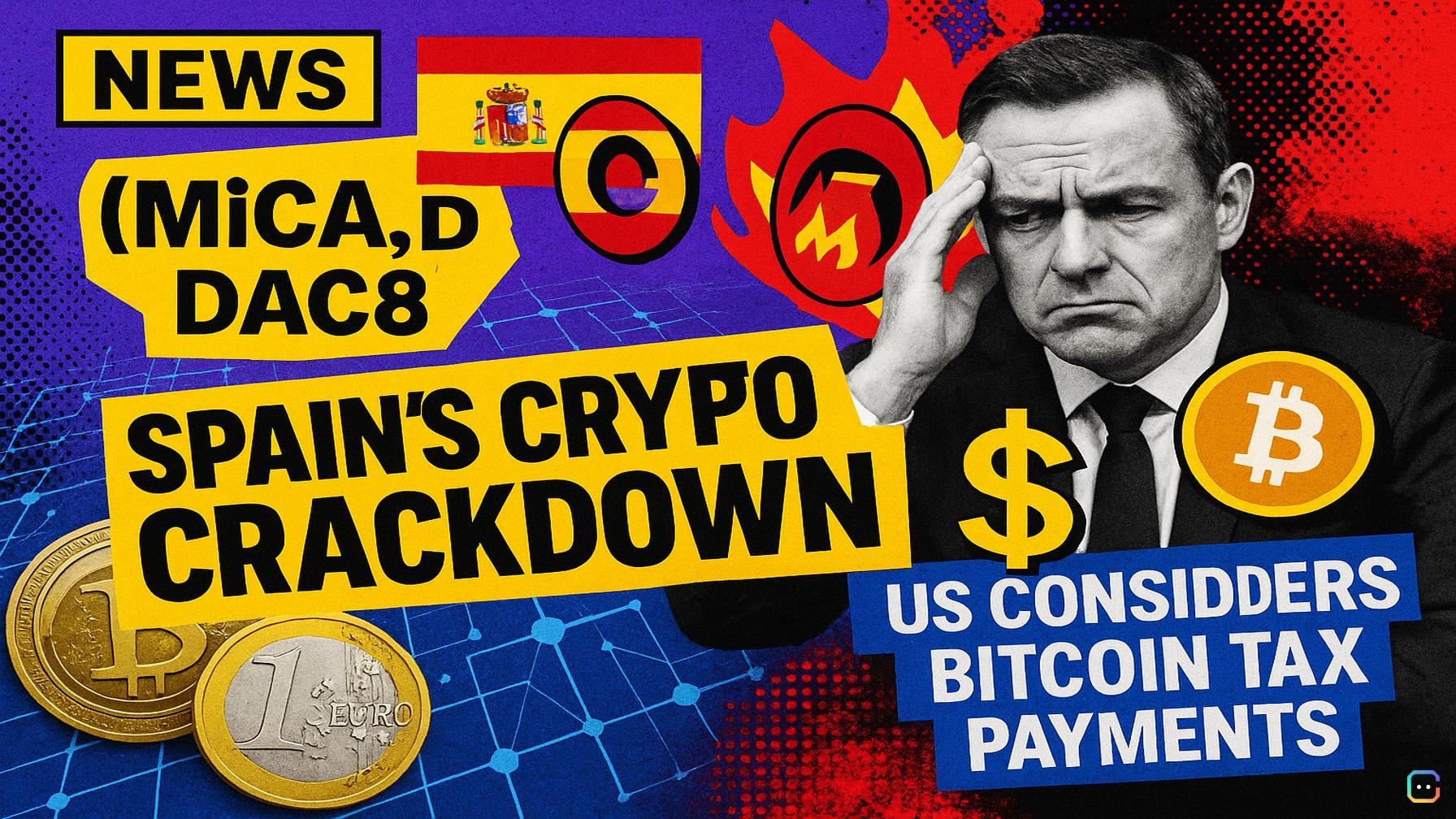
Spain is gearing up for a major regulatory crackdown just as the U.S. flirts with making Bitcoin an official tool for paying federal taxes — a split in global crypto policy that could reshape where and how Europeans hold digital assets.
What’s changing in Spain
- From mid‑2026 the EU’s Markets in Crypto‑Assets (MiCA) framework will be fully in force, and Spain’s National Securities Market Commission (CNMV) is already preparing to formalize oversight. The CNMV currently supervises more than 60 crypto players — including established names such as BBVA and Cecabank — and will push digital‑asset businesses into a fully institutional regulatory environment.
- Madrid extended the transition window to 1 July 2026, giving registered firms a final period to meet Europe‑wide licensing standards. But the deadline is strict: entities that don’t secure full EU authorization will have to cease Spanish operations, narrowing the market to the most compliant and capitalized firms.
New tax and reporting regime: DAC8
- Parallel to MiCA, the Administrative Cooperation Directive (DAC8) — approved by Congress in October 2025 and effective 1 January 2026 — will radically expand tax reporting for crypto. Unlike traditional banking thresholds (e.g., €250,000), DAC8 forces platforms to send granular transaction data on every trade — even a €2 transfer — to Spain’s Tax Agency.
- Platforms operating in Spain or through EU entities (examples: Binance Spain, Kraken Ireland) must integrate this reporting and share customer transaction histories by 2027. That creates near‑complete visibility of centralized platform activity for tax authorities and exposes accounts to potential enforcement or seizure under domestic rules.
Self‑custody: the shrinking refuge
- As exchange and wallet providers fall under automated surveillance, private, self‑custodied wallets remain the last area outside DAC8’s reporting chain. Experts say that personal wallets are the remaining space for crypto “sovereignty,” but legal pressure and evolving policy mean that private custody is likely to become an increasingly constrained option.
Domestic politics and rising stakes
- Spain’s political debates are hardening. The Sumar Parliamentary Group has pushed proposals to raise capital gains taxes to 47% and to classify all digital assets as seizable property — moves that would further increase the cost and risk of holding crypto on custodial platforms in Spain.
- In response, Spanish service providers, industry groups and holders are mobilizing to protect user privacy and deter an exodus of capital and talent to more crypto‑friendly jurisdictions.
A global contrast: U.S. policy moves the other way
- At the same time, U.S. policymakers are considering incentive‑focused measures. The proposed “Bitcoin for America Act” would allow taxpayers to pay federal taxes in Bitcoin without triggering capital gains events, effectively treating BTC as a strategic reserve or payment instrument. That approach sits in stark contrast to Spain’s tightening tax and reporting regime.
Why it matters
- The combination of MiCA, DAC8 and proposed domestic taxes sets up a fundamental choice for Spanish crypto users and firms in 2026: operate under near‑total transparency on centralized platforms, or move to self‑custody and accept a shrinking legal shelter. The industry is now preparing for a major regulatory and political fight over privacy, taxation and the future role of digital money in Spain.
Disclaimer: This content is informational and not investment advice. Cryptocurrency trading carries high risk; do your own research before making financial decisions. © 2025 AMBCrypto
Read more AI-generated news on: undefined/news