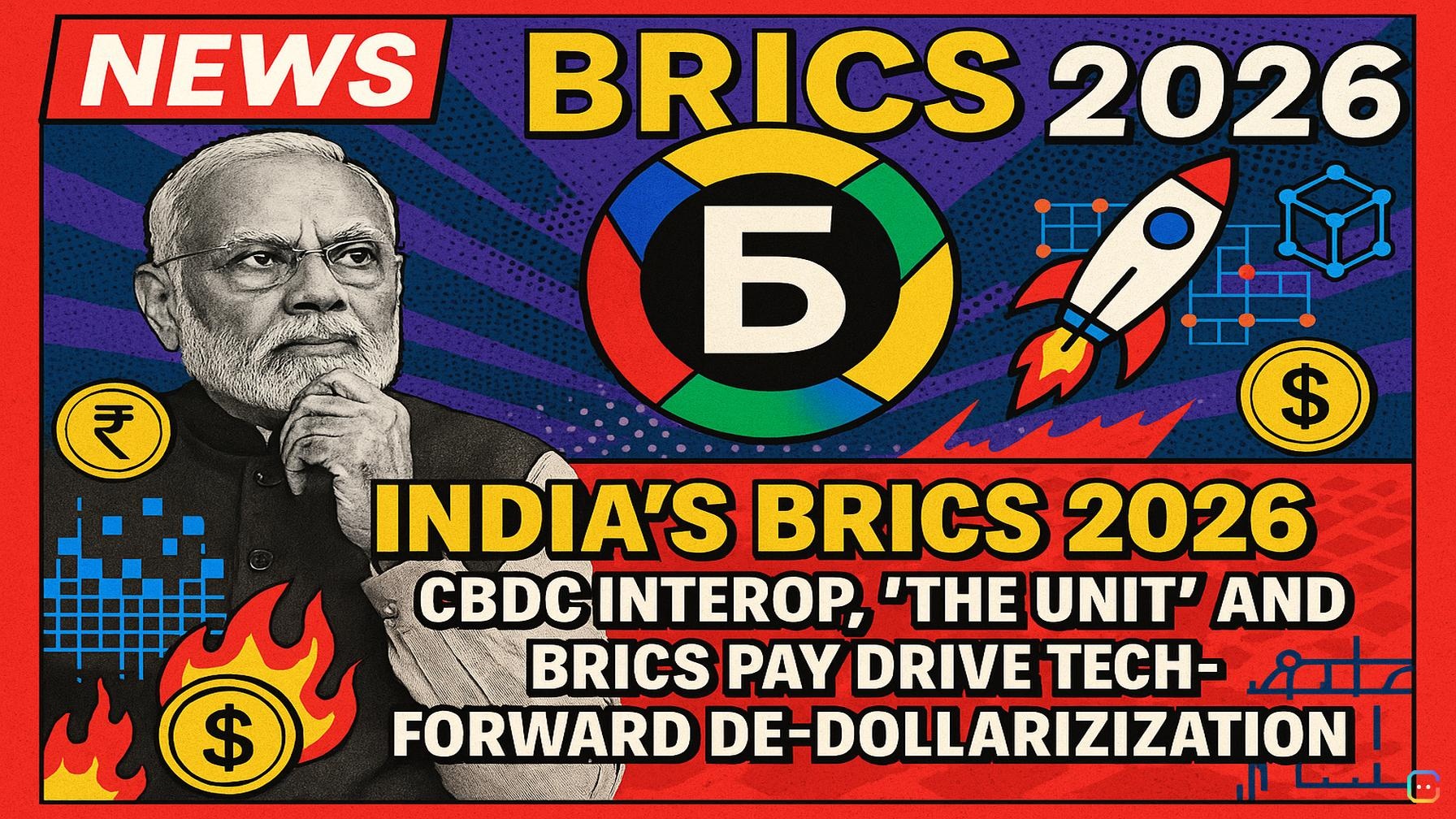
India’s 2026 BRICS presidency is sharpening the bloc’s focus on financial cooperation, technology governance and rolling out real alternatives to dollar-based settlement — and it’s doing so with a distinctly tech-forward playbook.
What’s on India’s agenda
Under the banner “Building Resilience and Innovation for Cooperation and Sustainability,” Prime Minister Narendra Modi has set the tone for the 18th BRICS Summit, due to take place in New Delhi in August or September 2026. Modi says India will continue the people-centric focus it pursued during its G20 term, elevating Global South priorities inside the BRICS platform.
From planning to deployment: payments and currencies
Members are moving from discussion to implementation on de-dollarization. A high-profile initiative is “The Unit,” which followed a 100-unit pilot released on October 31, 2025, and is pitched as a mechanism to facilitate cross-border trade without dollar intermediation. At the same time, Russia, China and India are targeting 2026–2027 for CBDC interoperability work that would link the digital ruble, yuan and rupee — a potential alternative settlement layer to SWIFT-style dollar rails.
BRICS Pay and the New Development Bank are already reshaping intra-bloc flows. BRICS Pay has reportedly slashed USD usage in intra-bloc trade by roughly two-thirds, and the New Development Bank is targeting having one-third of its loans denominated in members’ domestic currencies by 2026. Russia has said that as much as 90% of its intra-bloc trade in 2024 was settled in national currencies, signaling concrete uptake of local-currency rails. At the same time, members are trimming US Treasury holdings and expanding gold reserves; the bloc is estimated to control roughly half of global gold production.
A techno-political balance: India and the dollar
India’s external affairs minister, S. Jaishankar, clarified BRICS’ public stance in March 2025: “I don’t think there’s any policy on our part to replace the dollar. The dollar as the reserve currency is the source of global economic stability, and right now what we want in the world is more economic stability, not less.” That reflects a pragmatic posture: pursue alternatives, but not an abrupt decoupling that would risk instability.
AI governance as a strategic pillar
Beyond payments, AI governance has emerged as a core theme. Modi has framed India’s approach as “AI for All,” arguing the technology should enhance human values and capabilities while pairing innovation with governance. The bloc aims to develop frameworks for technology sovereignty and standards — an attempt to shape global AI norms rather than simply adopt Western models.
Political momentum and constraints
Indian officials, including Lok Sabha Speaker Om Birla, have signaled strong political will for a productive 2026 summit. Analysts call the bloc’s trajectory “De-dollarization 2.0”: more systemic, institutional and technologically driven than earlier efforts. That push has encountered geopolitical headwinds — including reports of proposed US tariffs on nations pursuing dollar alternatives — but BRICS members are accelerating technical deployments, expanding investment guarantees for development projects, and operationalizing earlier plans.
Why crypto and fintech observers should care
For crypto and payments markets, these moves matter. CBDC interoperability, alternative payment rails and wider use of local currencies could reduce reliance on dollar correspondent banking and create new cross-border settlement pathways that compete with or complement crypto rails. At the same time, centralization in CBDC and BRICS-led payment systems raises different risks and opportunities than permissionless crypto networks.
Still, important constraints remain: market depth, liquidity and internal divisions among members suggest the US dollar will likely retain its dominant reserve role in the near term. Even so, major banks like JPMorgan expect a net bearish view on the dollar in 2026, arguing that the “weaponization” of the dollar via sanctions could accelerate demand for alternatives.
Bottom line
BRICS 2026 isn’t just rhetoric. It combines concrete technical pilots (The Unit, BRICS Pay), CBDC interoperability roadmaps and an explicit AI-governance agenda — all under India’s presidency. For crypto and payments watchers, the coming 12–24 months will be telling: whether these pilots scale into durable, liquid alternatives to dollar rails, or whether practical limits will keep the dollar firmly at the center of global finance.
Read more AI-generated news on: undefined/news