Headline: On-chain neobanks set to surge from $149B to $4.4T by 2034 as blockchain remakes banking rails
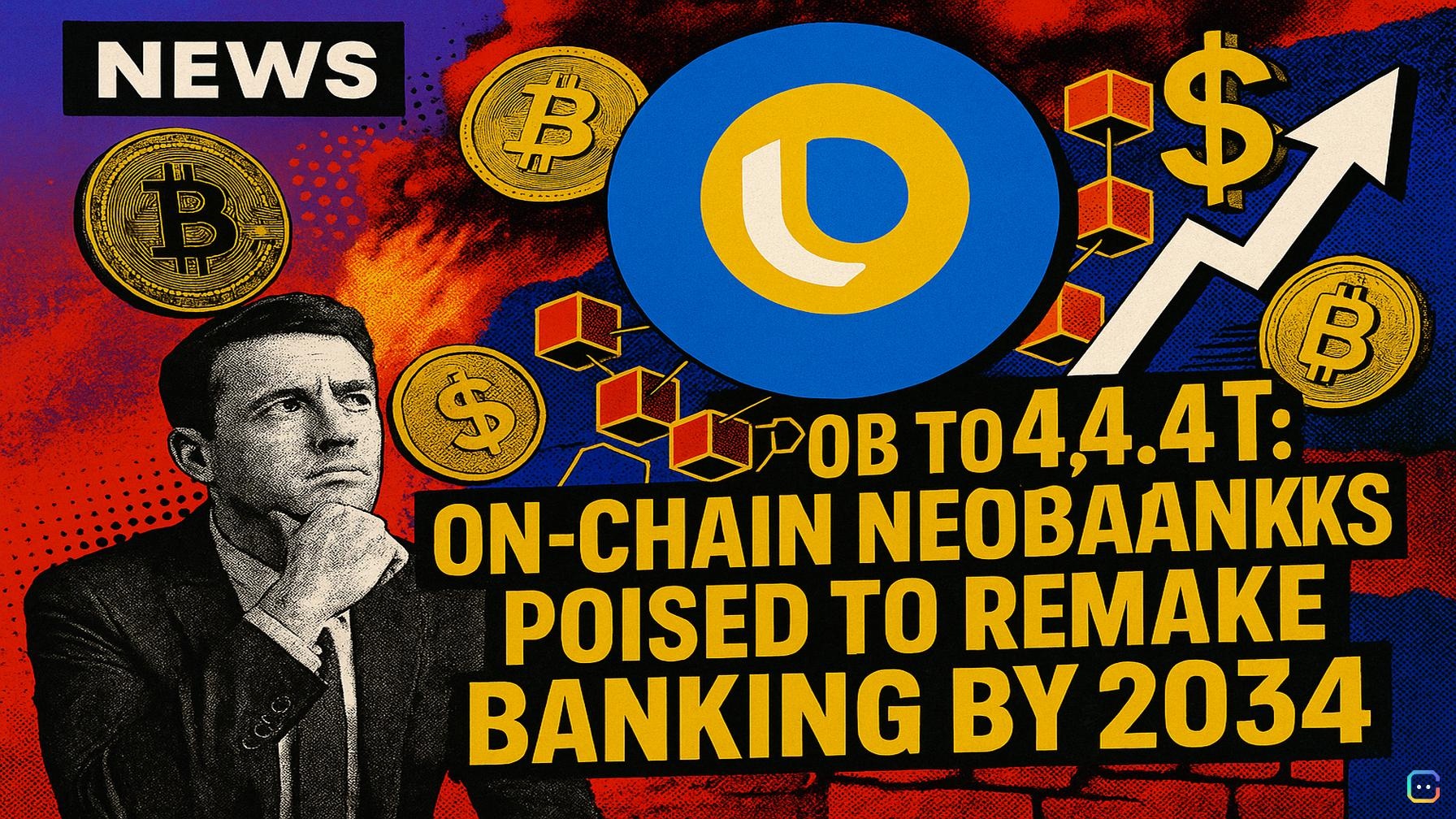
A new market analysis projects the global neobanking sector will explode from about $149 billion in 2024 to roughly $4.4 trillion by 2034, with the market crossing the $1 trillion mark as early as 2029. The report attributes this rapid, non-linear growth to a shift from hybrid digital-bank models to fully on-chain financial platforms that run core banking services natively on blockchain infrastructure.
What are on-chain neobanks?
Unlike traditional neobanks that depend on partner banks, custodians, and regional payment rails, on-chain neobanks execute core operations—asset custody, payments, settlements and records—directly on public or permissioned blockchains. That means transparent, auditable ledgers, programmable smart contracts for product delivery, and 24/7 global settlement without the delays or cutoff times of legacy cross-border systems.
Why growth could be exponential
The report argues the market expansion reflects more than user adoption: it anticipates structural changes in how financial services are delivered. With payments, savings, asset management and cross-border money movement handled on-chain, these platforms can scale through software upgrades and composable smart contracts instead of costly branch networks and manual back-office processes. Eliminating dependency on closed banking networks and minimizing settlement friction are central drivers of the projected acceleration.
Timeline and scale
Data in the analysis shows accelerating year-over-year growth rather than a steady linear increase, with the sector expected to surpass $1 trillion by 2029 and reach approximately $4.4 trillion by 2034. Analysts see these on-chain banks as early-stage building blocks for internet-native financial infrastructure, positioning them to capture expanding share of global financial activity as blockchain adoption deepens.
Risks and context
The report also stresses the sector remains in early adoption phases. Key challenges—regulatory clarity, security, interoperability and user trust—will shape how quickly and widely on-chain neobanks can replace legacy rails. Still, proponents argue the technology’s ability to remove intermediaries and speed settlement presents a compelling path for cross-border finance in the coming decade.
Bottom line
If the projections hold, on-chain neobanks could transform not only where consumers and businesses keep money, but how global money moves—turning programmable, borderless ledgers into the backbone of next-generation banking.
Read more AI-generated news on: undefined/news