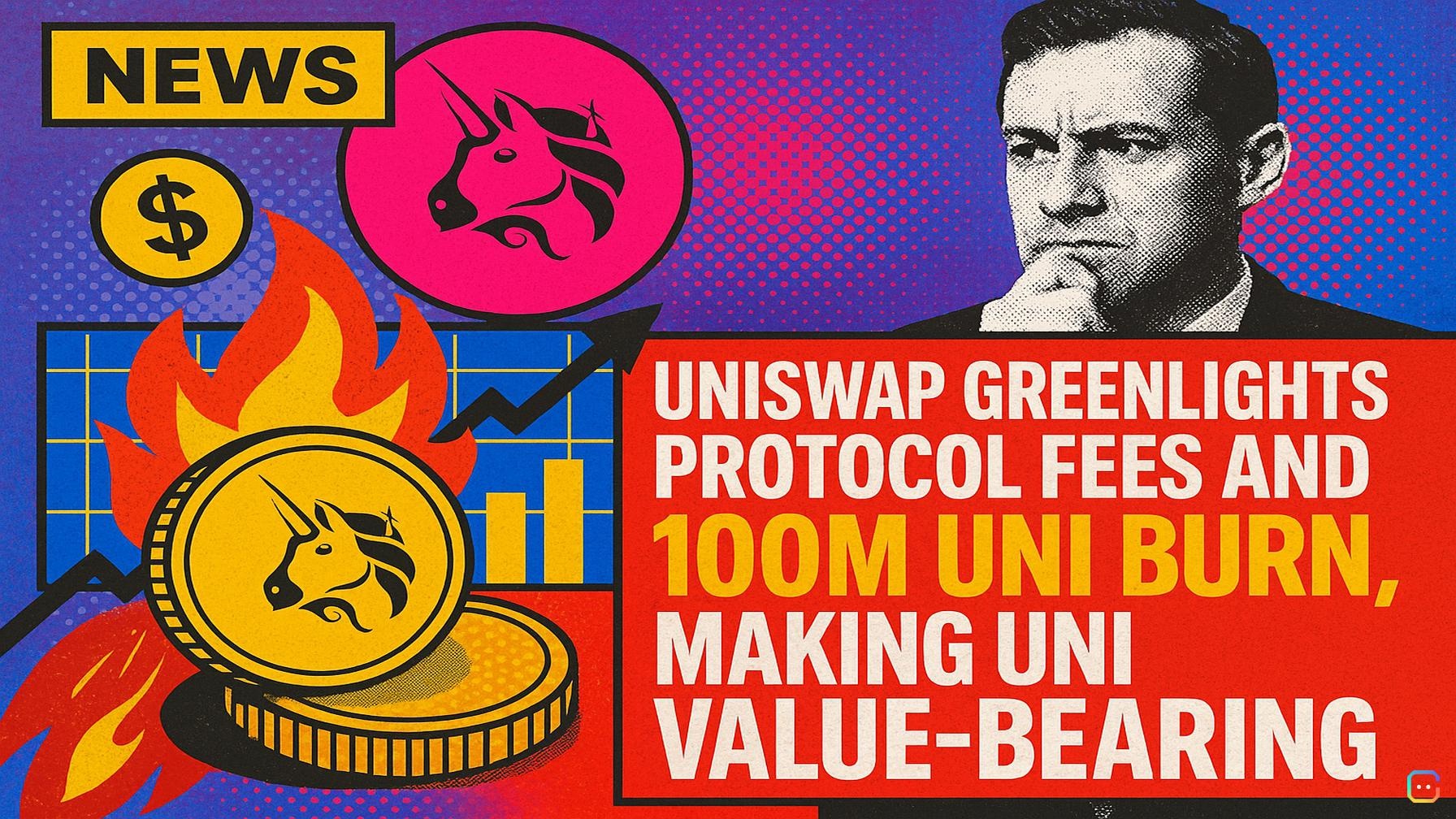
Headline: Uniswap voters greenlight protocol fees and massive UNI burn, turning governance token into value-bearing asset
Uniswap’s community has overwhelmingly approved the “UNIfication” proposal from Uniswap Labs and the Uniswap Foundation, authorizing the activation of protocol fees and a large-scale token burn that reshapes UNI from a governance-only token into one that directly accrues value from platform activity.
The five-day vote saw more than 125 million votes in favor and only 742 against, reflecting broad community support for the change. Under the update, some of the fees generated by Uniswap will be rerouted away from liquidity providers and into an on-chain mechanism that will burn UNI tokens — directly tying protocol usage to supply reduction and creating a new economic link between the DEX and its token.
Uniswap, the largest decentralized exchange, averages roughly $2 billion in daily trading volume and, per DeFiLlama data, generates about $600 million in fees on an annualized basis. Until now, all fees were distributed to liquidity providers, leaving UNI as a purely governance instrument with no direct revenue capture. The protocol-fee activation reverses that model, which could tighten token supply and potentially boost market value.
As part of the decision, the DAO will also retroactively burn 100 million UNI from the treasury — a move intended to reflect fees that would have accrued had protocol fees been active since Uniswap’s 2018 launch. At the current price, that 100 million UNI represents just over $590 million in market value. Following the vote, UNI traded up about 2.5% in the past 24 hours to $5.92.
The UNIfication vote marks one of the most significant economic shifts in Uniswap’s history, moving the protocol toward a fee-earning, token-value-aligned model that could reshape incentives for users, liquidity providers and UNI holders going forward.
Read more AI-generated news on: undefined/news