NFT fever is over — and NFT marketplaces have had to change fast to survive.
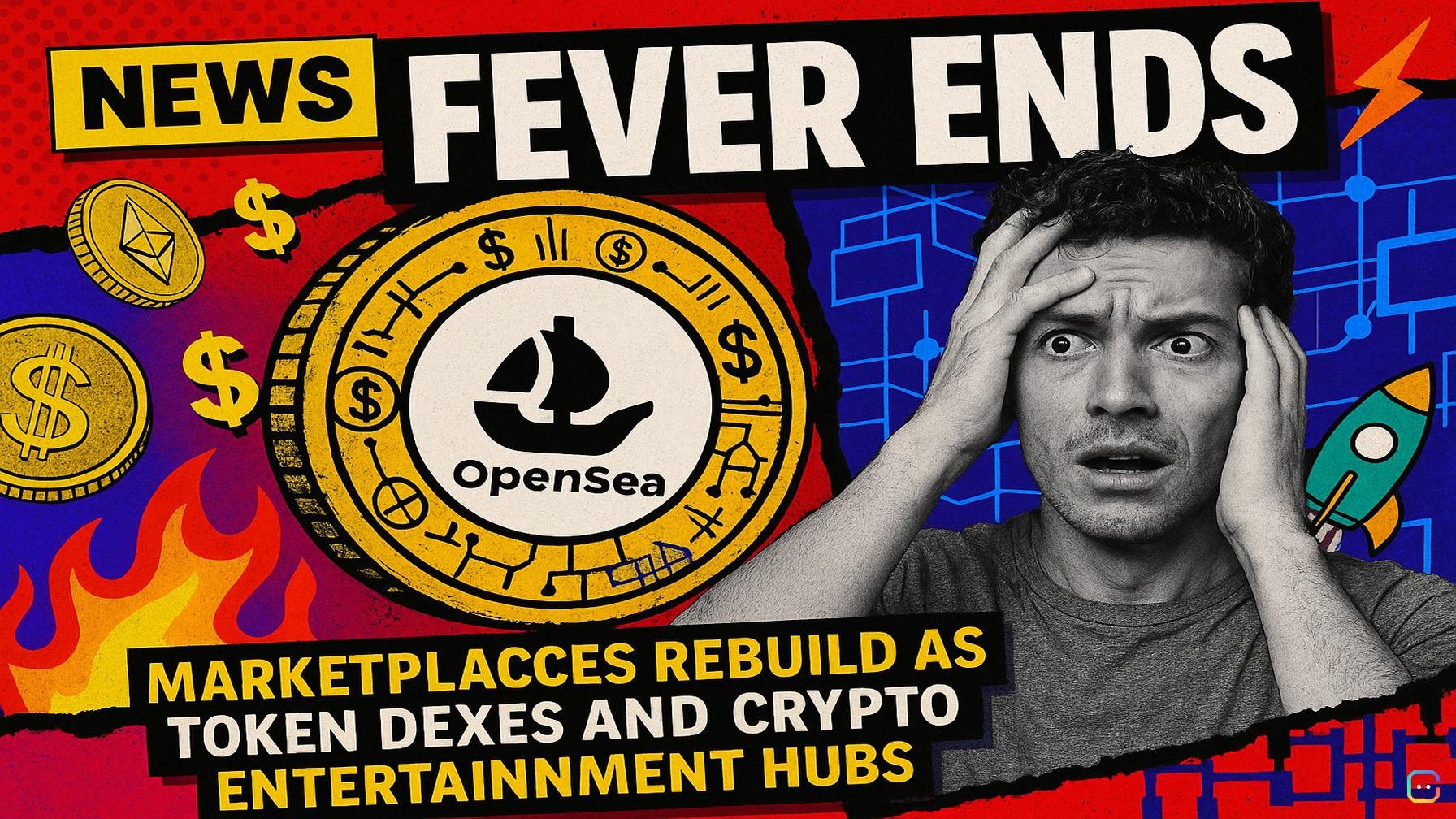
What was once a craze of seven‑figure JPEGs and celebrity apes has collapsed into a fraction of its former size. According to CoinMarketCap, the combined NFT market cap has plunged from a 2023 peak of $184 billion to roughly $487 million in 2025 — a roughly 99% decline. That collapse has forced marketplaces to restructure their products and revenue models, expanding beyond pure non‑fungible collectibles into fungible token trading, gaming, and other “crypto entertainment” services.
OpenSea’s OS2: NFTs meet token DEX
OpenSea answered with a full rebuild. In February it launched OS2, a cross‑chain platform and integrated decentralized exchange that brings NFTs and tokens under one roof. The open beta teased multi‑chain support and new “Voyages” rewards that observers suspect will tie into a future SEA token. Adam Hollander, OpenSea’s CMO, told Decrypt that adding tokens is an evolution, not a pivot: the company wants users to trade “tokens, digital collectibles, tokenized real‑world assets, perps, prediction markets” — anything people value online.
The move produced a headline month for OpenSea’s DEX: October saw $2.41 billion in trading volume. But the spike was short‑lived — volume fell about 75% to $581.48 million in November, per DeFiLlama — still dwarfed by Uniswap’s nearly $80 billion in November volume. The data underline both the potential and the scale gap between retooled NFT markets and incumbent DEX giants.
Magic Eden doubles down on culture and entertainment
Magic Eden has taken a different but equally expansive tack. In April it acquired meme‑coin trading app Slingshot, bringing non‑NFT token trading into its product mix, and it already offers multi‑chain token trading via its marketplace and Wallet app. Yet Magic Eden’s leadership plays down token trading as a central focus. “That market is incredibly commoditized,” Chief Business Officer Chris Akhavan told Decrypt, noting many established wallets, DEXes, and centralized exchanges already serve token traders.
CoinShares’ head of research James Butterfill argues otherwise: Magic Eden has been “more aggressive” than OpenSea in its token integrations, particularly around Solana and gaming ecosystems. He describes the marketplace evolving into an “application layer” for digital culture — expanding beyond NFTs into broader creator and fan experiences. That strategic shift has helped both OpenSea and Magic Eden stabilize engagement and diversify fee income during a year when traditional NFT volumes stayed muted.
Entertainment products, not just markets
Magic Eden is explicit about its ambitions: it aims to build a “crypto entertainment” ecosystem. Its Packs product — virtual packs that can contain real‑world assets (currently Pokémon cards) or NFTs — has already cleared “tens of millions” in volume, according to Akhavan. The company is also developing Dicey, a crypto casino and sportsbook, which Akhavan described as a “major new product.” Magic Eden says Packs are just the beginning of a larger entertainment roadmap as it pursues the goal of becoming the biggest crypto entertainment brand.
What’s next for marketplaces?
Analysts say the long‑term winners will be those that either offer clear structural differentiation or create a seamless, hard‑to‑replicate integration between NFT and token rails. As Butterfill put it, these platforms are increasingly “cultural liquidity hubs” sitting between creators, collectors, and token communities — but their ultimate success depends on whether those cultural economies keep growing and whether users come to see these marketplaces as essential infrastructure rather than optional storefronts.
Bottom line: the NFT boom is behind us, but the underlying market is far from dead. Marketplaces that broaden their playbooks — blending token trading, gaming, collectibles, and entertainment — stand the best chance of surviving and shaping the next phase of digital‑asset culture.
Read more AI-generated news on: undefined/news