Engie is exploring a pragmatic — and potentially industry-shifting — way to squeeze more value from its massive new solar farm in Brazil: pairing the site with battery storage or bitcoin-mining data centers to soak up excess generation that the grid can’t take.
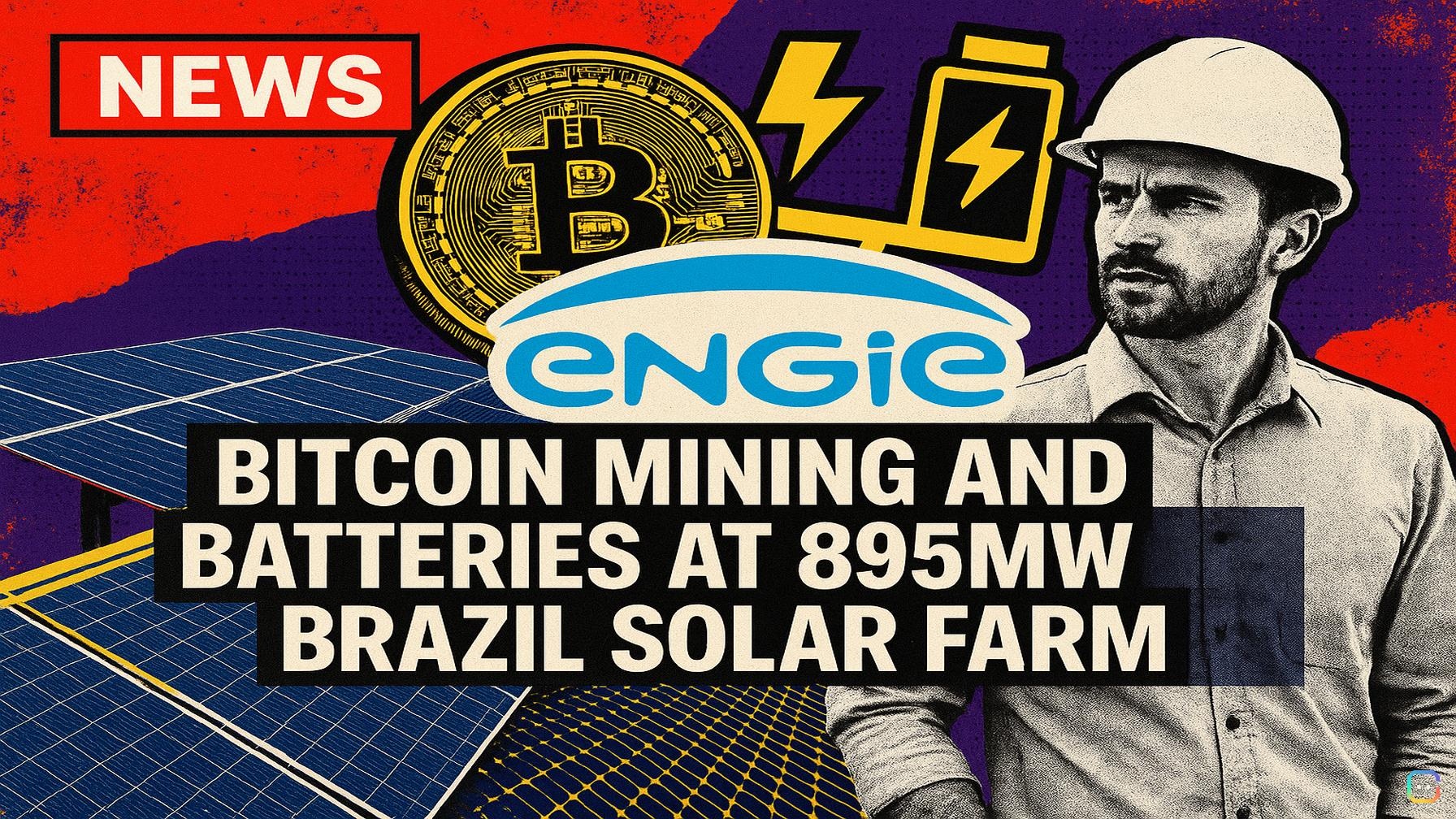
Reuters reported Monday that Engie’s Brazil arm is studying options for Assu Sol, which the company calls its largest solar project worldwide. The plant, in northeast Brazil, has 895 MWp of installed capacity and entered full commercial operation this month. But like many renewables in the country, Assu Sol is already facing output curtailments — deliberate reductions in generation used by grid operators to balance supply and demand — and Engie is looking for local “demand solutions” to limit the economic impact.
“We are looking at some possible offtakers,” Eduardo Sattamini, Engie’s country manager for Brazil, told Reuters. “That’s not coming next month. It will take a couple of years for us to implement.” His comments frame this as an infrastructure planning exercise, not an imminent mining rollout. The utility is evaluating battery storage or “data centers for bitcoin mining” as two candidate ways to monetize stranded or curtailed power at the project level.
Why the bitcoin angle matters for crypto markets: this isn’t primarily about chasing hash rate. It’s about power-market economics. If a utility can create guaranteed local demand when the grid can’t absorb renewable output, bitcoin miners — highly flexible, interruptible loads — become a useful tool to stabilize revenue at the site. For miners, that turns a potential source of cheap, otherwise-curtailed energy into a reliable supply. For utilities, it’s another option alongside storage or industrial buyers to reduce losses from curtailed production.
Curtailment has become a serious drag on Brazilian renewables since 2023, Reuters notes, inflicting billions of reais in sector losses. The culprits are familiar: a rapid buildout of wind and solar capacity outpacing demand growth, transmission bottlenecks, and growth in distributed rooftop solar that changes net load patterns.
The Engie story adds weight to a growing theme in mining strategy: large power producers and grid operators increasingly view flexible loads like bitcoin mining through the lens of grid management and monetization, not simply speculative data-center deployment. Engie — one of Europe’s biggest utilities and one that is 23.64% owned and 33.20% controlled by the French government — would be a significant name to embrace that approach.
If the company moves ahead, the near-term effect on global hash rate is likely limited given the “couple of years” timeline Sattamini outlined. The bigger takeaway for the crypto sector is strategic: major utilities are considering miners as potential grid-adjacent partners to turn otherwise curtailed renewable energy into value.
At press time, Bitcoin traded at $63,123.
Read more AI-generated news on: undefined/news