Visa is pushing deeper into crypto while posting solid quarterly results.
Key numbers first: Visa reported $11.63 billion in net revenue for fiscal Q3, a 14% year-over-year increase. Payments volume and processed transactions each rose 10%, cross-border volume climbed 13%, and adjusted earnings were $6.3 billion ($3.32 per share).
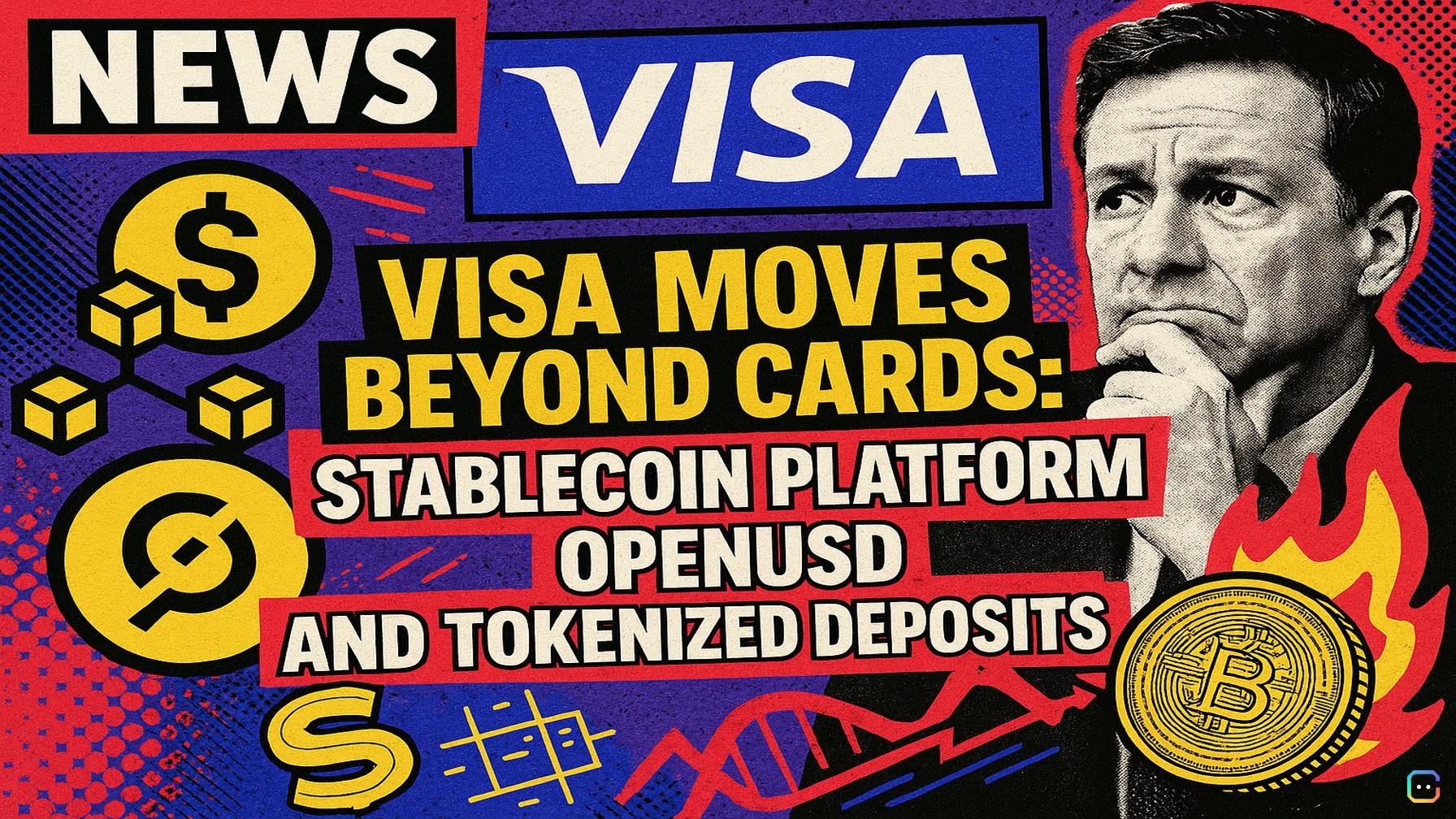
But the headlines for crypto watchers came from the company’s July 28 earnings call, where Visa laid out an expansive stablecoin and tokenization roadmap. The plan ties together OpenUSD, tokenized bank deposits, multi‑chain settlement, and AI-driven commerce — and positions Visa as a connector that links banks and payment firms to these new rails, rather than as a one‑asset issuer.
What Visa is building
- Visa Stablecoin Platform (announced July 16): a Visa‑managed environment offering wallet infrastructure and tools to mint, hold, transfer and redeem stablecoins. It’s in beta with selected clients; no wider launch date has been set.
- Settlement pilot: Visa already allows selected issuers and acquirers to settle with supported stablecoins. That pilot reached a $7 billion annualized run rate by March after a 50% quarter-over-quarter increase, and now supports nine blockchains — Ethereum, Solana, Base, Polygon, Avalanche, Stellar, Canton, Arc and Tempo.
- OpenUSD (OUSD): OpenUSD will be the first asset integrated into Visa’s beta platform. Once services go live, clients will be able to connect bank accounts, create managed wallets and access mint/redemption functions for OUSD. However, Visa emphasized a longer-term “multi‑coin, multi‑chain” stance: “Our role is not to pick winners,” the company said, noting it aims to connect clients to whatever regulated systems gain adoption. External observers — for example, ARK Invest researcher Lorenzo Valente — have described Visa’s involvement with OpenUSD as more like a “soft LOI” than a full strategic wager; Visa itself has not framed it that way.
Broader ecosystem moves
- OpenUSD momentum: Visa, Mastercard, Coinbase and more than 140 businesses joined the Open Standard initiative backing OpenUSD. The token is expected to launch later in 2026, but final issuance volume and adoption remain unclear.
- Tokenized deposits via Pismo: Visa plans to link the stablecoin platform with Pismo, the cloud banking infrastructure company it acquired in 2024. Tokenized deposits differ from typical stablecoins because they represent a customer’s claim on a specific regulated bank. Visa says this will let banks convert traditional deposits into programmable, continuously available digital money while keeping funds on bank balance sheets. The company also plans to support other third‑party tokenized‑deposit providers, but hasn’t named partners or given a timeline.
AI and agentic commerce
Visa sees stablecoins as a way to simplify back‑end settlement and AI agents as a way to transform the front end of commerce. The company has rolled out agent identity, token assurance and transaction‑control tools designed to let software agents pay within preset limits. It has partnered with OpenAI on agentic commerce tests and experimented with payment credentials for autonomous software — though mass adoption hinges on merchant, bank and consumer uptake plus unresolved liability, authentication and consent frameworks.
Market reaction and what’s next
Despite beating analyst estimates, Visa shares dipped roughly 1% in after‑hours trading following the release; that move wasn’t directly tied to the crypto commentary. Near‑term milestones to watch are expanded testing of the Visa Stablecoin Platform, more details on the Pismo tokenized‑deposit integration, and the eventual OpenUSD launch — none of which currently have firm dates.
Bottom line: Visa is transitioning from a pure card network toward a role as infrastructure provider across stablecoins, tokenized deposits and agentic payments. The company is making meaningful technical and commercial moves, but it’s deliberately keeping a multi‑asset, multi‑chain posture — leaving the door open as the market decides which rails and tokens gain traction.
Read more AI-generated news on: undefined/news