Ethereum’s tug-of-war: stronger fundamentals, softer price action
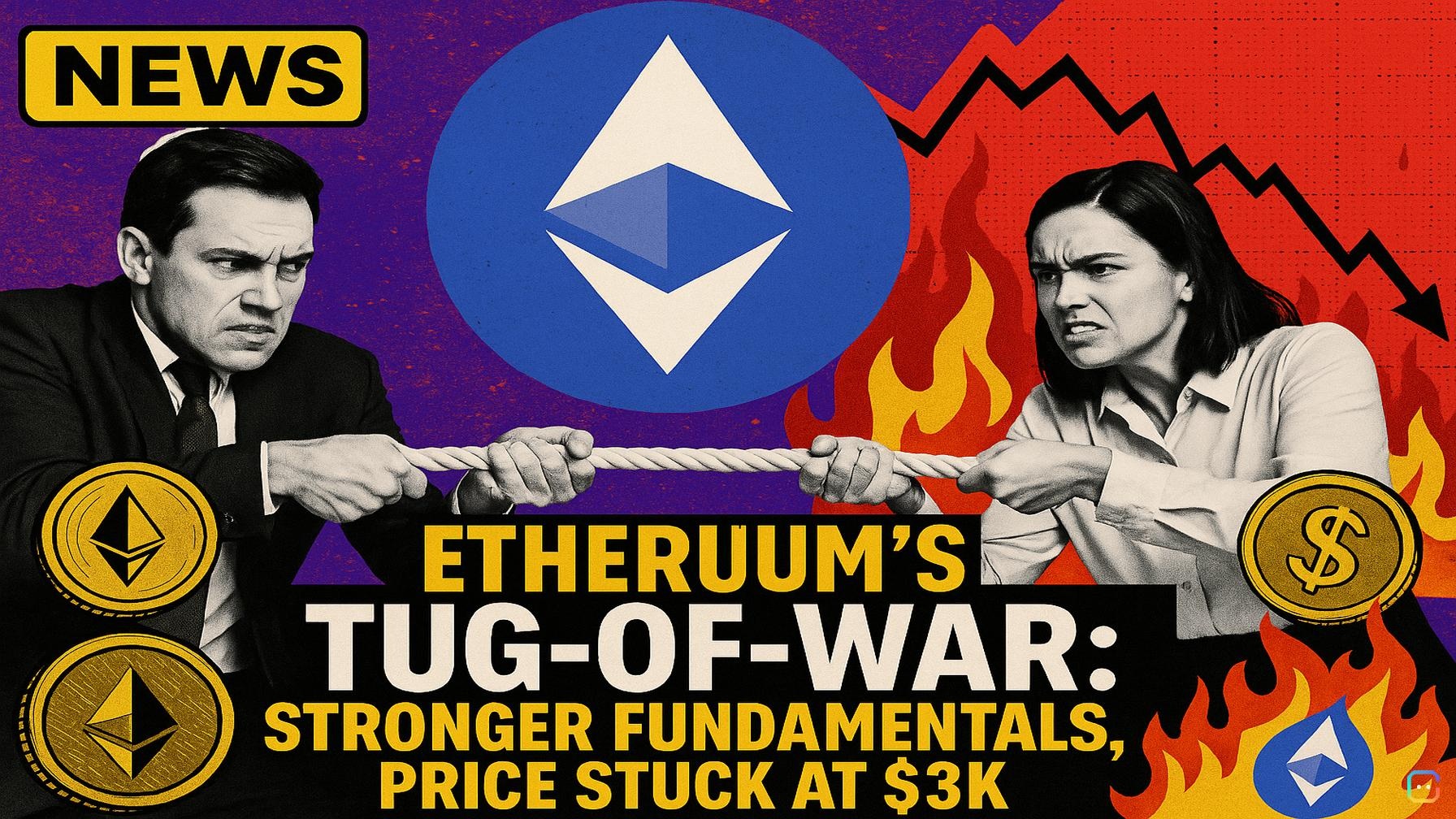
Ethereum finds itself stuck in a high-stakes tug-of-war. On-chain fundamentals look increasingly robust, but price action has been stubbornly muted — and that disconnect is drawing fresh scrutiny from traders and institutions.
A stretched sideways market
Technically, the broader market’s indecision isn’t unprecedented: large-cap tokens typically show a clear directional bias after roughly five weeks of sideways trading. This cycle has stretched past seven weeks with no confirmed breakout, pushing top caps deeper into leveraged liquidity and raising the stakes for any decisive move. For ETH specifically, the $3,000 area is emerging as a key battleground: it’s now beginning to look like a genuine test of market conviction.
Q4 pain versus fundamental gains
Ethereum finished Q4 with a -28.28% return, its weakest quarter relative to Bitcoin since the 2019 cycle. That performance has fueled criticism that recent protocol upgrades “failed” to move the needle. Yet the on-chain picture tells a different story.
Evidencing better scalability and lower fees, Etherscan data shows record smart contract deployments at 8.7 million, while average transaction fees have plunged to roughly $0.17 — a dramatic change from the days when fees spiked near $200 in 2022. Even after a post-October crash uptick to $8.48, the overall fee trend remains downward. Meanwhile, the network recently recorded up to 2.2 million daily transactions, demonstrating that Ethereum can grow throughput without reigniting fees.
In short: upgrades appear to have materially improved on-chain efficiency even if prices haven’t reflected it yet.
Institutional flows and the valuation debate
Despite improving fundamentals, institutional flows have been leaning away from Ethereum. ETH-focused ETFs registered $72 million in outflows across all nine funds — a red finish to 2025 — intensifying the narrative that ETH may currently be “overvalued.” That argument is reinforced by cross-chain comparisons: a chart cited from Solscan shows Solana recording 232 million total transactions (about 25% non-vote transactions) over the same reporting window versus roughly 1.2 million on Ethereum in that dataset. Those raw throughput numbers have convinced some smart-money allocators to favor faster, cheaper chains as alternatives or hedges.
Bitcoin’s Q4 resilience hasn’t helped ETH’s case either; BTC’s outperformance keeps it in the “digital gold” lane while Ethereum scrambles to prove its value as a high-utility, decentralized platform.
What it means for traders and investors
- Fundamentals: Upgrades have delivered clear on-chain benefits — lower fees, record contract deployments, and strong daily Tx counts — suggesting the network’s scalability narrative remains intact.
- Price action: ETH is trapped in a tight $2.7k–$3.2k range and hasn’t produced the decisive breakout many technicians expect after weeks of consolidation.
- Flows: Ongoing ETF outflows and capital rotation into alternatives like Solana indicate institutional caution and a potential reallocation away from perceived “slower” or more expensive networks.
Bottom line
Ethereum’s story right now is a classic fundamentals-versus-price divergence. The protocol upgrades have meaningfully improved on-chain efficiency, but institutional demand and market structure haven’t yet rewarded ETH’s narrative — leaving the $3k level as a critical test. Whether price catches up to the improved fundamentals, or institutions continue to favor other chains and BTC, will likely dictate Ethereum’s next big move.
Disclaimer: This article is informational and not investment advice. Cryptocurrency trading carries high risk; do your own research before making investment decisions. © 2026 AMBCrypto
Read more AI-generated news on: undefined/news