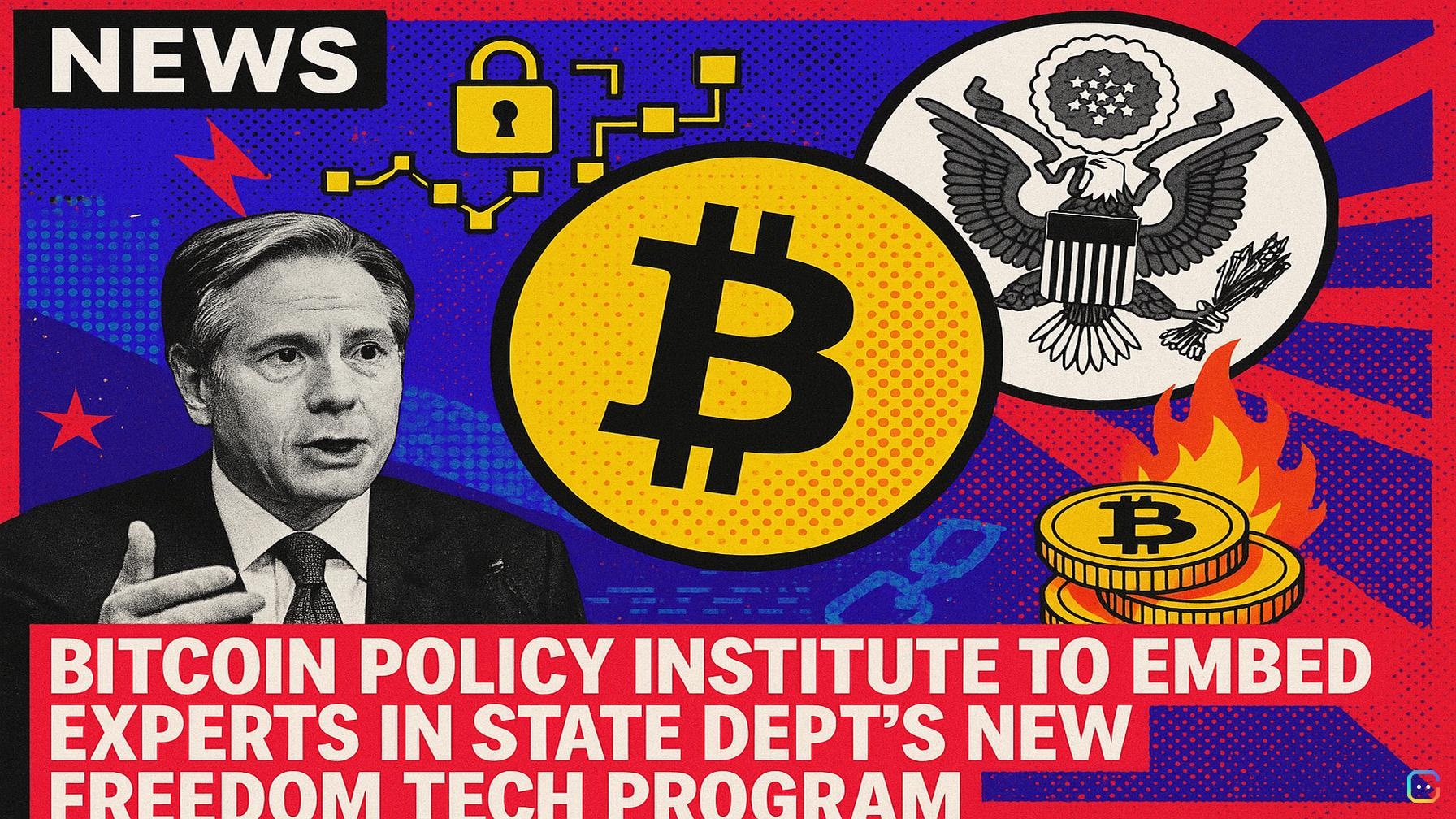
The Bitcoin Policy Institute (BPI) has been named a founding partner of the U.S. State Department’s new Freedom Tech Excellence Program (FTEP), positioning the Bitcoin-focused think tank to work inside the department on limited, technical assignments tied to digital freedom and free expression.
What the partnership is
- BPI announced the move on July 24 via X, saying its staff will join State Department teams to work on online speech, privacy tools, digital-surveillance countermeasures and responsible AI governance. The State Department describes FTEP as a talent-parnership that temporarily embeds private-sector experts in government projects while those experts remain affiliated with their employers.
- Other founding partners are Palantir Technologies, Anduril Industries and the Victims of Communism Memorial Foundation — bringing a mix of data software, defense engineering and human-rights expertise to the program.
Scope and limits
- FTEP’s publicly stated mission covers areas such as protecting online freedom of expression, countering unlawful surveillance and scams, expanding access to encryption and VPNs, supporting responsible AI governance and improving online safety for children.
- The State Department has not disclosed how many BPI staff will participate, when placements will start, which offices or embassies will host them, or how projects will be divided among partners.
- Crucially for the crypto community: FTEP is a digital-policy and talent-exchange program, not a Bitcoin reserve, payment system or federal crypto-licensing initiative. BPI’s role is to support assigned digital-freedom projects — not to run U.S. crypto policy.
Why it matters to crypto watchers
- BPI, founded in 2021 as a non-partisan, non-profit research organization, focuses on Bitcoin policy, national security, financial inclusion, energy and human rights. The group has argued that encryption and open monetary networks can protect journalists, dissidents and people in jurisdictions with restricted speech or banking access.
- Because of that expertise, BPI staff could advise on privacy-preserving tools, censorship-resistant technologies and financial-access solutions in U.S. diplomatic work — but the State Department has not tied any specific Bitcoin deployments to the program.
Context on BPI’s other policy efforts
- BPI has been active in U.S. Bitcoin policy debates: it supported efforts to translate President Trump’s March 6, 2025 executive order establishing a Strategic Bitcoin Reserve into law. That order created a reserve sourced from forfeited BTC and asked officials to study budget-neutral methods to acquire additional Bitcoin.
- Senator Cynthia Lummis reintroduced the Bitcoin Act in March 2025 at a BPI-organized event; that bill proposed the U.S. acquire one million BTC but had not passed when FTEP was announced. Federal officials were still debating which agency would legally control any reserve and how custody would work as of a July 2026 report — questions separate from FTEP’s mandate.
- The State Department program does not give BPI authority over federal Bitcoin holdings or advance the Bitcoin Act.
What remains unclear
- How projects will be allocated among the four founding partners, which bureaus or embassies will host placements, and the precise technologies or tools that will be developed or deployed are all unanswered. Those details will shape whether placements focus on research, technical tool-building, staff training or overseas programs.
- FTEP uses limited-term assignments rather than permanent hires, allowing specialists to return to their organizations with direct experience of diplomatic processes.
Next milestones
- BPI will continue its independent advocacy and events; its Freedom Tech DC summit is scheduled for September 22–23 in Washington and remains separate from the State Department partnership.
- The crypto community should watch for follow-up announcements that reveal how many experts are embedded, where they’ll serve and which projects they’ll work on — signals that will indicate how directly BPI’s expertise feeds into U.S. digital-diplomacy efforts.
Read more AI-generated news on: undefined/news