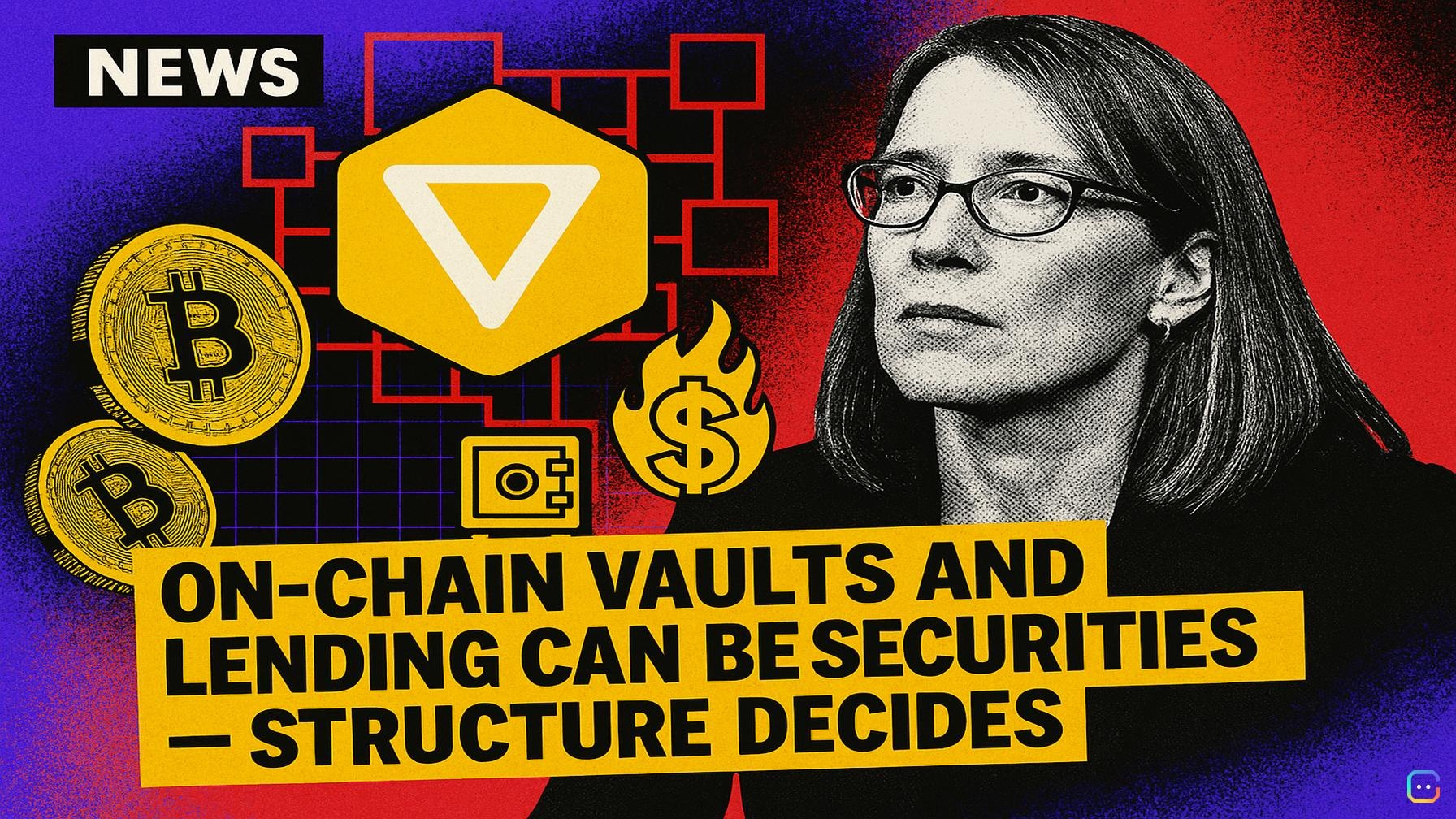
SEC commissioner Hester Peirce warned on July 22 that crypto vaults and onchain lending products can fall under U.S. federal securities laws depending on how they’re structured and run — and that moving activity onto a blockchain doesn’t magically remove legal duties.
Why this matters
- Vaults and lending systems are increasingly popular ways to earn yield: users deposit assets into smart contracts that then stake, lend, or otherwise deploy funds.
- Some vaults follow fixed, code-defined rules; others give managers discretion to pick strategies, move funds, or select counterparties. That operational difference can determine whether a product looks like an investment contract, an investment company, or otherwise falls into the SEC’s remit.
- Onchain lending platforms often set supported assets, rates, loan-to-value limits and liquidation policies — choices that may make certain loans resemble notes or other instruments treated as securities, even when the lent asset itself is not a security.
What Peirce said
- Peirce emphasized that simply tokenizing or putting financial mechanics onchain doesn’t change the underlying legal character of an activity that’s already covered by securities law. “You will have a painful fall,” she warned, addressing market participants who try to read the law in ways that exclude activities already within the securities framework.
- The SEC will evaluate vaults and lending arrangements case-by-case. A vault with a mostly fixed portfolio might look like a unit investment trust, while one with active manager discretion could resemble an actively managed investment company or separately managed account.
- Managers of vaults or lending strategies should also consider investment-adviser obligations, she added.
Regulatory context and next steps
- Peirce’s comments build on her 2025 position that tokenized securities remain subject to securities laws; she extended the same logic to vaults and lending tools.
- She did not call for a ban. Instead Peirce urged developers and operators to examine how their products actually work, to contact the SEC when unsure, and to propose rule changes where current regulations hinder new technology.
- The statement dovetails with broader SEC work on tokenized markets and ongoing debates in Congress — including the CLARITY Act, aimed at dividing regulatory roles between the SEC and the CFTC — and recent appeals from securities-transfer groups for clearer lines around issuer-backed tokenized stocks versus third-party offerings.
What operators should do now
- Audit product mechanics: who decides strategy, how profits are distributed, and whether assets are pooled.
- Determine whether structures create a common enterprise or rely on manager-driven profit expectations.
- Consult securities counsel and consider engaging proactively with the SEC if classification is unclear.
- Where current rules impede innovation, propose targeted regulatory changes to the agency.
Peirce, who has led the SEC’s Crypto Task Force since January 2025, is expected to leave the agency in November to join Regent University School of Law. Her message is blunt but clear: blockchain engineering won’t by itself sidestep U.S. securities duties — thoughtful product design and regulatory engagement will.
Read more AI-generated news on: undefined/news