Pavel Durov is bringing a built‑in, non‑custodial crypto wallet to Telegram’s massive user base — and he’s promising fee‑free transfers.
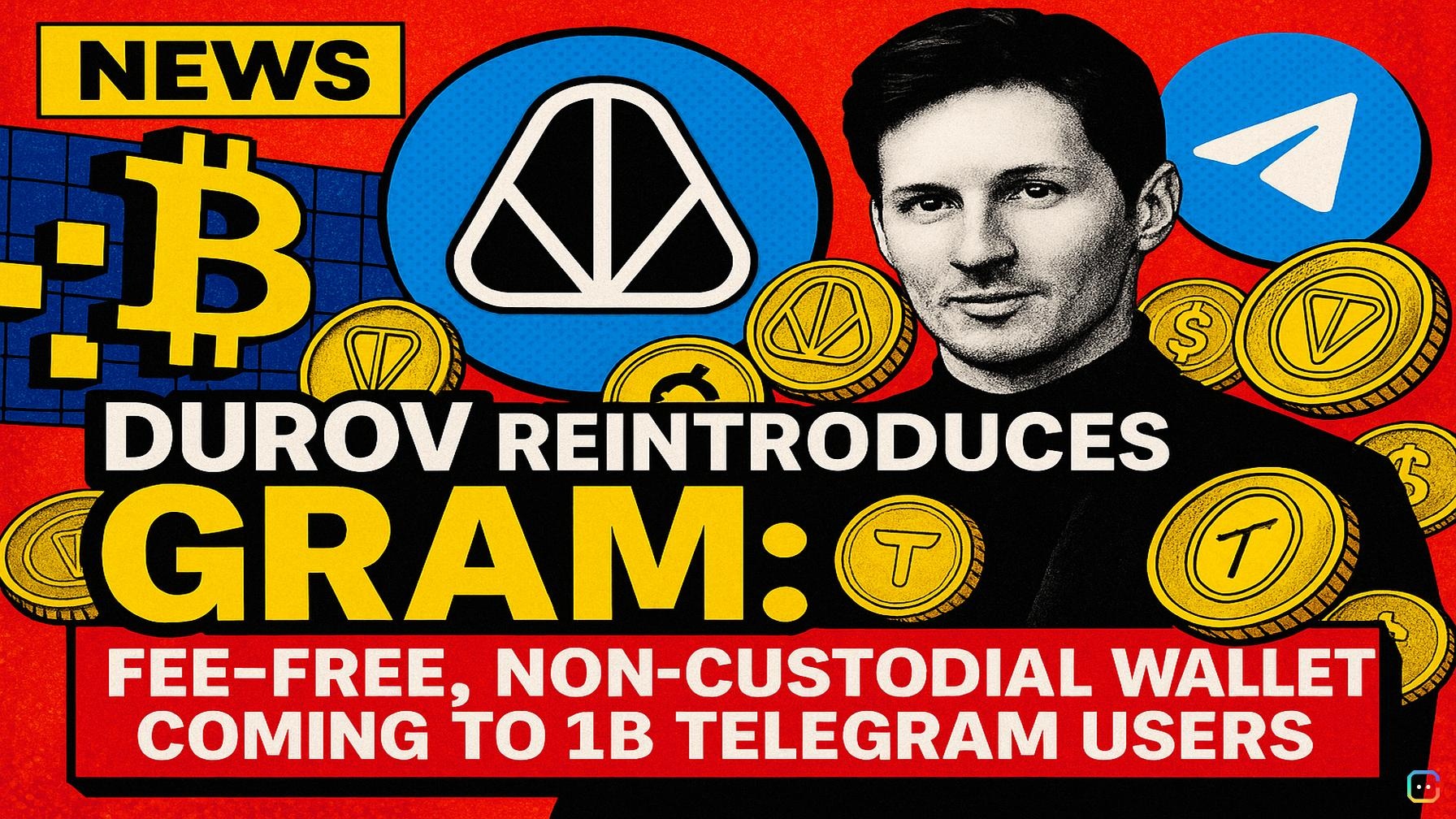
In a post on Telegram, the founder announced that a native Gram wallet will be rolled out inside the app this summer to more than 1 billion monthly users. Durov called the move “the largest rollout of a non‑custodial crypto wallet in human history.” The wallet will be integrated directly into Telegram, so users won’t need to install a separate app to send crypto to contacts. According to Durov, transfers will be instant and free.
What’s clear — and what isn’t
- Non‑custodial: Telegram says the wallet will let users keep control of their private keys rather than handing assets to Telegram or another custodian.
- Scale: With Telegram’s reported 1+ billion monthly active users (2025), even modest adoption could onboard millions into self‑custody and peer‑to‑peer crypto payments.
- Missing details: Telegram has not disclosed a firm release date, which assets will be supported, or how network costs will be covered while keeping transfers fee‑free. The company also hasn’t explained recovery options, security safeguards, regional availability, or whether identity checks will be required for some services.
Gram returns — and market reaction
The announcement follows The Open Network’s (TON) decision to rename its native token from Toncoin back to Gram, restoring the name from Telegram’s original 2018 blockchain white paper. Durov framed the change as a return to the project’s early identity, while the blockchain keeps the name The Open Network.
Reporting from crypto.news said the token rename took around three weeks and didn’t require holders to swap coins. Markets reacted: Gram reportedly jumped as much as 19%, trading at $2.21 after the rename and Telegram’s renewed involvement.
Regulatory context and history
The Gram name carries baggage. Telegram’s first blockchain project used the Gram token and raised about $1.7 billion in private funding before the U.S. SEC sued in 2019, alleging the token sale involved unregistered securities. Under a 2020 settlement cited by the SEC, Telegram agreed to return more than $1.2 billion to investors and pay an $18.5 million civil penalty, then withdrew from the project. Independent developers continued the open‑source work that evolved into today’s TON network.
Telegram’s deeper TON integration
Since exiting the original project, Telegram has gradually woven TON services into the app. The Financial Times reported that advertisers can buy Telegram ads with TON tokens, creators can receive crypto payments, and developers are building games, stores and other services on TON. Durov has also highlighted major venture capital interest: he said VC firms have invested over $400 million in Toncoin/Gram, naming backers such as Sequoia, Benchmark, Ribbit Capital, Draper Associates and Vy Capital.
Agentic Wallets: AI meets self‑custody
One noteworthy TON development is TON Tech’s April 28 launch of an Agentic Wallets standard. Designed for autonomous AI agents accessed via Telegram bots, Agentic Wallets are self‑custody smart‑contract wallets funded and permissioned by users. Under the model, a user:
- Funds an on‑chain wallet for an AI agent and grants it limited permissions (e.g., transfers, token swaps, DeFi interactions),
- Sets spending budgets and can withdraw funds or revoke access at any time, and
- Retains ultimate control — no intermediary holds the money and existing TON wallets reportedly don’t need upgrades to work with the standard.
Agentic Wallets are oriented toward automated services, while the planned Gram wallet appears aimed at person‑to‑person payments. Telegram has not said whether the new Gram wallet will interoperate with Agentic Wallets or other TON products.
Bottom line
Durov’s announcement sets ambitious scale — a fee‑free, non‑custodial wallet inside an app with over a billion users — and reignites interest in the Gram name. But technical and policy details remain unresolved: assets supported, global vs. phased rollout, fee mechanics, security and recovery systems, KYC/regulatory handling, and potential integration with TON’s agent standards. For now, the market has reacted, developers are building, and the crypto community will be watching Telegram for the technical docs and rollout timeline that will determine whether this becomes a major step toward mainstream self‑custody or another high‑profile crypto experiment with unanswered questions.
Read more AI-generated news on: undefined/news