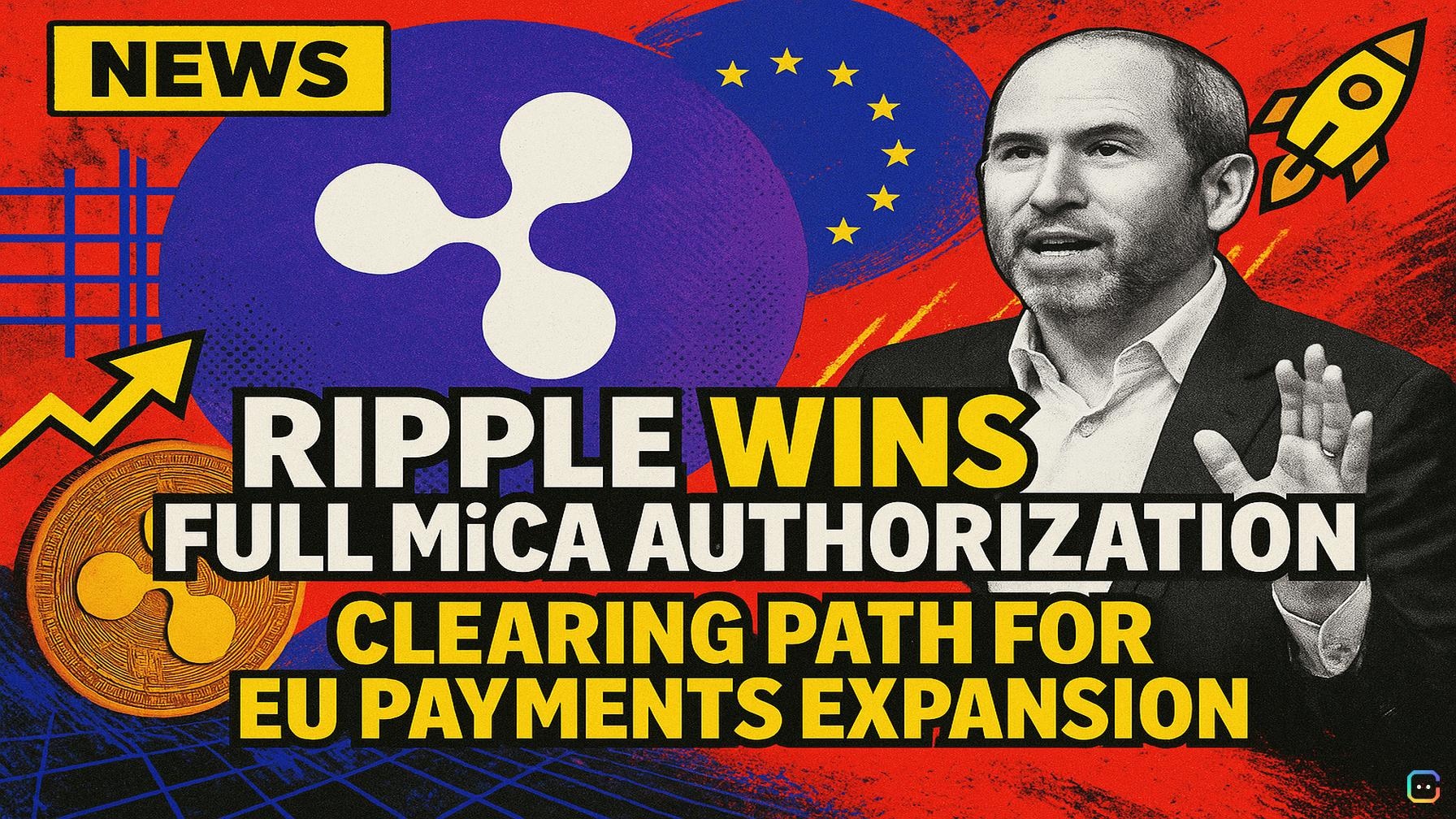
Ripple scores full MiCA authorization, clearing a path for wider European payments
Ripple has won full authorization under Europe’s Markets in Crypto‑Assets (MiCA) framework for its corporate payments entity, clearing a major regulatory hurdle for expanding crypto‑enabled payment services across EU and EEA markets. The license lets Ripple operate under a unified EU regime — but it is a business‑level authorization, not a blanket endorsement of XRP trading or of the token as an investment.
Why it matters
- MiCA creates one standardized rulebook across member states, reducing the need to navigate dozens of national regimes. That makes it easier for licensed firms to scale operations across Europe while meeting compliance obligations.
- For Ripple, whose core proposition is regulated payments and settlement infrastructure, MiCA authorization should simplify conversations with banks, payment firms, fintechs and institutional partners. Clear regulatory status helps legal and compliance teams assess risk, and makes operational partnerships more feasible.
- The move could strengthen Ripple’s position in European payment corridors, potentially smoothing adoption among regulated institutions that prefer well‑defined oversight.
What it does — and doesn’t — mean
- It authorizes Ripple’s crypto‑asset services under MiCA; it does not mean European regulators have approved XRP as an investment product, nor does it automatically clear all XRP trading across Europe. Token demand and price remain dependent on actual usage, liquidity and product adoption.
- The authorization delivers permission to operate more openly in Europe, but Ripple still needs to convert that permission into volume, partnerships, and concrete integrations with banks and payment providers.
The broader context
- MiCA has become one of the most attractive regulatory frameworks globally because it replaces fragmented national rules with a single, relatively clear regime. That clarity is drawing exchanges, custodians, stablecoin issuers, infrastructure providers and payments firms to secure European footing.
- Firms that obtain authorization early can gain a commercial edge, presenting a stronger compliance story to institutional clients while competitors complete approvals. For Ripple — focused on cross‑border payments — that timing could be meaningful.
What to watch next
- Whether Ripple announces new European clients, expanded payment corridors, or deeper bank and payment‑provider integrations following its MiCA approval. Those developments would be the real test of impact for XRP holders and for Ripple’s European strategy.
- How much payment volume and institutional usage the company can generate — licenses grant the right to operate, but don’t by themselves create demand.
Bottom line
Ripple’s MiCA authorization is an important licensing milestone that makes Europe a more navigable market for its payments business. It enhances institutional trust and regulatory clarity — valuable assets for scaling in a key jurisdiction — but it is a step, not the finish line, for driving adoption and affecting XRP’s market dynamics.
Source: Based on disclosures from Ripple and ESMA. Report written by the News Desk; edited by Samuel Rae.
Read more AI-generated news on: undefined/news