Headline: Solana’s SIMD-0096 Sparks Important Debate Over Priority Fees and Validator Incentives
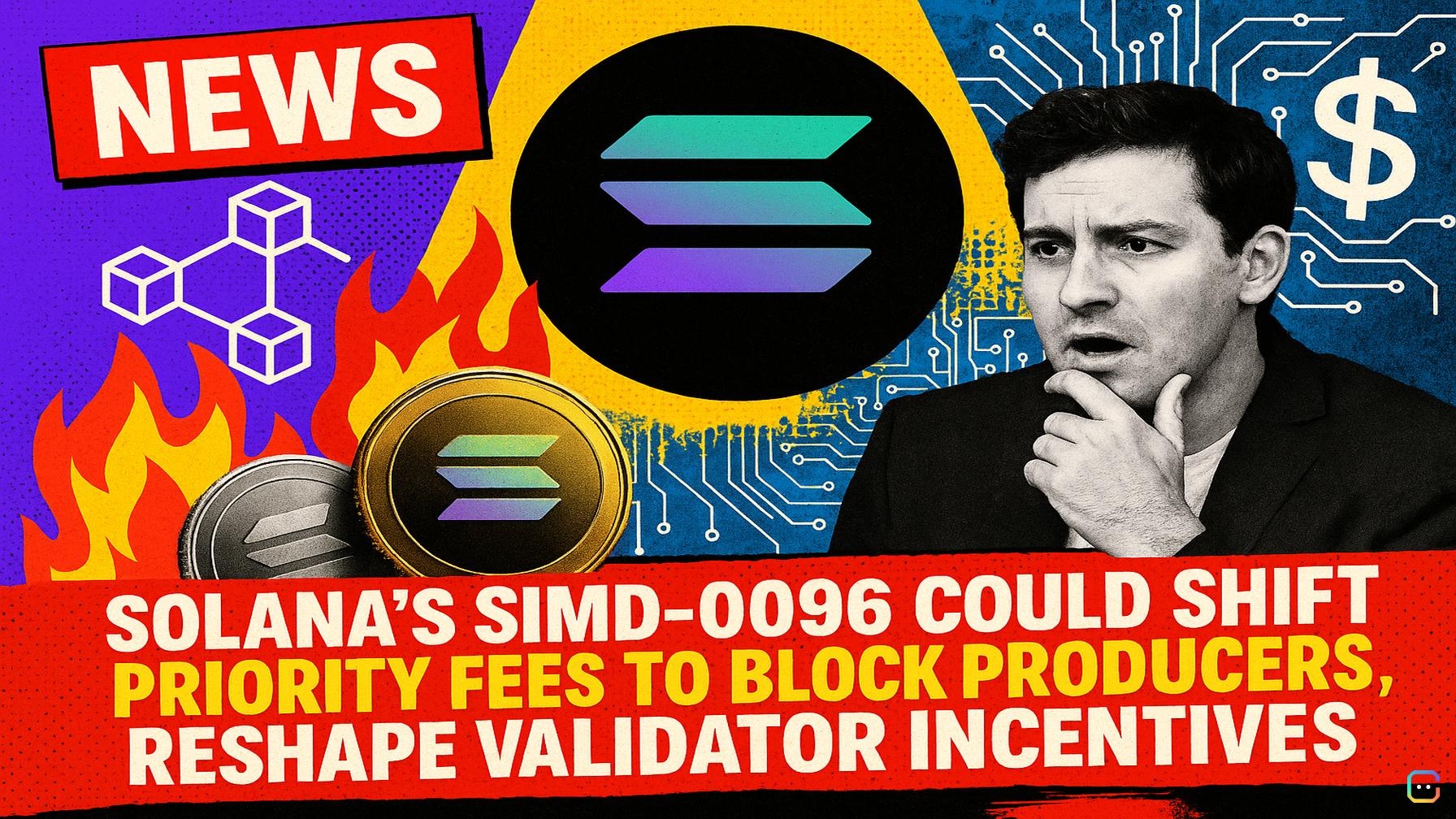
Solana’s ongoing discussion around SIMD-0096 — a proposal clarifying how priority fees should be allocated — may not be the flashiest headline in crypto, but it’s a consequential one for anyone who cares about how the network actually runs.
What changed
- SIMD-0096 aims to clarify the distribution of priority fees, the additional fees users pay to have transactions processed faster during congested periods.
- Those fees can become a meaningful part of validator economics on a busy chain, so any change to their allocation has downstream effects on network incentives.
Why it matters
- Solana’s competitive edge is built on both raw performance and the economic design that keeps validators honest and active. Speed alone isn’t enough — validators must be incentivized to secure the chain and process transactions efficiently.
- If a larger share (or 100%) of priority fees flows directly to block producers, validators could receive more immediate rewards for servicing high-demand windows. That shifts incentives and could change behavior during peak times — for better or worse — depending on how it’s implemented.
What SOL holders should watch
- The relevant question isn’t whether SIMD-0096 will move SOL’s price in the short term but whether it improves the long-term economics of running and securing Solana.
- If priority-fee allocation aligns validator incentives while preserving low-cost user activity, it strengthens Solana’s position among high-performance chains. If not, it could introduce trade-offs that reduce network efficiency or accessibility.
Context and caution
- This proposal arrives amid a busy news cycle — ETFs, regulatory moves, exchange activity, on-chain flows — so separating the underlying development from market noise is important.
- Source-backed changes like SIMD-0096 are useful data points, but traders should avoid overinterpreting them. A protocol tweak doesn’t guarantee lasting demand, and on-chain signals don’t always translate into finished market outcomes.
- Treat the proposal as a concrete update and monitor follow-up actions — governance votes, implementation details, validator behavior — to see whether it drives meaningful change.
Where to learn more
- The discussion and full text live on Solana’s official GitHub repository for those who want the primary source.
This report is based on the Solana improvement proposal discussion. Written by the News Desk; edited by Samuel Rae. Source: GitHub.
Read more AI-generated news on: undefined/news