Hong Kong regulators back changes to CVAP exam after industry talks, promise lower fees and better study support
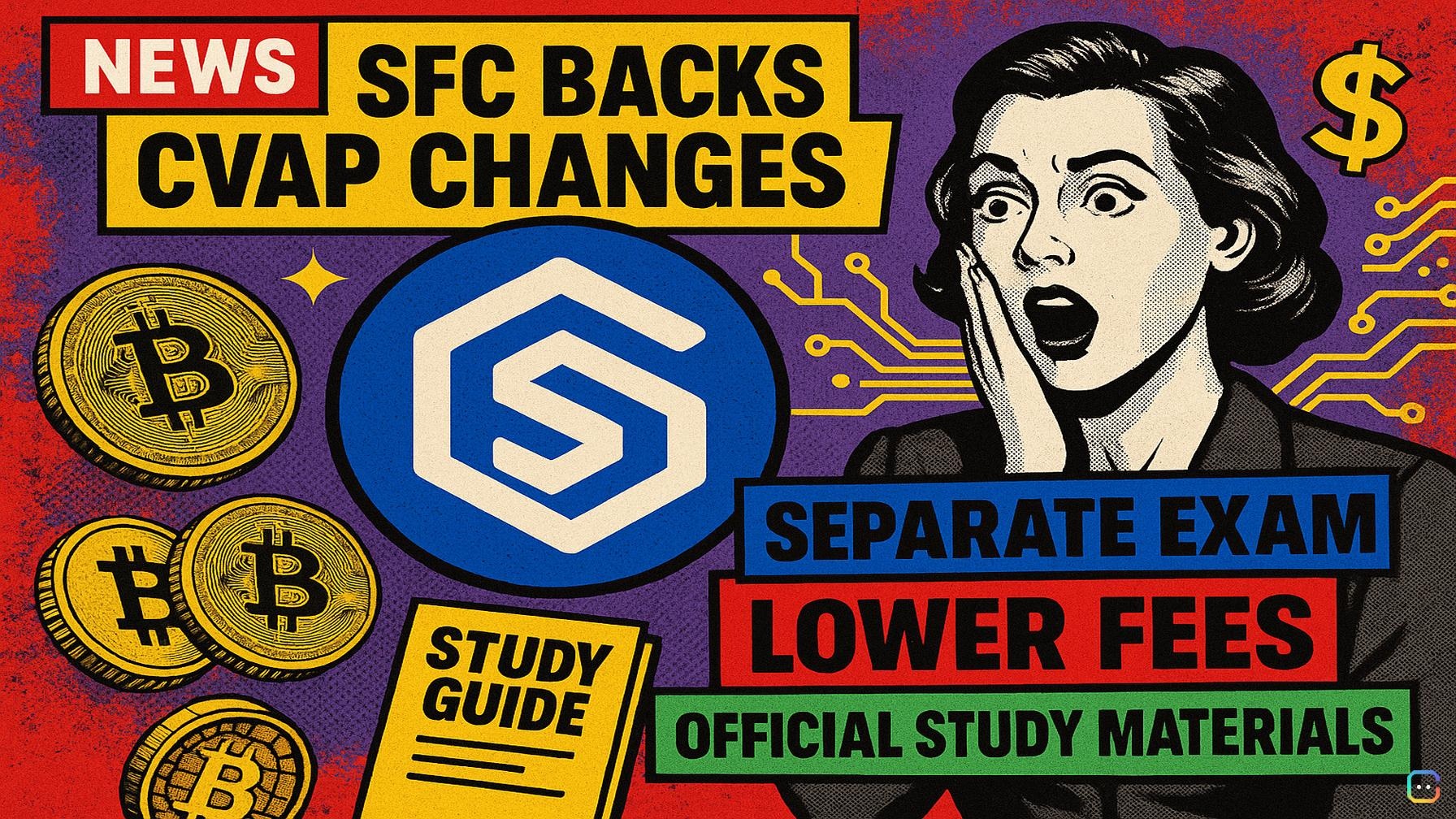
Hong Kong’s Securities and Futures Commission (SFC) has agreed to a series of changes to the Certified Virtual Asset Platform (CVAP) exam after meetings with the Hong Kong Securities and Futures Professionals Association, the regulator confirmed. The commitments — which include separating the CVAP exam from its mandatory training course, providing official revision materials and cutting assessment fees — aim to reduce barriers for professionals entering the city’s regulated digital-asset market.
What changed
- The SFC will allow candidates to sit the CVAP exam independently of the mandatory training course, rather than forcing enrollment in the course before testing.
- The regulator plans to publish official revision materials for candidates.
- Exam fees will be reduced to align with the fees charged for existing Paper 2 and Paper 3 licensing exams.
These concessions came after discussions involving the association and senior officials including Deputy Secretary for Financial Services and the Treasury Joseph Chan Ho-lim and Ye Chi-heng, Executive Director of the SFC’s Intermediaries Division.
About CVAP
The Certification Programme for Virtual Asset Professionals (CVAP) is Hong Kong’s flagship qualification for the digital-asset industry. Administered by the Hong Kong Securities and Investment Institute (HKSI) to SFC standards, the programme certifies knowledge in blockchain fundamentals, digital-asset products and anti-money‑laundering compliance.
Industry concerns raised
The association used the meeting to press several operational and policy concerns tied to recent virtual-asset rules:
- Removal of the previous 10% minimum exemption for virtual asset management and the immediate effect of new rules (with no transition period) have increased uncertainty for firms preparing to enter or already operating in the space.
- Many new requirements are principle-based and lack practical, operational guidance — complicating compliance and business planning.
- The association questioned whether the CVAP examination framework had been formally approved by the SFC board; the SFC did not directly confirm board sign-off, but said the exam is conducted under powers granted by the Securities and Futures Ordinance and encouraged existing license holders to take the exam promptly.
Ongoing issues and asks
The association said discussions will continue with the Financial Services and the Treasury Bureau and the SFC on unresolved operational items, including:
- Guidance for private funds seeking self-custody arrangements.
- Clearer boundaries between technology service providers and regulated activities (arguing that firms that don’t hold customer assets or take commissions should not be automatically subject to licensing).
- The regulatory framework for virtual-asset payments.
- Easing certain operational demands on licensed virtual-asset trading platforms — proposals included allowing more hardware encryption options, reviewing hot/cold wallet ratio requirements, reassessing insurance rules and streamlining procedures for on‑chain transfers.
The association also asked regulators to publish clearer processing schedules and milestone-based guidance after the SFC acknowledged that surging demand for virtual-asset licences has strained staffing and contributed to uncertainty over approval timelines.
Derivatives and retail access
The group urged faster approvals for virtual-asset derivatives, noting that Hong Kong retail investors currently can buy only five spot cryptocurrencies on regulated venues — Bitcoin, Ether, Avalanche, Chainlink and Solana — and lack regulated hedging products.
Regulatory context and timeline
These talks come as Hong Kong continues to roll out a comprehensive virtual-asset framework. In May, the Financial Services and the Treasury Bureau and the SFC confirmed plans to create licensing regimes for virtual-asset advisory and management service providers — extending oversight beyond trading platforms, custody services and stablecoin issuers. The government said legislation covering trading, custody, advisory and management services will be introduced alongside a regulated stablecoin framework; the first licensed stablecoins are expected to enter circulation between mid‑2026 and the second half of 2026.
Why it matters
Separating the exam from mandatory training, cutting fees and providing official study materials could lower time and cost barriers for professionals seeking SFC‑aligned qualifications, helping firms scale compliance capability more quickly. But the association’s broader push for clearer operational guidance and faster product approvals highlights the practical frictions still facing market entrants as Hong Kong builds out its regulated virtual‑asset ecosystem.
Read more AI-generated news on: undefined/news