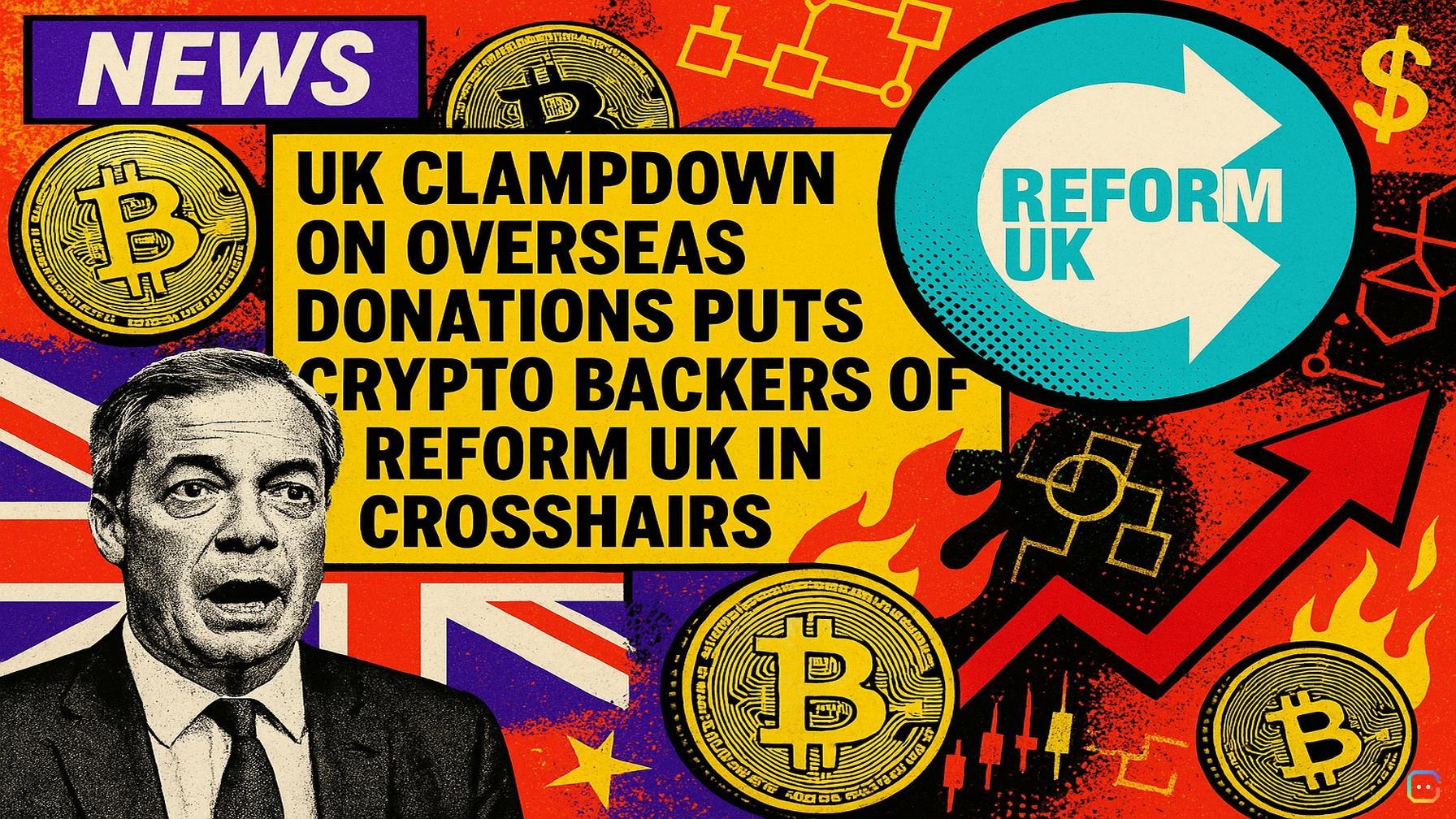
Nigel Farage’s surprise return to frontline politics on 3 June 2024 has left more than a few people scrambling for explanations — and raised fresh questions about the influence of crypto money on British politics.
The U-turn came a week after Farage had publicly said he was staying out of the next election. One awkward consequence: a pre-recorded interview with US right‑wing YouTuber Steven Crowder — filmed while Farage was still in “retirement” — ran after he announced he would stand. In that interview Farage crowed about his comfortable post‑political life as a GB News presenter (estimated earnings c. £400k a year), lobbyist, columnist, reality‑TV regular and online monetiser. “There’s no money in politics…if you’re straight,” he told Crowder. “For the first time in 30 years… I’m earning good money. I’m enjoying life.”
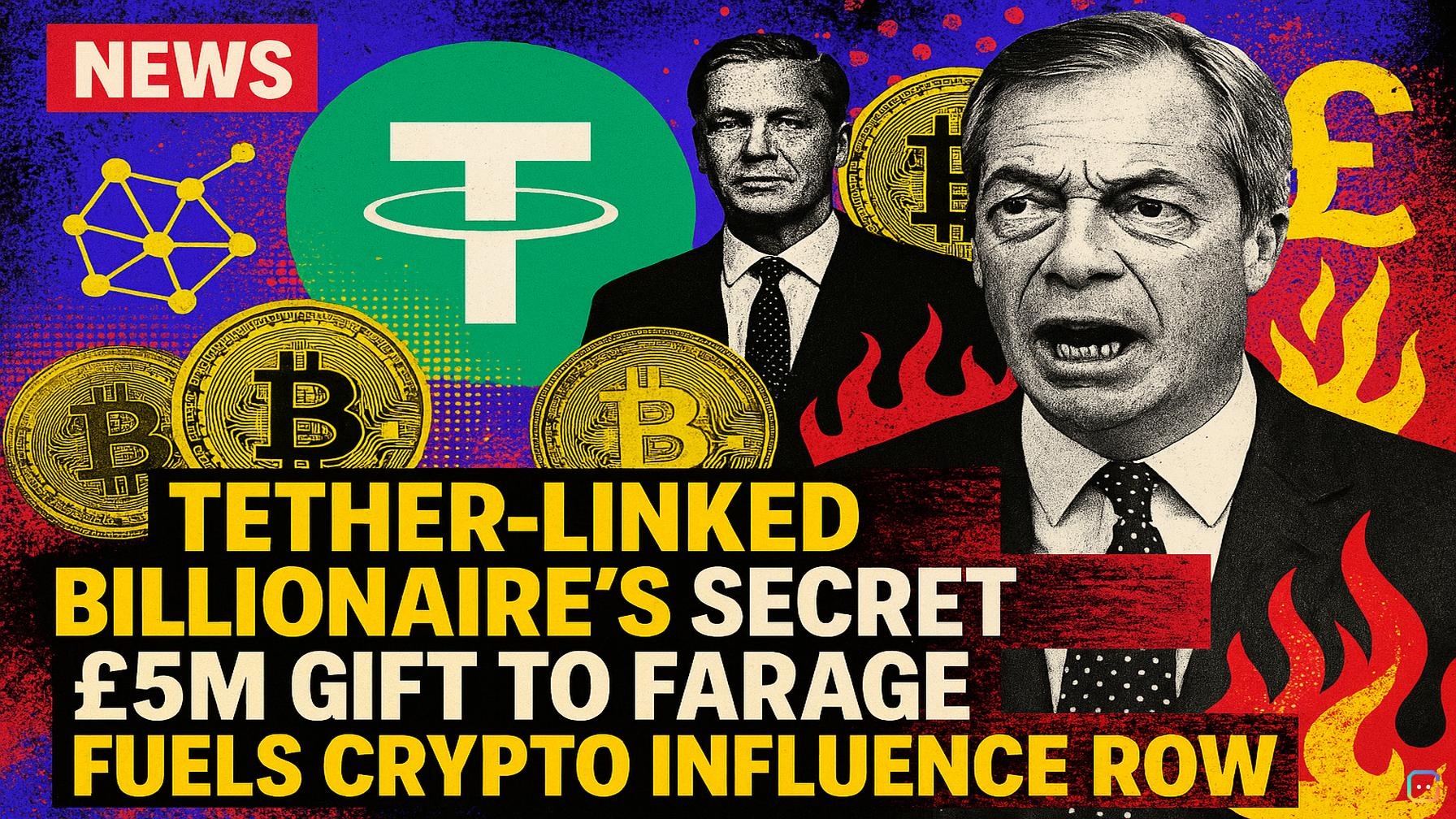
So what changed? One narrative is conscience: he could not leave Reform UK to the leadership of Richard Tice. Another is finance: in April it emerged that Christopher Harborne, a Thai‑based crypto billionaire, had given Farage a secret, personal £5m gift — a donation that critics say may have been intended to set him up to re‑enter politics.
The sequence: someone told The Guardian about the gift; the paper contacted Farage; Farage then briefed The Telegraph himself. According to reporting, the payment was a private, mano‑a‑mano arrangement. Farage has described it as “personal and unconditional,” and said it was given before he returned to Parliament, which he argued meant no declaration was required. Harborne’s position in crypto is material to the story: he reportedly has about $18bn (c. £13.5bn) invested in a firm tied to the stablecoin issuer Tether — and Farage, while an MP, had specifically recommended Tether. That overlap has prompted accusations of a major conflict of interest.
Journalists and political opponents have flagged the lack of paperwork or formal records of conversations between donor and recipient. Without them, motive and intent are hard to prove; suspicion that the money was intended to lure Farage back into politics, however, remains a live line of inquiry. Reform UK says its leader did not breach the code of conduct; Farage insists no rules were broken.
Complicating the picture further, The Sunday Times has reported that long‑time aide George Cottrell — described in reporting as a convicted criminal and crypto gambler — provided funding for Farage’s operation in the year before he re-entered Parliament, covering staffing, security and housing. Farage and Reform UK have denied that rules were broken or that the funds were used for housing.
Beyond the legal formalities, the episode has clear reputational implications for crypto and for political transparency in the UK. Critics point out:
- The optics of large, private crypto wealth being used to support a political figure can reinforce perceptions of unaccountable influence in the sector.
- If donations or gifts linked to crypto interests are not declared or properly scrutinised, they risk conflicts where politicians might be perceived as advancing the business interests of their backers.
- The affair could provoke demands for tighter disclosure rules, and it may trigger a by‑election in Clacton that—regardless of the outcome—could harm Reform UK’s standing.
Farage’s combative response to scrutiny — repeatedly telling interviewers “It’s none of your business” — has itself become part of the story, suggesting he believes personal wealth and political life can be compartmentalised. Observers note a parallel with the US: where Donald Trump’s open acceptance of large donations from controversial figures has become normalized within his political coalition. In Britain, by contrast, even modest gifts prompt headlines; a secret multimillion‑pound transfer tied to crypto tycoons is likely to sharpen scrutiny rather than quiet it.
There’s a final political subplot: Farage has always been more of a disruptor than a policy wonk. Michael Crick’s 2022 biography summed up a common view: Farage has never seemed especially interested in the nuts and bolts of governing — the “dull ministerial meetings” and legislative detail — even as he relishes the spectacle of shaking up the system. For voters and watchdogs alike, the Harborne gift raises a question about motivation: is this a reluctant return to politics driven by principle, or a recalibration driven by very good money?
For the crypto industry, the episode is a warning: high‑profile involvement in politics brings regulatory and reputational risk. As crypto capital moves into public life, so too will public scrutiny — and that scrutiny is likely to be less forgiving in the UK than in some other jurisdictions.
Read more AI-generated news on: undefined/news