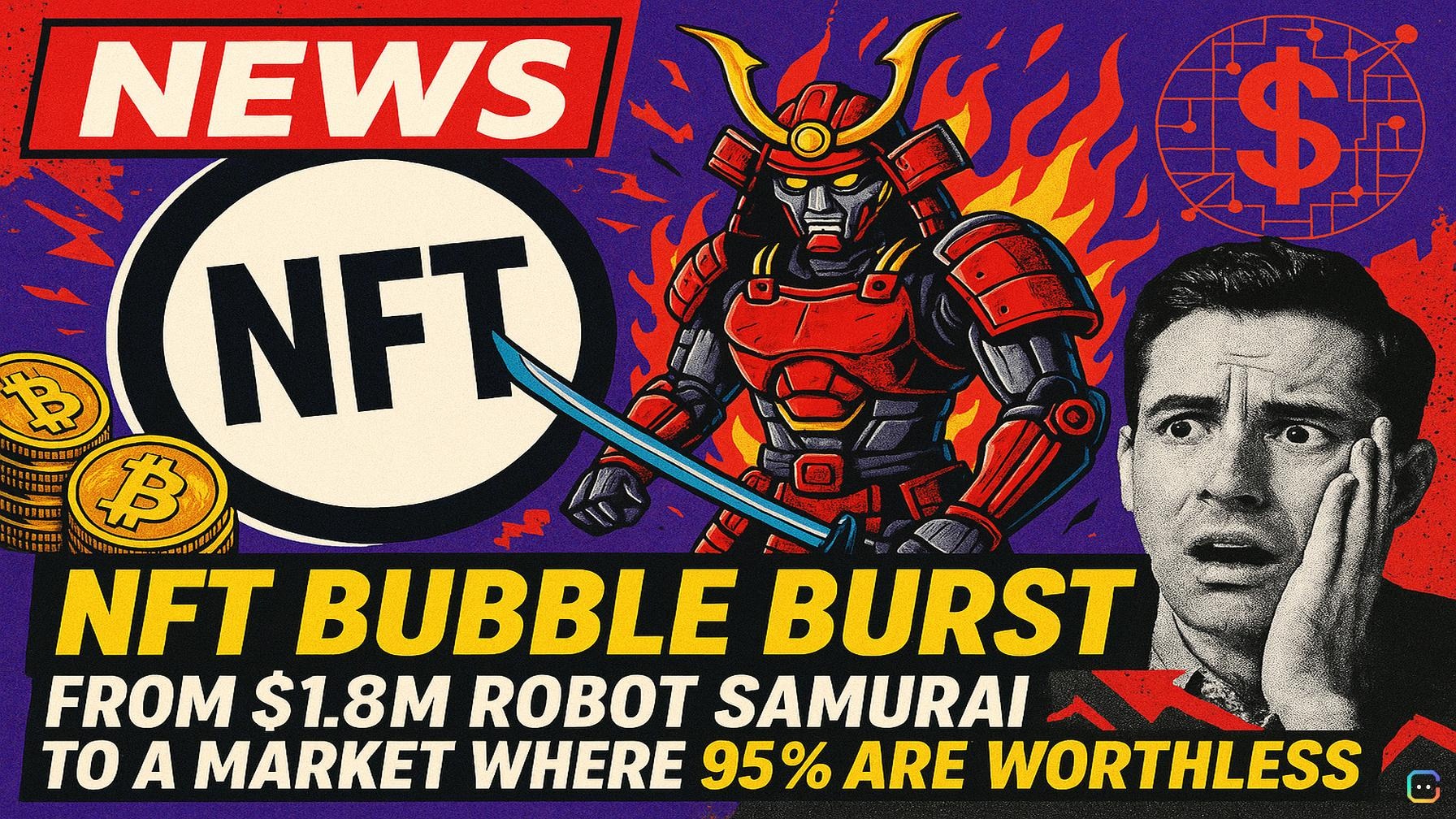
In December 2021 a blockchain record tied to a computer-generated image of a robot samurai fetched cryptocurrency worth more than $1.8 million — a symbol of the peak of the NFT gold rush. In hindsight, that moment now looks less like a new art revolution and more like the crest of a speculative bubble: trading volumes tumbled from roughly $4 billion to about $800 million, research now suggests roughly 95% of NFTs are essentially worthless, and the same robot samurai’s best offer in the last year was just 0.0554 ETH (about $2,852 as of Dec. 17).
How did an idea that promised to “revolutionize” art and make everyday collectors rich implode so quickly — and is there any future left for NFTs?
The promise: provenance and new revenue for creators
The technical idea behind NFTs dates back to experiments in the mid-2010s. At a 2014 hackathon, artist Kevin McCoy and entrepreneur Anil Dash explored how blockchains — distributed ledgers designed to create tamper-resistant records without centralized gatekeepers — could record ownership of digital works. Supporters argued NFTs could create a permanent, traceable certificate linking a piece back to its creator, a way for digital artists to sell work and for collectors to hold provable ownership.
Interest exploded in 2021. On March 11, Christie’s stunned the world by selling Beeple’s Everydays: The First 5000 Days for $69 million, vaulting the online artist Michael Winkelmann (Beeple) into the headlines and convincing millions that NFTs were the next big market.
Where theory met reality — and failed
But NFTs were certificates, not copies of the art itself — and that distinction exposed multiple structural problems that the boom failed to solve:
- Provenance and authentication: Blockchain records can show who minted a token, but they don’t automatically verify that the minter is the genuine artist. In 2018, coder Terence Eden briefly listed himself as the owner of the Mona Lisa on a blockchain project — a stunt that highlighted how identity and trust still require institutions or reliable verification.
- Rights and usage: Many NFTs did not grant legal ownership or copyright of the underlying artwork. Buyers were frequently unclear what they actually purchased — a token, a link, or some claim of association — rather than the art itself.
- Vulnerability to fraud and tech rot: Marketplaces’ verification was often weak, links to hosted artwork frequently broke, and some NFTs didn’t include the actual image or music at all, just a URL that could vanish.
- Irreversible transactions and security: Blockchain transactions can’t be reversed, leaving buyers exposed to hacks and scams without the safety nets that traditional finance provides.
Hype, celebrity and the gold-rush dynamics
NFT marketing leaned heavily on hype. Major auction houses, celebrities and brands amplified the mania: Sotheby’s and Christie’s were selling NFTs for millions; Jimmy Fallon hyped Bored Apes; Snoop Dogg, Paris Hilton, Louis Vuitton, YouTube and universities joined in. Some creators embraced spectacle — Damien Hirst even burned originals and called it “transforming” them into NFTs. But overly optimistic narratives and weak consumer protections encouraged scams, wash trading and speculative flippers. As Anil Dash later observed, the technology was promising but the market behaved like an exploitative gold rush.
The crash and its casualties
By 2022 the market cracked. High-profile reversals and sharp price declines illustrated how extreme the boom had been:
- Jack Dorsey’s first tweet, which sold for $2.9 million in March, failed to attract meaningful bids when relisted in April (top bid $280).
- By July 2022 daily NFT sales had dropped by more than 90%.
- Celebrities who bought at the peak have seen values collapse: Justin Bieber’s Bored Ape purchase cost roughly $1.3 million in Ether; Eminem spent about $460,000 — yet as of Dec. 17, 2025 the highest recent offers for those assets were roughly $2,800.
- Failed projects produced real losses and legal fallout: Logan Paul’s CryptoZoo, which promised NFT-based earnings for players, spawned a class-action suit and partial refunds.
- Everyday collectors were hit hard. One collector told Vice he still held most of his NFTs and faced losses above $50,000; another in Florida said he lost up to $400,000 trying to get back in.
Winners and survivors
Not everyone lost out. Some traders profited by timing quick exits; others who avoided the hype rode earlier crypto cycles. Big brands and institutions that integrated NFTs into established offerings — Disney, the NBA, Louis Vuitton and certain video-game studios — have maintained reasonable sales where institutional trust and IP control protect value. Christie’s even shuttered its digital art department in September, underscoring the retreat of traditional auction houses from the unregulated fringes.
Is there a future for NFTs?
Many of the original social goals remain attractive: better tools for artists to monetize work, programmable royalties, and immutable provenance. But the market’s experience shows those benefits require robust identity verification, clear legal rights attached to tokens, better consumer protections, and a move away from speculation-driven narratives. Some creators and collectors remain committed; others see the boom as a useful stress test that cleared out bad actors and inflated projects.
As Roham Gharegozlou put it: speculative excesses happened, but they also exposed weaknesses that the technology now has to address. If NFTs are to “rise from the ashes,” they’ll likely thrive not as a universal shortcut to decentralized art patronage, but as niche tools backed by trusted brands, clear legal frameworks, and technical safeguards that actually match the original promise of putting creators — not hype — first.
Read more AI-generated news on: undefined/news