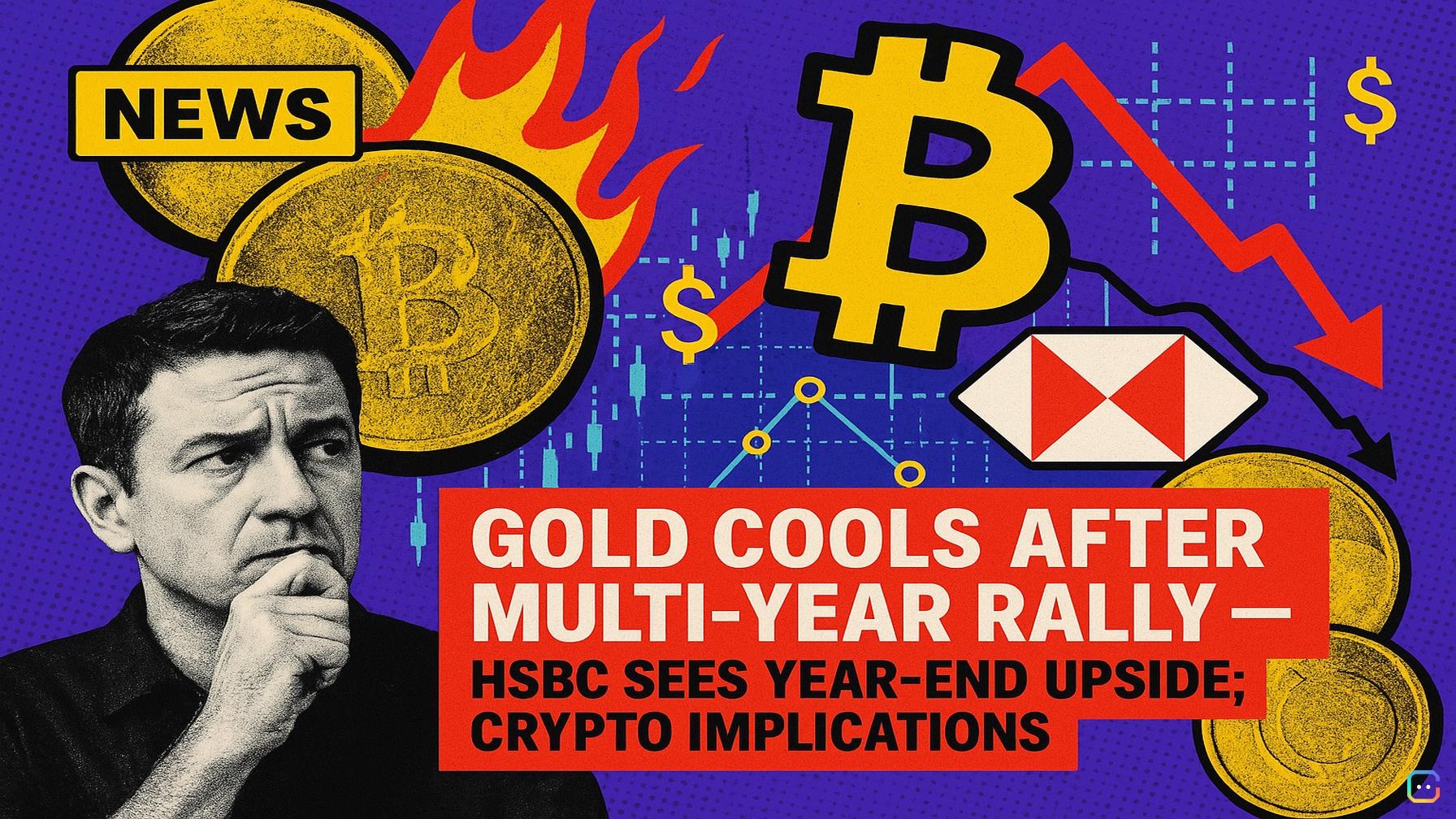
Gold cools after multi-year rally, but HSBC sees upside by year-end
Gold slipped nearly 1% on Tuesday, trading just above $4,100 as the metal struggles to find fresh buying momentum. After an unprecedented three-year rally, XAU/USD has entered a choppier phase and has been unable to sustain a push above the $4,200 level in recent sessions.
Short-term headwinds include tighter activity in the US services sector, elevated real yields and a stronger US dollar—factors HSBC says could keep gold range-bound for now. “We believe gold may remain range-bound in the near term amid elevated real yields and a stronger USD,” the bank’s Global Chief Investment Officer Willem Sels and Global Head of Wealth Insights Lucia Ku wrote to clients.
That cautious near-term view, however, sits alongside a more bullish medium-term outlook. HSBC highlights three structural demand pillars that could lift prices toward year-end: central bank buying, steady ETF inflows and continued demand for portfolio diversification. “Demand for portfolio diversification, central bank buying and steady ETF inflows should support gold prices over the medium term,” the note said, adding: “We anticipate further upside for gold by year-end.”
HSBC’s team also observed that gold’s reaction to recent geopolitical tensions has been muted—“gold did not rally during the Middle East conflict and has largely moved in tandem with equities”—but argues that the metal’s role as a portfolio diversifier remains intact.
A major underpinning for HSBC’s outlook is ongoing central-bank accumulation. Since 2022, many central banks have steadily added to reserves, and the majority continue to top up their gold holdings, providing a structural source of demand that could prove significant if market conditions shift.
For crypto investors and traders, gold’s current behavior is worth watching: its correlation with equities and the impact of central-bank demand can signal broader risk appetite shifts and compete with crypto assets in investors’ store-of-value strategies.
Read more AI-generated news on: undefined/news