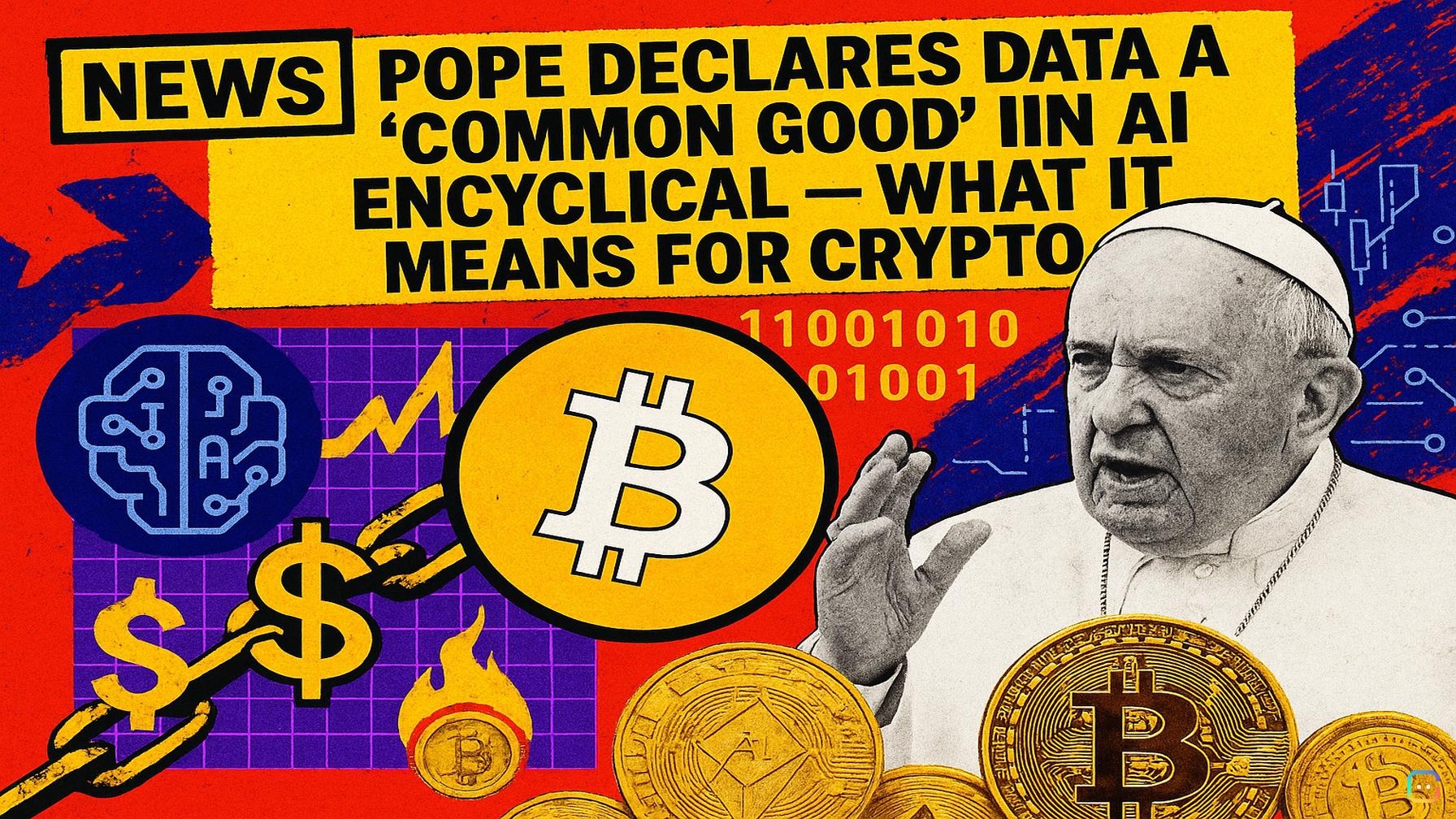
Pope Leo XIV has published his first encyclical devoted entirely to artificial intelligence, arguing that data should be treated as a shared human resource and calling for stronger oversight of Big Tech. Magnifica Humanitas — a 245-paragraph document released at the Vatican’s Synod Hall on May 25 and signed by the pope on May 15 (the 135th anniversary of Rerum Novarum) — frames AI as the defining moral challenge of his papacy and compares the coming social upheaval to the Industrial Revolution.
Core message
- Technology is not neutral, Leo writes: algorithms “absorb the values, blind spots, and economic incentives of whoever builds them.” Pretending otherwise hides bias rather than eliminating it.
- Data, the encyclical argues, is the product of many people and should be governed as a common good, not hoarded by a handful of companies. This extends Catholic social teaching on natural resources to the digital economy.
- The pope stresses subsidiarity: decisions should be made as locally as possible. For technology, that means more distributed oversight — transparent algorithms, independent community audits, and legal routes for people to challenge automated systems that affect credit, hiring, or criminal risk scores.
Issues covered
Magnifica Humanitas addresses a wide range of harms and policy questions tied to AI: warfare and autonomous weapons, dehumanization and technocracy, data colonialism, child safety online, mass unemployment, disinformation, and transhumanism. Leo rejects the idea that human limitation is a flaw to be engineered away, arguing that finitude underpins empathy, moral judgment, and care; systems designed to optimize vulnerability out risk excluding the people most in need.
On machine “objectivity”
The encyclical is careful to avoid anthropomorphism: AI systems “do not possess a body, do not feel joy or pain.” They can simulate empathy and produce persuasive language, but they lack lived experience and true understanding. That makes delegating sensitive moral decisions to opaque algorithms dangerous, because apparent objectivity can mask the choices built in by designers and funders.
Vatican stage — and Silicon Valley presence
Christopher Olah, co-founder of Anthropic and head of its interpretability research team, shared the stage with Pope Leo at the Synod Hall presentation, alongside two cardinals and two theologians. Olah acknowledged what many industry leaders avoid saying publicly: major AI labs operate under incentives and constraints that may conflict with “doing the right thing,” and outside scrutiny from governments, religious institutions, and civil society is necessary. He also warned that AI-driven labor displacement could create “a moral imperative of historic proportions” if it occurs at scale.
Institutional follow-up
The encyclical formalizes a stance the pope has held since his election, and it follows direct engagement with tech executives — Pope Leo met with Silicon Valley leaders at the Vatican in November 2025. On May 16 the Vatican also approved an internal AI commission drawing on seven departments to coordinate AI governance work across the Holy See.
Why it matters for the crypto and tech communities
By declaring data a common good and calling for distributed oversight, the Vatican’s document speaks directly to ongoing debates around data ownership, interoperable identity, decentralized governance, and transparency — issues central to Web3 and the wider technology policy landscape. Whether policymakers translate these moral imperatives into law, regulatory frameworks, or new governance experiments will be a key story to watch.
Read more AI-generated news on: undefined/news