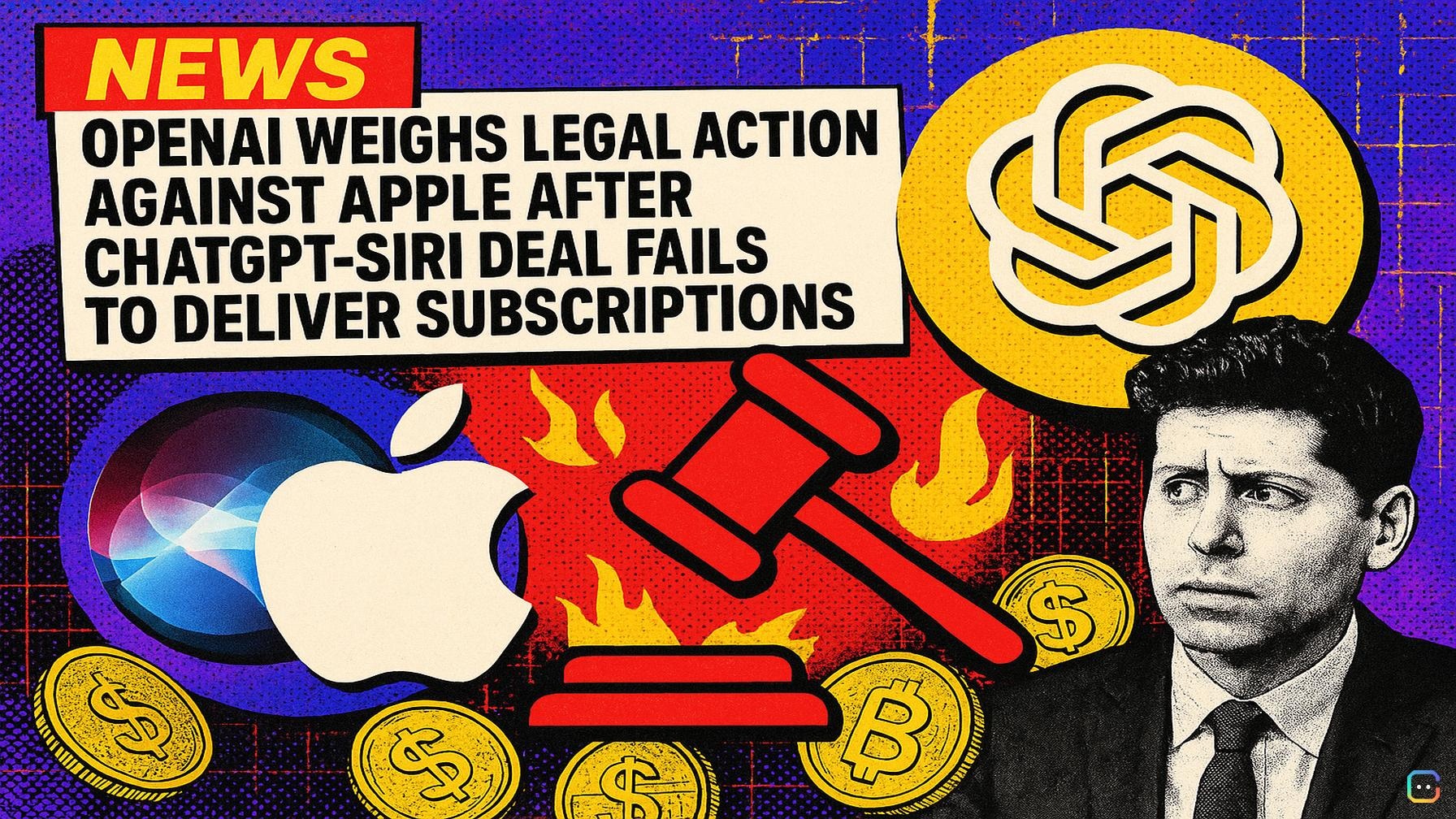
OpenAI is weighing legal action against Apple after two years of their ChatGPT‑powered Siri partnership failed to deliver the commercial payoff the startup expected, according to multiple reports.
What happened
- The deal, unveiled at Apple’s WWDC 2024, let Siri hand off complex queries to ChatGPT and integrated OpenAI’s model into iOS “Visual Intelligence” features so users could point their camera at objects or documents and get answers powered by ChatGPT.
- Rather than receiving an upfront fee from Apple, OpenAI and Apple reportedly agreed to bet on converting iPhone users into paid ChatGPT subscribers ($20/month) and sharing in‑app revenue under App Store rules.
Why OpenAI is upset
- Bloomberg reports OpenAI’s lawyers are “actively working with an outside legal firm on a range of options” that could include a breach‑of‑contract notice stopping short of immediate litigation.
- Sources say OpenAI believes it met its obligations while Apple failed to meet key commitments around how prominently ChatGPT is presented in Siri and how easily users can discover and upgrade to paid plans. A Firstpost report added that OpenAI had expected Apple’s ecosystem to “drive billions of dollars in subscriptions” but instead saw lower‑than‑expected revenue and limited visibility, with ChatGPT features reportedly buried in iOS settings.
Apple’s position and broader tensions
- Apple reportedly prefers offering ChatGPT as an optional, free Siri upgrade and then taking its traditional App Store cut of any resulting subscriptions instead of paying model providers upfront. OpenAI argues that minimal in‑product promotion means “functionality is embedded but does not lead to subscription conversion,” which it views as a breach of commercial expectations.
- Apple has its own worries. Reports from TechCrunch and Bloomberg say Apple executives are uneasy about OpenAI’s privacy practices and its hardware ambitions — including projects involving former Apple design chief Jony Ive — and are exploring deeper integrations with rival models from Google’s Gemini and Anthropic.
Status and timing
- Neither company has publicly confirmed any legal move. People close to the talks say OpenAI may wait to escalate until after its high‑profile trial with Elon Musk concludes.
Why it matters for the wider tech (and crypto) world
- At stake is a fundamental question: when powerful AI models are embedded inside dominant platforms, who captures most of the value — the model provider or the platform that controls the user interface and billing relationship?
- This dispute is an early, high‑stakes test of that dynamic. Its outcome will influence how future AI–platform deals are structured — and will be closely watched by advocates of decentralized, user‑owned models who argue for different value and data flows than those enforced by closed platforms.
Bottom line: what started as a marquee partnership to bring ChatGPT deeper into iOS is now testing the limits of commercial expectations, platform power, and the economics of embedded AI — with potential implications for both centralized and decentralized approaches to AI deployment.
Read more AI-generated news on: undefined/news