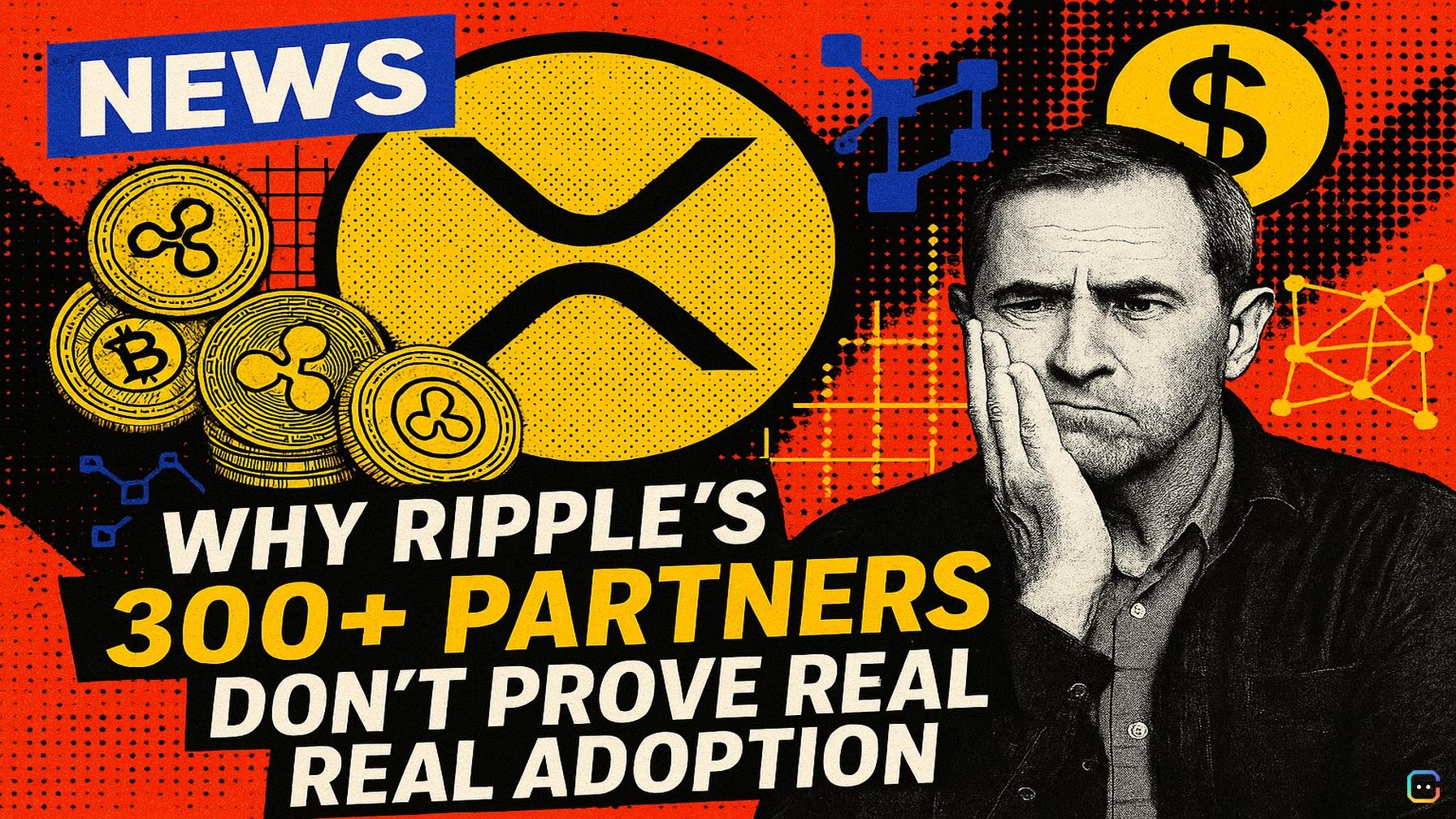
Ripple often touts its roster of institutional partners—more than 300 firms—as a major argument for wider XRP adoption. That number is impressive, but it doesn’t answer the key question for token holders: how many of those partners actually use XRP?
Why the distinction matters
- Working with Ripple’s technology is not the same as settling transactions in XRP. A bank can pilot Ripple software, join a payment network, or partner with the company without ever touching the token.
- For investors, the difference is critical. The bullish case for XRP depends on real, recurring token utility—moving value, sourcing liquidity, or settling transactions—not just brand-name corporate relationships.
Partnerships aren’t all equal
- Testing or piloting software ≠ live settlement through XRP.
- Joining a network ≠ holding XRP inventory to provide liquidity.
- A corporate relationship ≠ token-driven demand.
What readers should do
Whenever a headline announces a new Ripple partnership, ask: “What role does XRP actually play here?” If that role is unclear, the news may be good for Ripple the company but far less direct evidence for XRP’s demand as an asset.
Where the debate stands
- Supporters point to Ripple’s enterprise relationships, its survival through legal battles, and its long-standing payments focus.
- Critics note that institutional relationships haven’t consistently translated into the kind of token usage that justifies claims of broad XRP adoption.
- The reality is probably in between: Ripple’s network, brand, and partner list matter—but investors still need proof those relationships produce meaningful token demand.
What to watch next
The story of XRP’s adoption will hinge less on the raw partner count and more on concrete indications that partners are using the asset. Traders and analysts should monitor metrics such as On-Demand Liquidity (ODL) corridor activity, XRP settlement volumes, partners’ public statements about holding or settling in XRP, and on-chain flows tied to institutional addresses.
Bottom line
Ripple’s institutional footprint is real, but it doesn’t automatically equal XRP adoption. The next phase of the narrative will be decided by how clearly partners put the token to work—not just by how many logos Ripple can list.
Report by the News Desk; edited by Samuel Rae. Based on information released by the Crypto platform.
Read more AI-generated news on: undefined/news