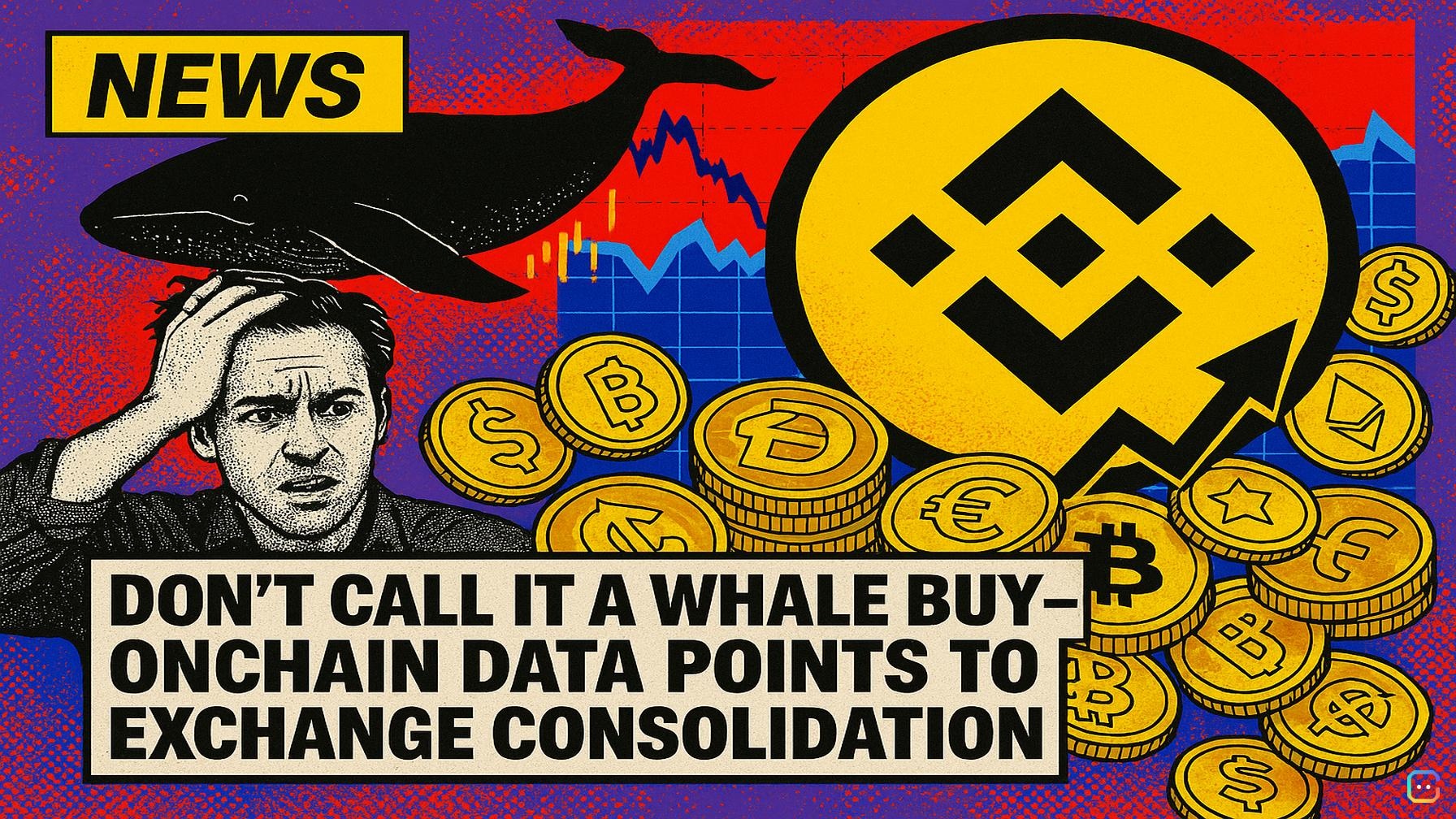
Big “whale” buy-up? Not so fast — onchain data suggests the story is more about bookkeeping than buying.
CryptoQuant’s research shows that widely shared charts claiming a sudden, massive reaccumulation by large Bitcoin holders are misleading. Much of the apparent surge in giant wallets comes from exchanges consolidating funds — moving many small accounts into a few large addresses for operational or compliance reasons. Those internal transfers can make it look like a single entity is piling in, when in reality it’s just exchange bookkeeping.
Julio Moreno, head of research at CryptoQuant, says that after stripping out exchange-related movements, balances held by genuine large holders (addresses holding 100–1,000 BTC) are actually falling — a trend that matches spot ETF outflows since ETFs launched in early 2024. Moreno flagged that most whale data has been “affected” by these consolidations, which inflated recent whale totals.
At the same time, another cohort is showing a different behavior: long-term holders. Matthew Sigel, head of digital assets research at VanEck, notes that long-term holders were net accumulators over the past 30 days after what had been their biggest selling spree since 2019. That shift reduces one key source of selling pressure, though it doesn’t guarantee an upward breakout — it simply softens the argument that one group is driving prices down.
Market snapshot: Bitcoin has been trading around the $90,000 area in thin holiday volume. At the time of reporting the price was roughly $89,750, about 2.8% below a recent high of $90,250, with 24-hour volume near $52 billion and a market cap around $1.75 trillion (circulating supply ≈ 20 million BTC). Volatility has produced sharp up-and-down moves, but weak volume means those moves lack conviction.
How to read this all together: ETF activity has changed the landscape — spot ETFs now absorb a significant share of on- and off-chain demand, which can alter where Bitcoin is held and how flows show up onchain charts. ETF outflows have likely contributed to the drop in the 100–1,000 BTC band, while some long-term holders quietly accumulate. Overall, the evidence points more toward consolidation and shifting custody than a dramatic whale-driven reaccumulation or a major crash.
What matters next: sustained ETF flows and stronger trading volume. Those would be needed to confirm a meaningful breakout or breakdown. Until then, beware headlines that equate large exchange moves with fresh whale buying — much of the recent “whale” activity appears to be internal reshuffling rather than a new wave of accumulation.
Featured image: Unsplash. Chart: TradingView.
Read more AI-generated news on: undefined/news