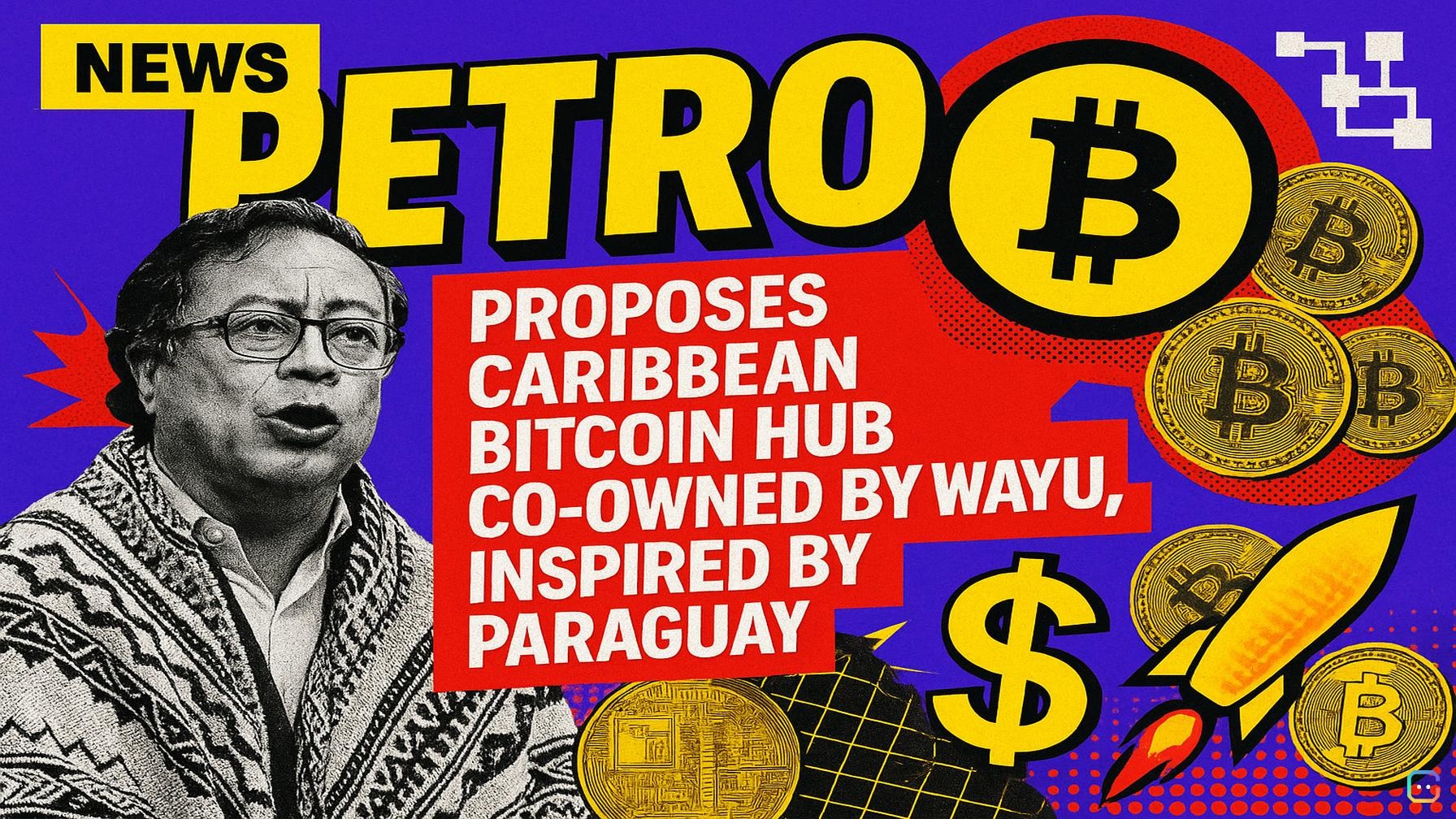
Paraguay’s growing role in Bitcoin mining — now accounting for roughly 4.3% of the global network — has inspired an unexpected proposal from Colombia’s president and could shape Bogotá’s next big energy play.
President Gustavo Petro this week floated the idea of turning Colombia’s Caribbean coast into a Bitcoin-mining hub, naming Barranquilla, Santa Marta and Riohacha as candidate cities in a post on X on May 5, 2026. Unusually, Petro said any projects there should be set up as co-owned ventures with the Wayúu, the region’s largest Indigenous community, putting social inclusion at the center of the pitch.
The environmental framing is key to Petro’s argument. He pointed to Paraguay’s success — which leveraged abundant hydroelectric power from facilities such as the Itaipu dam and has risen to one of the world’s top mining jurisdictions — as evidence that developing countries can turn clean electricity into crypto-export revenue. Colombia already has a strong renewables profile: World Bank data from April 2024 shows roughly 75% of the country’s electricity comes from renewable sources, more than double the global average. Petro says tapping that clean power for mining would avoid the climate scrutiny aimed at fossil-fuel‑driven operations.
Industry analysts see the same opening. Firms like Hashlabs argue that mining can convert surplus or low-cost electricity into a hard-currency export, delivering meaningful economic impact for emerging markets. At the same time, a reported strategic pivot by some US commercial miners toward higher-margin workloads like artificial intelligence and high-performance computing could free up market share, making it easier for low-cost-energy countries to capture greater slices of global hashrate.
But practical and political hurdles are real. Petro’s term ends in August and Colombia’s constitution bars re-election; the country holds presidential elections on May 31, giving him only a short window to advance policy, legislation or incentives required to attract large-scale mining investment. Beyond timing, questions remain about grid stability, environmental permitting, Indigenous rights and how co-ownership with the Wayúu would be structured in practice.
If Colombia moves forward, the plan would join a broader trend across Latin America: nations with abundant, cheap renewable energy positioning themselves as attractive hosts for crypto miners. Whether Petro’s proposal gains traction will depend on political will, regulatory clarity and how investors respond to the promise of clean-powered mining partnered with community ownership.
Read more AI-generated news on: undefined/news