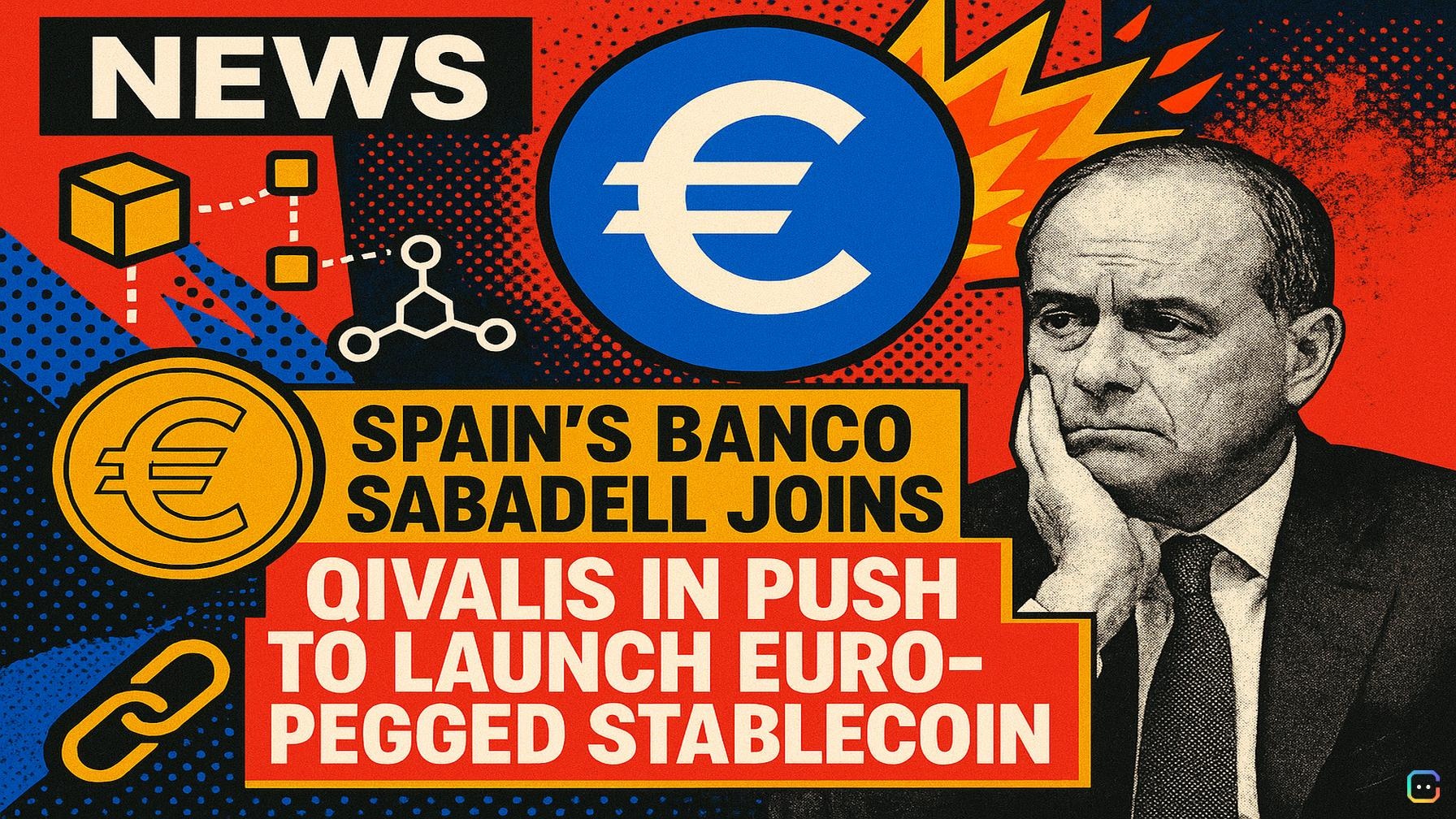
Spain’s Banco Sabadell has become the latest major lender to back a European push for a euro‑pegged stablecoin, joining a banking consortium that aims to boost transaction efficiency and challenge the US dollar’s grip on digital payments.
What happened
- Sabadell, Spain’s fourth‑largest bank by assets, announced Tuesday it is joining Qivalis, a consortium formed in Amsterdam in 2025 by a group of European banks.
- Qivalis plans to develop and issue a Markets in Crypto Asset Regulation (MiCA)‑compliant, euro‑pegged stablecoin in the second half of 2026, Reuters reported.
Why it matters
- The initiative is pitched as a way to make payments “more efficient and secure,” according to Sabadell CEO César González‑Bueno, and to strengthen Europe’s footprint in the growing digital‑assets market.
- Euro‑pegged stablecoins currently make up less than 1% of global stablecoin volume, far below what might be expected given the euro’s role in global finance. A successful European stablecoin could help reduce reliance on US dollar‑denominated digital assets.
Who’s involved and who’s joining
- Qivalis already includes a dozen institutions such as ING, UniCredit, KBC, Danske Bank and BNP Paribas. Spain’s BBVA — the country’s second‑largest bank — joined the consortium last month, stressing that collaboration is essential to “create common standards that support the evolution of the future banking model and deliver financial innovation to our clients.”
- Other Spanish banks are close behind: Bankinter said it’s in talks and will update in early summer, while non‑listed lenders Abanca, Kutxabank and Cecabank are reportedly considering membership.
Regulatory backdrop and tensions
- The project comes amid a push from European officials and industry advocates to grow a local stablecoin ecosystem and reduce dependence on US payment rails. At Paris Blockchain Week in April, France’s finance minister Roland Lescure urged banks to explore tokenized deposits and called for more euro‑pegged stablecoins.
- Industry group Blockchain for Europe has warned that while MiCA improves safety, it has also made euro‑pegged stablecoins less competitive versus dollar‑denominated rivals. The organization argued that aspects of MiCA risk putting Europe on the “downward‑sloping part of the regulatory Laffer curve” and recommended reforms to make regulated euro stablecoins more viable.
Outlook
- As more traditional banks test blockchain use cases internally and seek practical paths into crypto markets, the Qivalis consortium could expand. If it meets its 2026 target and attracts wider participation, the project might mark a turning point for euro‑denominated digital money — both in Europe’s payments infrastructure and in the global stablecoin landscape.
Read more AI-generated news on: undefined/news