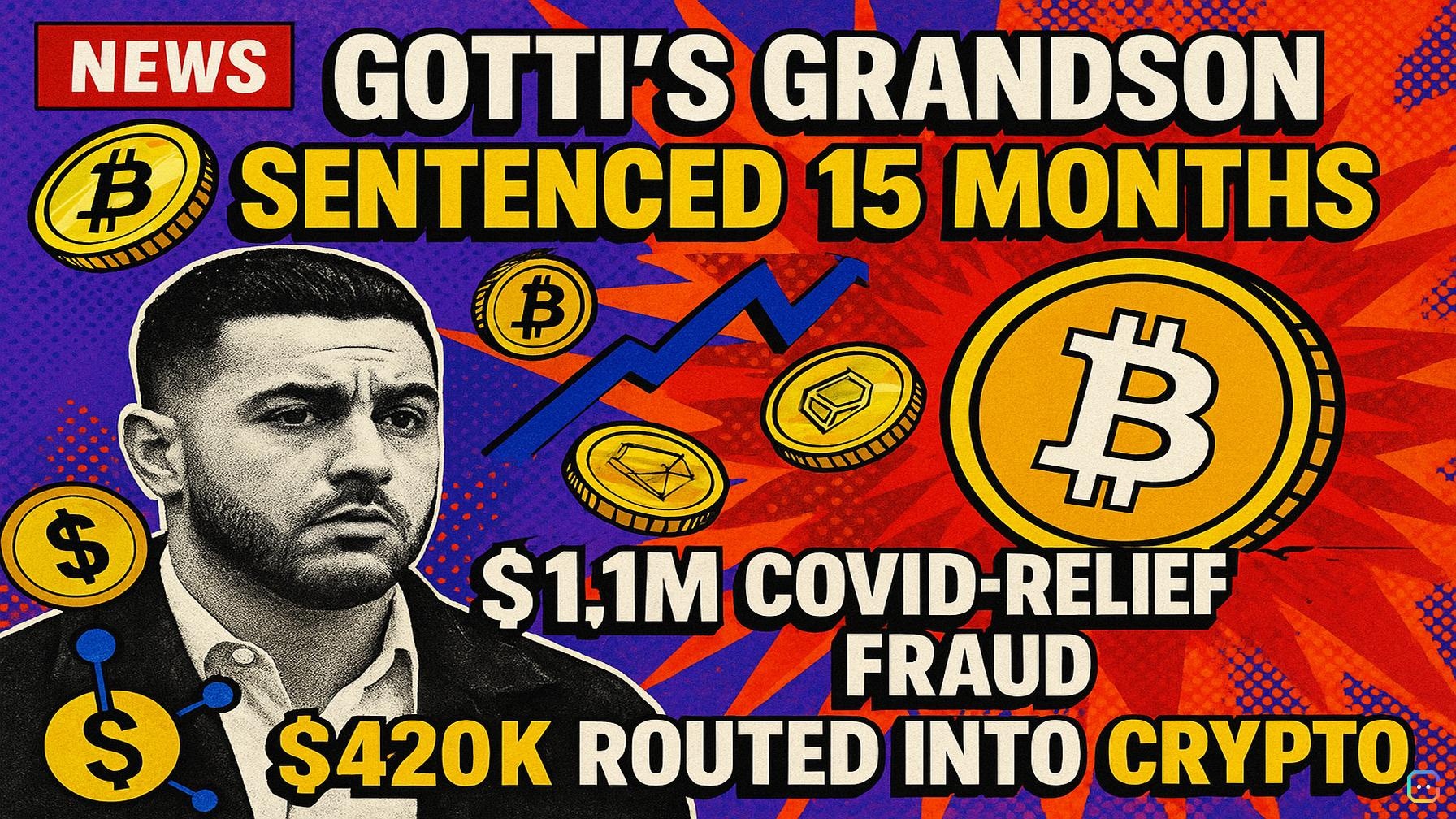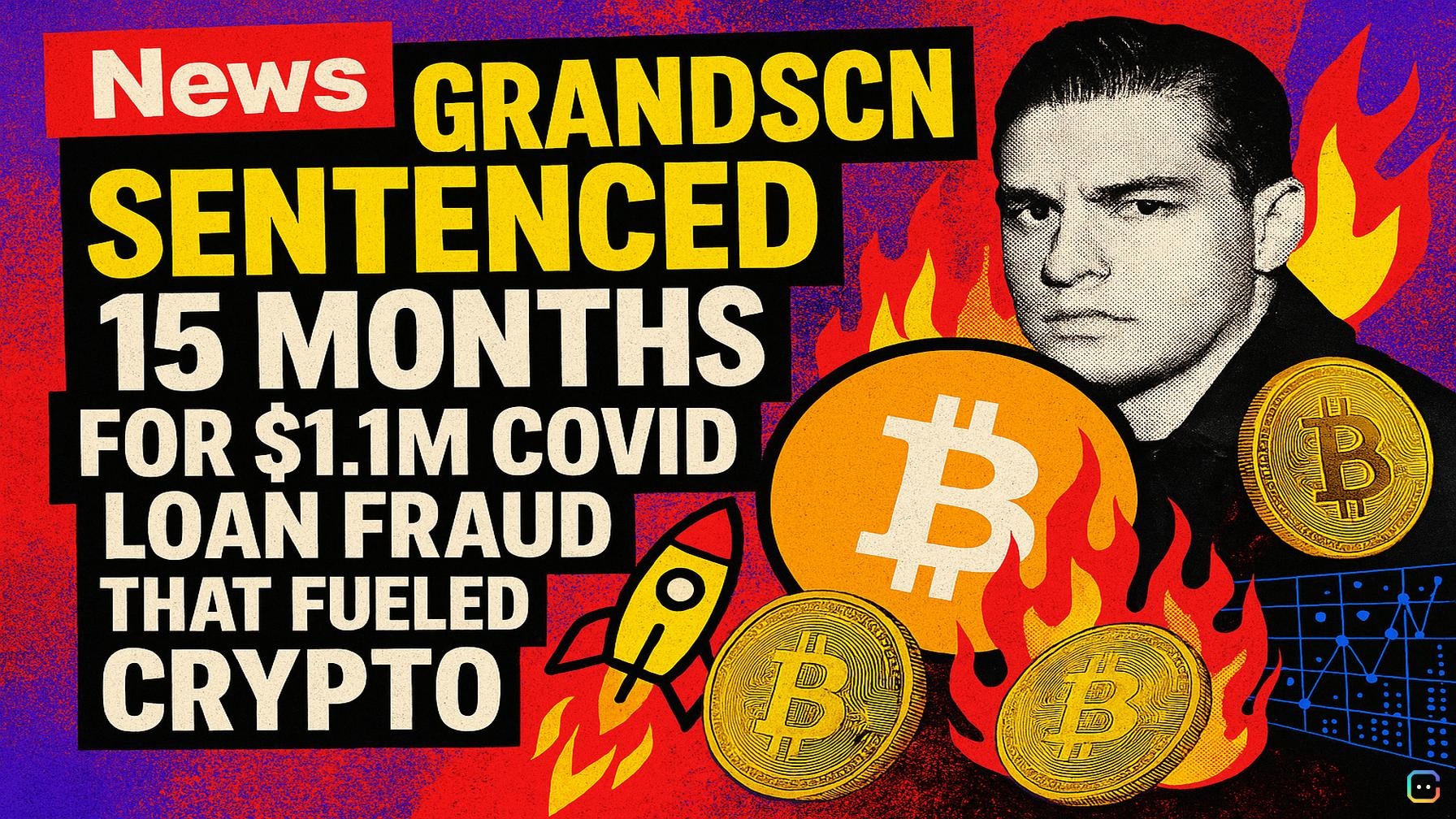
Carmine G. Agnello — the grandson of notorious Gambino boss John Gotti — was sentenced to 15 months in prison after prosecutors say he siphoned pandemic relief money into cryptocurrency investments, highlighting a recurring theme of COVID-era fraud feeding into digital-asset channels.
Key facts
- The U.S. Attorney’s Office for the Eastern District of New York says Agnello fraudulently obtained roughly $1.1 million in Economic Injury Disaster Loans (EIDL) intended to aid small businesses during the pandemic.
- About $420,000 of those funds were diverted into a crypto business rather than used to support his Jamaica, Queens–based company, Crown Auto Parts & Recycling, LLC.
- Agnello pleaded guilty to wire fraud in September 2024. He was sentenced in April 2026 to 15 months in prison, ordered to pay $1,268,302 in restitution, serve two years of supervised release, and complete 100 hours of community service.
- The fraudulent applications — submitted between April 2020 and November 2021 — allegedly included false employee counts and misrepresentations about how the money would be used.
A broader pattern: COVID relief and crypto
Investigators and industry experts say Agnello’s case is part of a wider problem: rapid pandemic relief disbursements, loosened verification, and the explosive growth of crypto created fertile ground for fraud.
- The SBA Office of Inspector General has estimated more than $200 billion in potentially fraudulent loans issued across COVID relief programs, with about $136 billion tied to EIDL alone.
- “The government prioritized speed, relaxed controls, and created what investigators have described as a kind of pay-now-chase-later environment,” cybercrime consultant David Sehyeon Baek told Decrypt. “Money was pushed out fast, and serious verification often came much later.”
- Isabella Chase, Head of Policy, EMEA at TRM Labs, called pandemic programs “among the most significant fraud vectors we have observed in recent years,” adding that the combination of fast disbursement, lax checks, and rapid crypto maturation produced a “near-perfect storm” for criminals pivoting funds into digital assets.
Recent related enforcement
Federal prosecutors have continued to unveil cases where COVID loans were routed into crypto:
- In March, prosecutors charged Los Angeles rideshare driver Bruce Choi with wire fraud and money laundering after he allegedly obtained more than $2 million in COVID loans for a fictional company and wired the proceeds to crypto exchange Kraken.
- In October, a rural English glazier was sentenced to 22 months for securing two Bounce Back loans and spending part of the proceeds on crypto and gambling despite only being eligible for one loan.
Gotti connection, but limited organized-crime links
Agnello’s family name has drawn attention, but prosecutors did not bring RICO or money-laundering charges, nor publicly allege broader organized-crime involvement. Baek noted that in the Eastern District of New York — a jurisdiction experienced with Gambino prosecutions — the absence of such charges suggests the case was handled as a straightforward wire-fraud matter.
Defense and behavioral context
Agnello’s attorney, Jeffrey Lichtman, told the court his client suffers from a gambling addiction and cited an unusual upbringing — including the reality show Growing Up Gotti — as mitigating factors. Experts caution, however, that many crypto-related frauds show calculated, methodical behavior: structured transactions, layering across wallets, and deliberate efforts to obscure fund origins, rather than impulsive spending.
What this means for crypto and compliance
The Agnello case underscores ongoing enforcement focus on the nexus between pandemic fraud and crypto. For exchanges, regulators, and compliance teams, it’s another reminder that emergency-relief programs attracted sophisticated misuse and that on-chain monitoring, stronger KYC/AML measures, and faster cross-sector cooperation remain critical tools for detecting and disrupting similar schemes.
Read more AI-generated news on: undefined/news