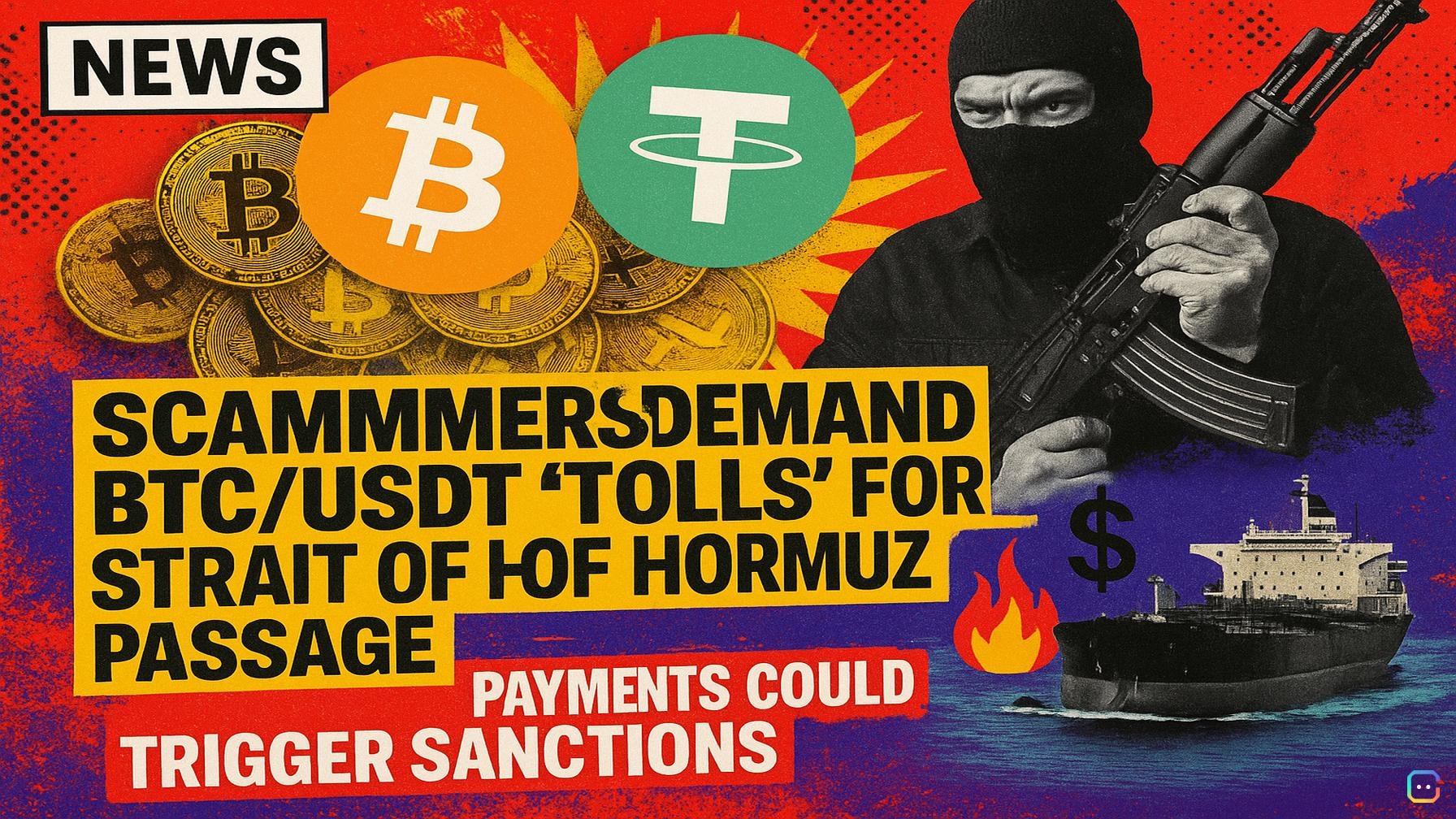
Headline: Scam merchants posing as Iranian officials demand Bitcoin/Tether “tolls” for safe passage through Strait of Hormuz — victims risk sanctions
At least one ship that came under fire while trying to leave the Strait of Hormuz may have followed fraudulent instructions sent by criminals pretending to be Iranian security officials, maritime-risk firm Marisks warned Monday. The firm stopped short of a definitive attribution but flagged an emerging scam targeting vessel owners stuck west of the strait.
How the scam works
- Operators of stranded ships are receiving messages purporting to be from Iranian security services offering “safe passage” in exchange for transit fees paid in cryptocurrency — primarily Bitcoin (BTC) or Tether (USDT).
- The approach is deliberately structured to look official: owners are asked to submit documents for review, “verified,” and then presented with a crypto-denominated fee and a scheduled transit time once payment is made.
- Marisks was blunt that these messages are fraudulent and do not originate with Iranian authorities. Tehran has not publicly commented.
Why the scheme is landing
- The scam feeds on the current chaos in the Strait of Hormuz. Since regional hostilities escalated, the vital waterway — which previously handled roughly 20% of the world’s oil and LNG — has been largely closed and vessels have been stranded for days under threat of armed intervention. That pressure makes ship operators vulnerable to quick-fix offers, even from unverified sources.
- The fraud appears to have been seeded by recent reporting that Iran had been considering an actual Bitcoin-denominated toll for tankers (reportedly about $1 per barrel for loaded vessels), lending the scam a veneer of plausibility.
Legal and compliance peril for victims
- Paying a cryptocurrency “toll” is not just a matter of losing money to criminals. Chainalysis senior intelligence analyst Kaitlin Martin warns that any crypto transfer tied to Iranian-controlled waterways could be treated as material support — a classification that may put companies in breach of U.S. and international sanctions.
- Entities linked to the Islamic Revolutionary Guard Corps are subject to some of the strictest sanctions. That means a shipping company that pays what appears to be a ransom or toll could face legal scrutiny and enforcement even after being defrauded.
Bottom line
- Marisks says these solicitations are fraudulent. Shipowners and operators should verify any official instructions through established channels and seek legal and compliance guidance before making payments, especially in crypto. Responding to fraudulent demands could expose firms to significant financial loss and potential sanctions risk.
Read more AI-generated news on: undefined/news