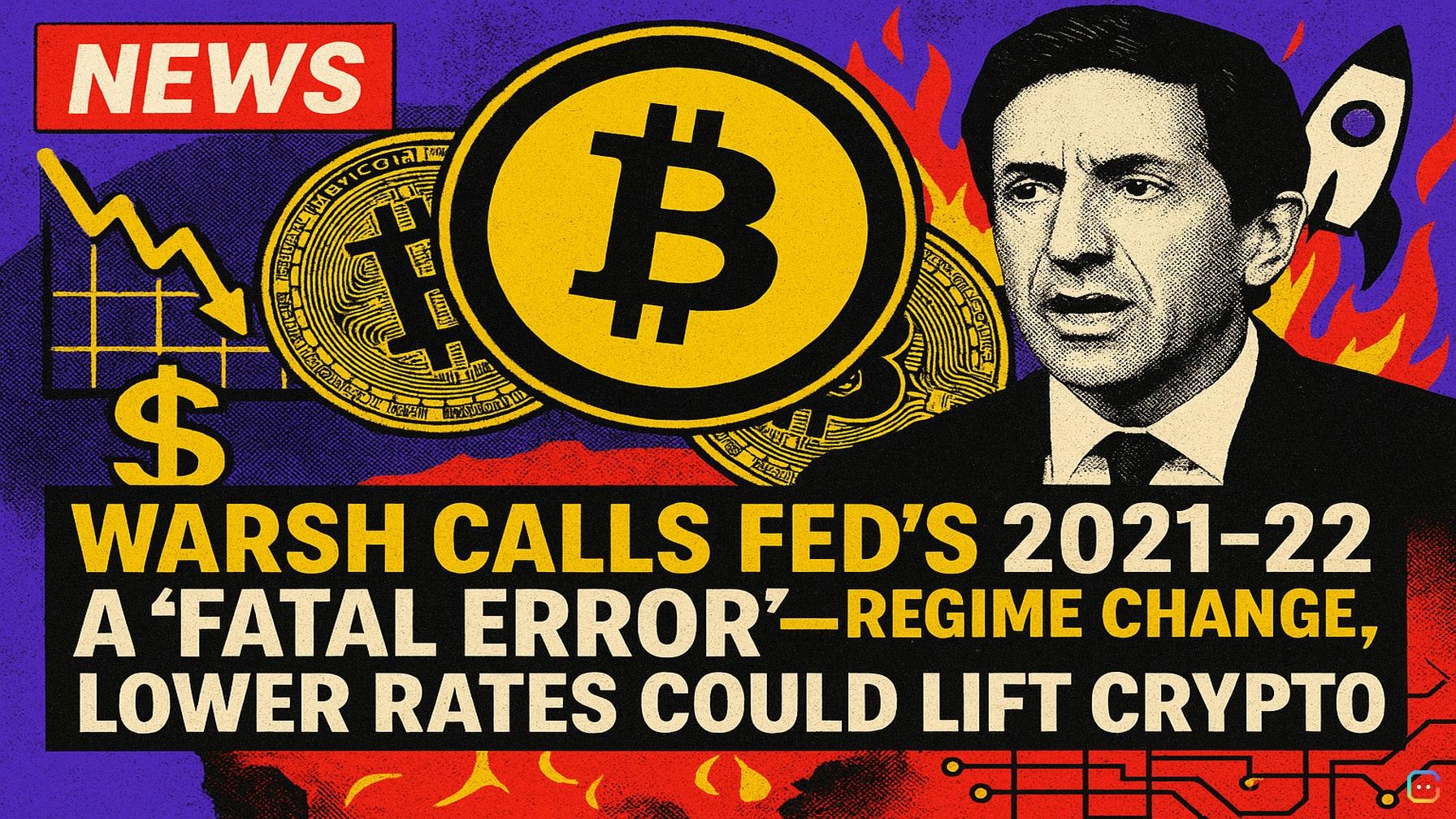
At a Senate Banking Committee hearing Tuesday, President Trump’s Federal Reserve chair nominee Kevin Warsh delivered a blunt assessment of the Fed’s handling of the post‑Covid price surge, calling the central bank’s 2021–22 response a “fatal policy error” and arguing that fixing it requires a full “regime change” in how monetary policy is run—not just incremental tweaks.
Warsh’s diagnosis
- Warsh said the Fed “missed its mark” after Covid, noting prices rose “25 to 35% for virtually all deciles of the American people,” and called the resulting legacy a problem the institution has not yet fully reckoned with.
- He rejected the idea that the 2021 pause was merely a timing mistake, instead framing it as a category error that undermined credibility and requires deeper structural reforms.
What he wants changed
- Communication overhaul: Warsh criticized frequent forward guidance, arguing that premature public pronouncements about rate paths constrain policy flexibility and provoke market disruption. “Price stability exists when no one talks about inflation,” he said, endorsing much less forward talk from Fed officials.
- “Regime change”: He pressed for a new inflation framework, different policy tools, and a reworked communications strategy. He floated reducing the number of policy meetings per year (without committing to a specific number) and said press conferences should accompany meetings that do take place.
- Balance sheet and rates: Warsh called for shrinking the Fed’s balance sheet to give the central bank room to lower interest rates for households and small and midsize businesses without reigniting inflation.
AI and the disinflationary case
- A notable part of Warsh’s outlook is his view that AI is a structural, disinflationary force. He described AI as “the most disruptive moment in modern economic history,” arguing productivity gains from the tech could allow the Fed to cut rates while preserving price stability.
Why crypto markets should care
- A Fed chair leaning toward lower rates and a smaller balance sheet would be broadly positive for risk assets, including crypto. Lower interest rates reduce the opportunity cost of holding non‑yielding assets like Bitcoin and make cash‑yielding alternatives less attractive.
- Warsh’s own ties to the industry—his crypto portfolio reportedly spans more than 20 blockchain and digital‑asset companies via venture investments—also signal an unusually high level of familiarity with the space for a Fed chair nominee.
- For Bitcoin specifically, the practical implication is clear: a Fed tilt toward lower rates informed by an AI‑driven disinflation thesis would remove a major macro headwind that has capped recovery since the October 2025 all‑time high of $126,000.
Context and next steps
- The Fed held its benchmark rate at zero through 2021 as inflation began rising and then raised rates rapidly from mid‑2022 through January 2023. U.S. inflation remained above the Fed’s 2% target, at 3.3% year‑over‑year in March 2026.
- Warsh’s remarks set a stark contrast with the Powell era and lay out a clear policy agenda that, if enacted, could shift the macro backdrop for crypto. Markets and lawmakers will watch both his confirmation process and any concrete proposals that emerge if he takes the chair.
Bottom line: Warsh’s testimony signals a potential pivot to a less talkative Fed, a smaller balance sheet, and a pro‑growth, AI‑friendly narrative that would likely be constructive for crypto—if those ideas become policy.
Read more AI-generated news on: undefined/news